
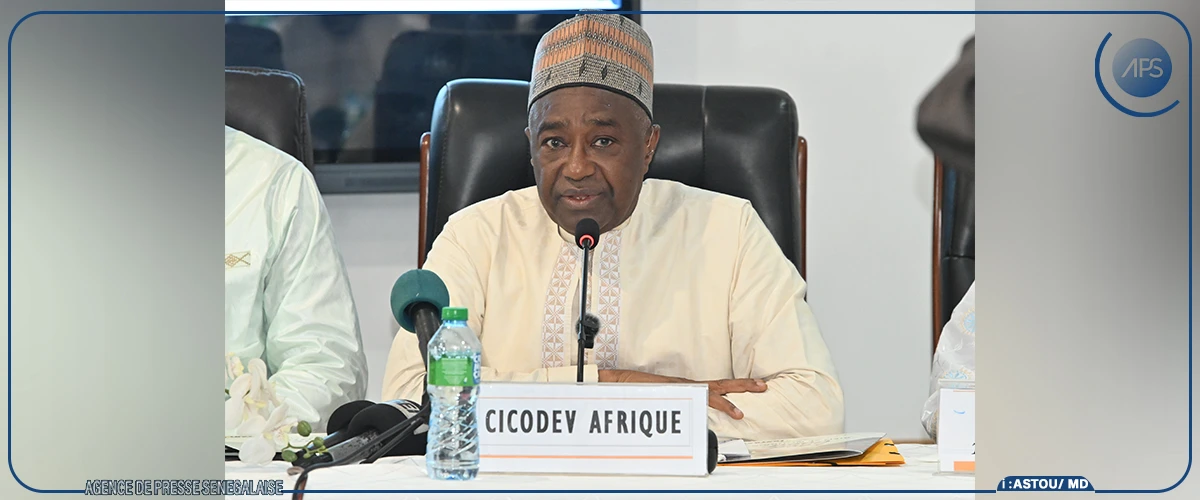
CICODEV Afrique: Urges FRA Facilitation for Sénégal Femmes Transformatrices
Summary
- Amadou Kanouté, Executive Director of CICODEV Afrique, advocated for easier access to the Autorisation de fabrication et de mise en vente (FRA) in Dakar.
- The primary goal of this advocacy is to enable women processors (femmes transformatrices) to access markets in Senegal.
- Currently, women processors are unable to sell their products without obtaining this essential authorization.
- Simplifying the FRA procedures is seen as critical for the economic empowerment and market participation of these women entrepreneurs.
Advocacy for Streamlined Market Access
The central argument put forth by CICODEV Afrique's director is that simplifying the FRA procedures is crucial for enabling women processors to effectively access markets.
Amadou Kanouté, the Executive Director of CICODEV Afrique, recently issued a public appeal in Dakar for the simplification of procedures related to the Autorisation de fabrication et de mise en vente (FRA). This call, made on a Wednesday, September 30, highlights a critical barrier faced by women processors in Senegal, often referred to as 'femmes transformatrices', who are striving to bring their products to market.
Kanouté's advocacy underscores the significant challenges these women encounter in navigating the current regulatory landscape. The core issue revolves around the mandatory nature of the FRA, without which women processors are unable to legally sell their goods. This regulatory requirement, while intended to ensure product safety and quality, inadvertently creates substantial hurdles for small-scale entrepreneurs, particularly women, who may lack the resources or expertise to comply with complex administrative processes.
The Regulatory Framework and Its Impact
The Autorisation de fabrication et de mise en vente (FRA) is a pivotal component of Senegal's food safety and commercial regulations. It serves as an official clearance, permitting businesses to manufacture and distribute their products within the market. For women processors, obtaining this authorization is not merely a bureaucratic step but a fundamental prerequisite for economic viability and growth. Without it, their ability to participate in formal markets is severely restricted, limiting their income generation and entrepreneurial potential.
This regulatory framework, while essential for consumer protection and maintaining standards in the food sector, can inadvertently stifle the growth of small and medium-sized enterprises (PMEs), especially those led by women. The complexity and potential delays associated with securing the FRA can deter or even prevent women transformatrices from formalizing their businesses, thereby keeping them in the informal economy where market access is often precarious and opportunities for expansion are limited. The call for facilitation directly addresses this friction between regulatory necessity and practical accessibility for vulnerable economic actors.
Empowering Women Through Simplified Processes
The central argument put forth by CICODEV Afrique's director is that simplifying the FRA procedures is crucial for enabling women processors to effectively access markets. This facilitation of the Autorisation de fabrication et de mise en vente (FRA) is seen as a direct pathway to economic empowerment for femmes transformatrices across Senegal. By reducing the administrative burden, these women can more readily transition from informal production to formal market participation, thereby increasing their sales, income, and overall contribution to the local economy.
Enhanced market access for these women-led businesses would not only boost individual livelihoods but also contribute to broader economic development within Senegal. The current situation, where women cannot sell their products without this authorization, highlights a systemic challenge that impedes the growth of a vital segment of the entrepreneurial landscape. Therefore, the push for simplification is not just about regulatory reform but about fostering an inclusive economic environment that supports and nurtures local talent and enterprise.
Why This Matters for Compliance and Market Strategy
The advocacy for the simplification of FRA procedures in Senegal carries significant implications for businesses, particularly those in the food processing sector, and for legal and compliance professionals advising them. Any legislative or administrative reforms aimed at streamlining the Autorisation de fabrication et de mise en vente process could fundamentally alter the compliance landscape. Businesses, especially small and medium-sized enterprises (PMEs), would need to adapt their internal processes and market entry strategies to align with new, potentially less onerous, requirements.
For lawyers and compliance officers, monitoring these developments is paramount. Changes in the regulatory environment, specifically regarding the Autorisation de fabrication et de mise en vente (FRA), could present new opportunities for market entry or expansion for their clients, particularly women entrepreneurs. Conversely, a failure to adapt to simplified procedures could lead to missed opportunities or inefficient compliance efforts. The ongoing dialogue around the facilitation of FRA procedures in Senegal underscores a broader trend towards making regulatory frameworks more accessible, especially for key economic demographics like women processors.
Practical Implications
Lawyers and compliance officers advising food processing businesses or women entrepreneurs in Senegal should monitor for potential legislative or administrative reforms aimed at simplifying the Autorisation de fabrication et de mise en vente (FRA) process, as this could significantly impact compliance requirements and market access strategies for their clients.
Source
Source: Original reporting via APS
How does this affect you?
Get an AI analysis of this article grounded in your jurisdictions, practice areas, and any policy documents you've uploaded to Wansom.
Finish Reading the Full Story and the Expert Analysis.
Get the latest legal & regulatory intelligence in Senegal
Wansom is AI and can make mistakes.