
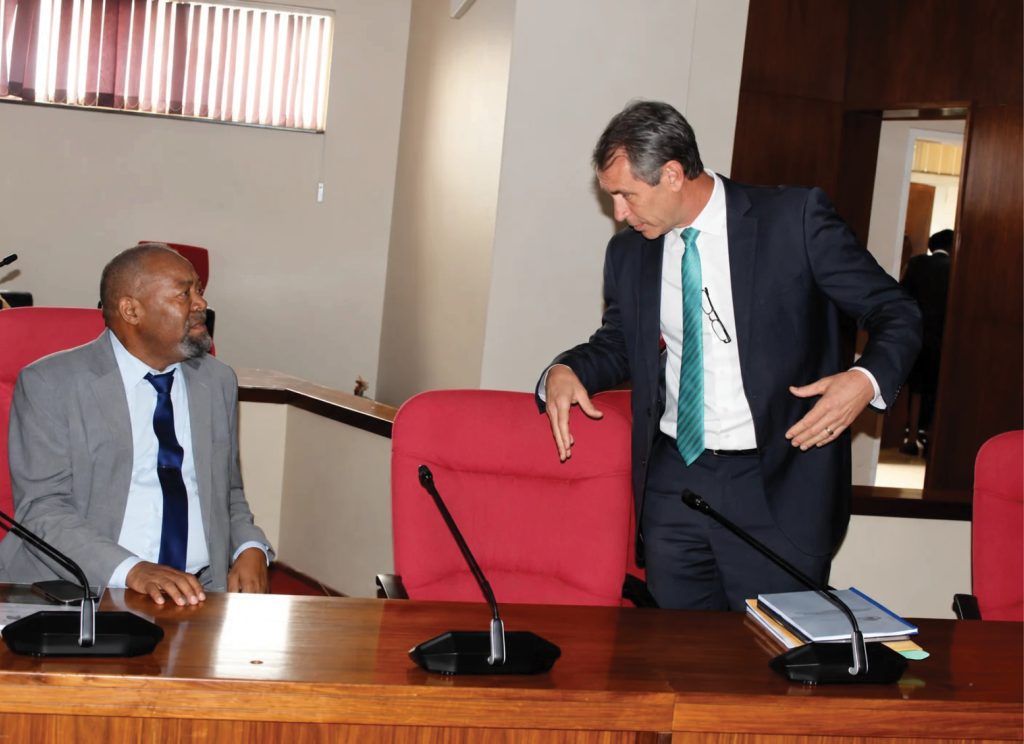
Eswatini Senate Passes Finance Bills for Budget, Infrastructure
Summary
- Eswatini's Senate has adopted three finance bills to secure government loans.
- These loans are intended to address an approximate E3 billion budget shortfall.
- Funding will also support the next phase of the Mkhondvo-Ngwavuma Water Augmentation Programme.
- One specific piece of legislation is the African Development Bank Loan Bill No.18 of 2026.
- The bills aim to bolster Eswatini's economic stability and facilitate infrastructure development.
What Happened
The successful enactment of these finance bills is poised to have a profound impact on Eswatini's economic outlook and its capacity for sustained development.
The Eswatini Senate has formally adopted a series of three critical finance bills, marking a pivotal moment in the nation's fiscal management. These legislative instruments are specifically designed to enable the government to secure essential loans, which are earmarked for two primary purposes: addressing a substantial budget deficit and funding the ongoing expansion of key national infrastructure. The unanimous approval by the senators underscores the collective recognition of the urgent need for these financial measures to bolster the kingdom's economic stability and facilitate its development agenda.
A central objective of these recently approved bills is to provide Eswatini budget shortfall funding, specifically targeting an estimated deficit of approximately E3 billion. This significant financial gap necessitates immediate action to ensure the continuity of government operations and public services. Concurrently, a portion of the anticipated loan proceeds is designated to finance the subsequent phase of infrastructure development, particularly under the ambitious Mkhondvo-Ngwavuma Water Augmentation Programme. This dual focus highlights the government's strategy to manage both immediate fiscal challenges and long-term strategic investments.
Legislative Framework
Among the legislative package passed by the Eswatini Senate is the African Development Bank (Enhancing Economic Resilience and Competitiveness Programme Phase II) Loan Bill No.18 of 2026. This specific piece of Eswatini government loans legislation illustrates the nation's reliance on international financial institutions to support its economic programs. The bill's title itself indicates a commitment to strengthening economic resilience and competitiveness through structured borrowing. The inclusion of such a detailed bill within the broader set of finance legislation emphasizes the strategic nature of these borrowing initiatives.
The collective adoption of these finance bills provides the legal framework necessary for the government to proceed with securing the required capital. This legislative action is crucial for formalizing the government's authority to incur new debt, ensuring transparency and parliamentary oversight in the process. The passage of these bills is a prerequisite for the government to engage with lenders and finalize the terms of the loans, which are vital for implementing the outlined fiscal and developmental objectives.
Economic and Development Impact
The successful enactment of these finance bills is poised to have a profound impact on Eswatini's economic outlook and its capacity for sustained development. The provision of Eswatini budget shortfall funding, amounting to approximately E3 billion, is critical for stabilizing the nation's finances and preventing potential disruptions to essential public services. This immediate financial injection is fundamental to maintaining fiscal equilibrium and supporting the government's operational continuity in the face of current economic pressures.
Furthermore, the dedicated Mkhondvo-Ngwavuma Water Augmentation Programme finance represents a significant investment in the country's future infrastructure. This program is a cornerstone of Eswatini's long-term development strategy, aimed at enhancing critical resources and supporting broader economic growth through improved infrastructure. The funding secured through these bills will enable the progression of this vital project, ultimately contributing to the nation's resilience and prosperity by addressing both immediate financial needs and strategic developmental goals.
Practical Implications
Lawyers advising on public finance, infrastructure projects, or government procurement in Eswatini should monitor the final enactment and specific terms of these finance bills. They will impact funding availability for key government initiatives like the Mkhondvo-Ngwavuma Water Augmentation Programme and may introduce new contractual or compliance considerations for clients involved in these sectors.
Source
How does this affect you?
Get an AI analysis of this article grounded in your jurisdictions, practice areas, and any policy documents you've uploaded to Wansom.
Finish Reading the Full Story and the Expert Analysis.
Get the latest legal & regulatory intelligence in Eswatini
Wansom is AI and can make mistakes.