
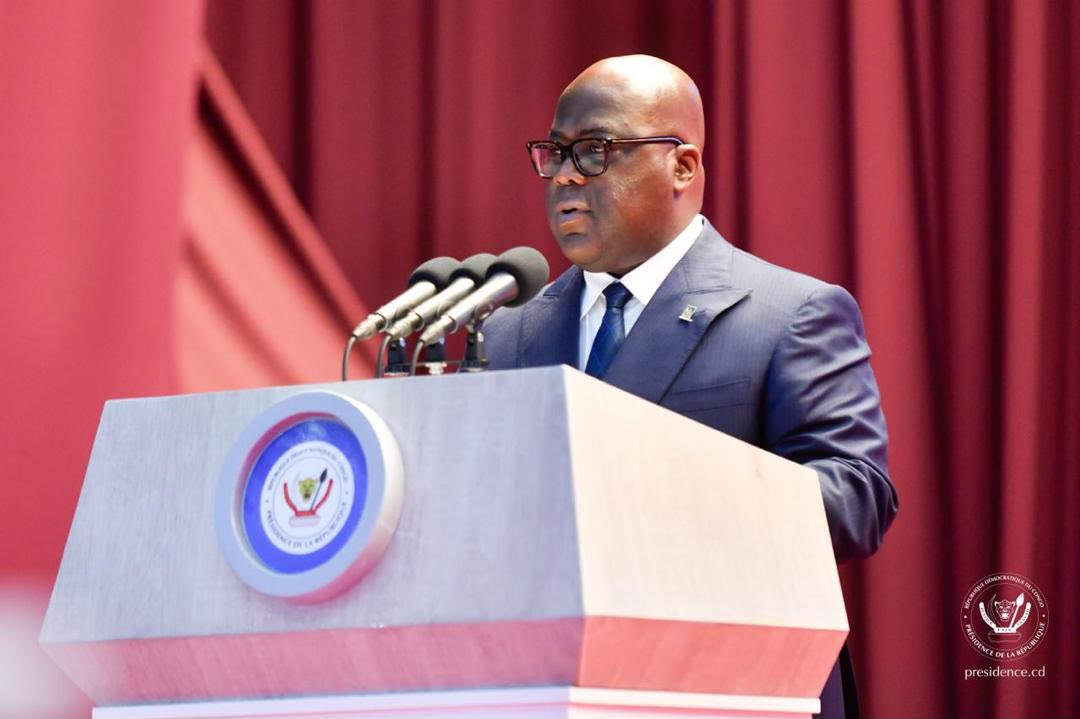
DR Congo: Presidential Ordinances for National Dialogue Delayed
On Friday, September 4, in the Democratic Republic of Congo, media outlets, particularly Congo Nouveau, reported on the delayed signing of presidential ordinances intended to structure a national dialogue, raising questions about President Félix Tshisekedi's management of the timeline.
This delay in issuing crucial presidential ordinances for a national dialogue carries significant legal and political implications for the DRC. The structuring of such a dialogue, especially the contentious issue of including or excluding armed groups like AFC/M23, directly impacts the nation's peace and security agenda, potentially influencing political stability, human rights, and the overall investment climate. For legal practitioners, this signals a period of potential political uncertainty and the necessity to closely monitor policy shifts related to national reconciliation and security, as the framework for future political engagement remains undefined.
The legal context for a national dialogue in the DRC is rooted in the Constitution, which grants the President powers to issue ordinances (e.g., Article 79). These ordinances would provide the legal framework for the dialogue's composition, mandate, and procedures. The debate surrounding the participation of armed groups like AFC/M23 touches upon fundamental constitutional principles of national sovereignty, territorial integrity, and the state's monopoly on legitimate force. The distinction between political actors and armed movements, as emphasized by the Minister of Human Rights, is critical in defining the scope of participants, often guided by national security legislation and international humanitarian law. While the courts are not directly involved in the *initiation* of the dialogue, any legislative or constitutional changes proposed as a result would ultimately be subject to review by the Constitutional Court.
Key parties involved in this unfolding situation include President Félix Tshisekedi, whose signature on the ordinances is awaited; the media outlets Congo Nouveau, Actualite.cd, and Infos 27, which are reporting on and shaping public discourse; Nicolas Kazadi, a former minister commenting on the exclusion of armed groups; Samuel Mbemba, the Minister of Human Rights, advocating for a popular, grassroots dialogue; and the armed group AFC/M23, whose potential inclusion is a central point of contention. The Agence Congolaise de Presse (ACP) also contributes by reporting on calls for national mobilization.
Attorneys and legal professionals operating in the DRC should meticulously track the issuance and content of any forthcoming presidential ordinances pertaining to the national dialogue. These documents will establish the definitive legal framework for political engagement and could foreshadow significant legislative or constitutional reforms. Businesses, in turn, should assess the political stability implications arising from these delays and the ongoing debate concerning armed groups, as these factors could directly influence security assessments, investment decisions, and operational continuity. A thorough understanding of the legal criteria for participation in such dialogues is paramount for advising clients on political risk and engagement strategies in this evolving landscape.
How does this affect you?
Get an AI analysis of this article grounded in your jurisdictions, practice areas, and any policy documents you've uploaded to Wansom.
Finish Reading the Full Story and the Expert Analysis.
Wansom is AI and can make mistakes.