
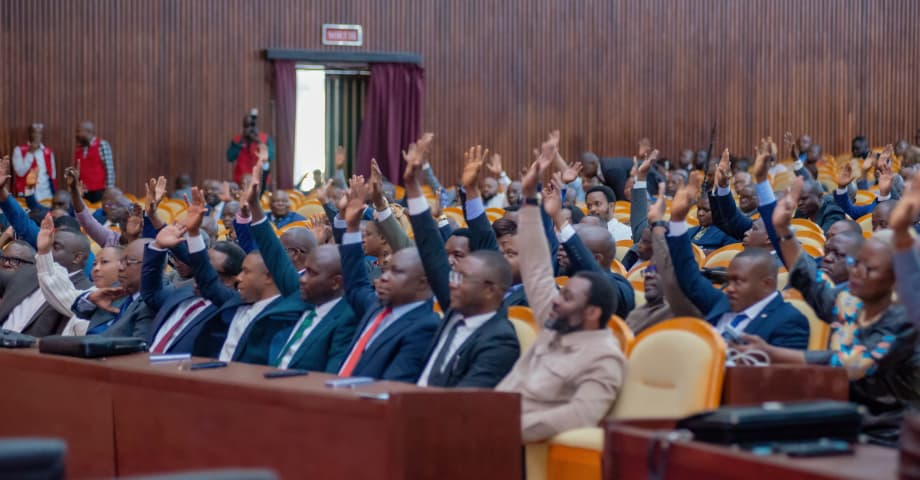
DR Congo National Assembly Adopts Resolution to Maintain CNDH's 'A' Status
On September 23, the National Assembly in Kinshasa, Democratic Republic of Congo, adopted a resolution to support the retention of "Status A" accreditation for the National Human Rights Commission (CNDH), following a recommendation from the Global Alliance of National Human Rights Institutions (GANHRI) to downgrade it to "Status B" due to non-compliance with the Paris Principles. This parliamentary action aims to bolster the CNDH's international standing amidst concerns about its independence and operational capacity.
This development is profoundly significant for the protection and promotion of human rights in the DRC. The CNDH's "Status A" accreditation is critical for its credibility, independence, and ability to engage effectively with international human rights mechanisms, including direct participation in the UN Human Rights Council. A downgrade to "Status B" would severely limit its influence and access to international forums, potentially weakening human rights advocacy and oversight within the country. For legal practitioners, it underscores the ongoing challenges faced by independent institutions in the DRC, particularly concerning financial autonomy and operational independence, which are vital for upholding the rule of law and democratic principles. The CNDH's president, Paul Nsapu, explicitly cited financial constraints as a major impediment to independent investigations and provincial deployment, highlighting a systemic issue.
The legal context for the CNDH's accreditation is rooted in the Constitution of 2006 (as amended) and specific organic laws that established the institution in accordance with the "Paris Principles." These international standards, adopted by the UN General Assembly, outline requirements for the independence, mandate, and operational effectiveness of national human rights institutions. GANHRI, through its Sub-Committee on Accreditation (SCA), periodically reviews these institutions against these principles. The National Assembly's resolution, while politically significant, does not directly alter GANHRI's assessment but signals strong parliamentary support and a commitment to addressing the identified shortcomings, particularly financial constraints. The Parliament's call for increased governmental support and improved governance within the CNDH reflects an understanding of the stakes involved.
The key parties involved are the National Assembly of the Democratic Republic of Congo, the National Human Rights Commission (CNDH) and its president, Paul Nsapu, and the Global Alliance of National Human Rights Institutions (GANHRI). The Government of the DRC is also a crucial party, as it is urged by the Parliament to provide the necessary financial and material support to the CNDH. The CNDH's documentation of events like the C64 coalition march further illustrates its role in monitoring human rights situations.
Attorneys, particularly those involved in human rights, constitutional law, or international law, should closely monitor the CNDH's efforts to demonstrate its independence and operational capacity within the given recourse period. The parliamentary resolution and the CNDH's request for increased funding highlight the need for robust state support for independent institutions. Practitioners should be aware that the CNDH's accreditation status directly impacts its ability to investigate human rights violations and engage with international bodies, which in turn affects the avenues available for redress for victims of human rights abuses. The outcome of GANHRI's final decision on the CNDH's status is not yet reported.
How does this affect you?
Get an AI analysis of this article grounded in your jurisdictions, practice areas, and any policy documents you've uploaded to Wansom.
Finish Reading the Full Story and the Expert Analysis.
Get the latest legal & regulatory intelligence in DR Congo
Wansom is AI and can make mistakes.