
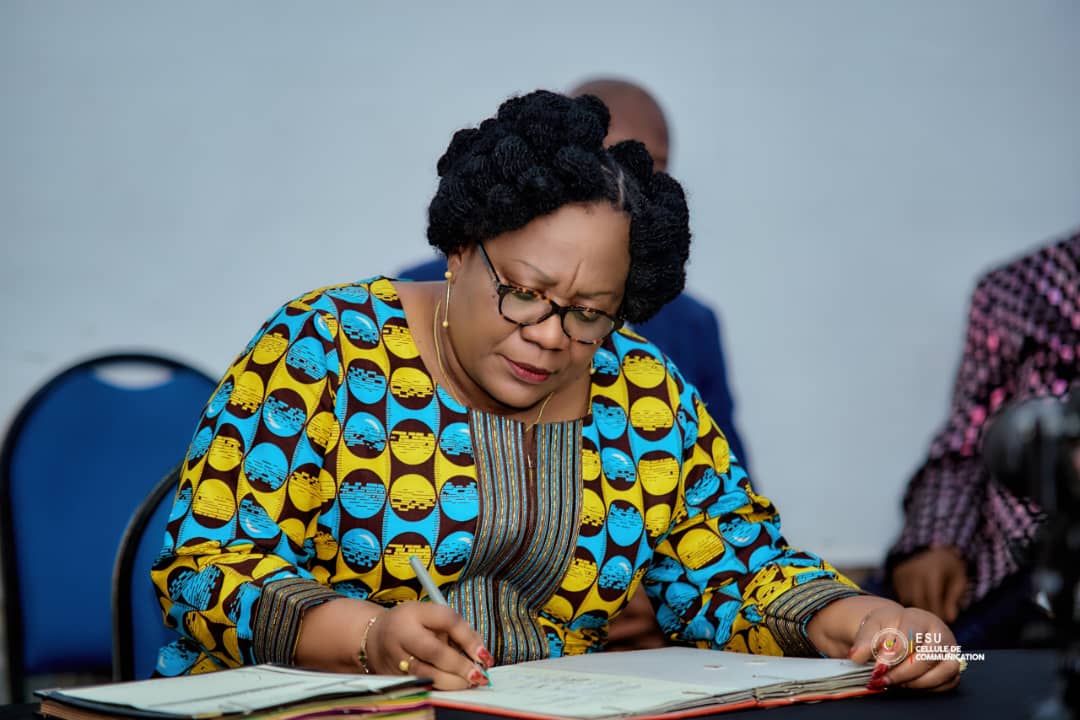
DR Congo: Assembly Recommends Sanctions for ESU Minister's Irregularities
In the Democratic Republic of Congo, on Monday, October 26, the National Assembly unanimously adopted recommendations for sanctions against the Minister of Higher and University Education (ESU), Marie-Thérèse Sombo, following a three-month parliamentary inquiry into alleged financial irregularities concerning student fees.
This development is legally significant as it underscores the robust oversight role of the legislative branch over the executive in the DRC, particularly regarding the management of public funds. It highlights the potential for accountability of high-ranking government officials based on parliamentary investigations, even though the ultimate decision on sanctions rests with other authorities. For legal practitioners, this signals an environment of increased scrutiny of public officials and the potential for administrative or political consequences arising from alleged financial mismanagement, emphasizing the importance of stringent compliance and transparency in public finance.
The legal context for this action is rooted in the DRC's constitutional framework, which establishes a separation of powers and grants the National Assembly significant oversight functions, including the power to conduct parliamentary inquiries. The recommendations for sanctions, which could be administrative or political, would typically be considered by the Prime Minister or the President, as heads of the executive branch, in accordance with relevant administrative law and their constitutional powers regarding ministerial appointments and dismissals. The mention of a motion of no confidence initiated by a national deputy further illustrates the parliamentary tools available for holding the executive accountable. It is important to note that the outcome of these recommendations and the motion is not yet reported, and the adoption of recommendations does not equate to immediate revocation.
Key parties involved include the National Assembly, which conducted the inquiry and adopted the recommendations; Marie-Thérèse Sombo, the Minister of Higher and University Education against whom the recommendations are directed; Judith Suminwa, the Prime Minister, who is asked to consider sanctions; the President of the Republic, who also has the authority to act; and National Deputy André Mushongo, who initiated a motion of no confidence. The alleged irregularities pertain to the management of funds collected from student fees.
Attorneys advising government officials, public institutions, or entities involved in public finance in the DRC should closely monitor the follow-up actions by the Prime Minister and the President regarding these recommendations. The progression of the motion of no confidence initiated by Deputy André Mushongo is also a critical development to watch. This case serves as a potent reminder of the active parliamentary oversight mechanisms in the DRC and the potential for significant administrative and political repercussions for alleged financial irregularities, necessitating stringent adherence to public finance regulations and principles of good governance.
How does this affect you?
Get an AI analysis of this article grounded in your jurisdictions, practice areas, and any policy documents you've uploaded to Wansom.
Finish Reading the Full Story and the Expert Analysis.
Wansom is AI and can make mistakes.