
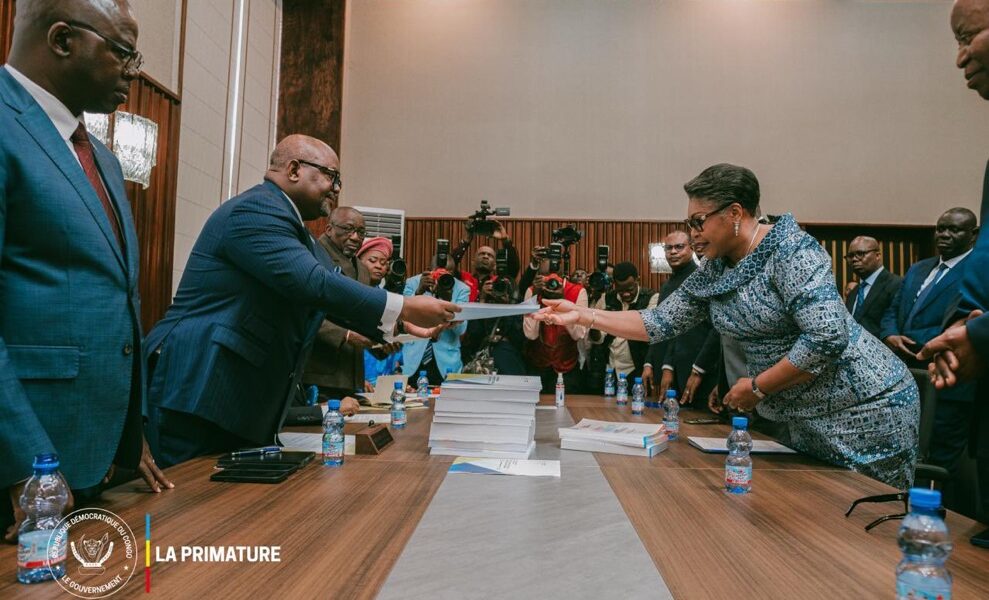
DR Congo: 2027 Draft Budget Bill Deposited in National Assembly
Prime Minister Judith Suminwa Tuluka of the Democratic Republic of Congo (DRC) formally submitted the draft 2027 finance bill, valued at 56.929 billion Congolese Francs (approximately 24.8 billion US dollars), along with the 2025 accountability bill, to the Bureau of the National Assembly on Tuesday, September 15, 2026. This action initiates the crucial parliamentary review process for the nation's financial blueprint for the upcoming fiscal year and provides a detailed account of public expenditures from a prior period.
This submission holds profound legal and economic significance for all stakeholders in the DRC. The draft 2027 budget, with its substantial valuation, will dictate the government's fiscal policy, revenue generation strategies, and allocation of resources across various sectors, from infrastructure development to social services and defense. This directly impacts the operational environment for businesses, influencing tax burdens, public procurement opportunities, and regulatory frameworks. The accompanying 2025 accountability bill is equally vital, as it provides a mechanism for parliamentary oversight of past government spending, fostering transparency and potentially highlighting areas for financial reform or improved governance.
The legal framework governing this process is enshrined in the DRC Constitution and specific organic laws. Article 126 of the Constitution of the Democratic Republic of Congo mandates the government to present the finance bill to the National Assembly, which then holds the constitutional prerogative to examine, amend, and ultimately adopt it. The "Loi Organique relative aux finances publiques" (Organic Law on Public Finance) further elaborates on the detailed procedures for the preparation, presentation, and parliamentary scrutiny of both the annual finance bill and the accountability report. This legal structure ensures that the executive's financial proposals are subject to rigorous legislative review, upholding democratic principles and fiscal responsibility. The key parties involved in this stage are Prime Minister Judith Suminwa Tuluka, representing the executive branch, and the Bureau of the National Assembly, which receives the documents on behalf of the legislative body.
For legal professionals and businesses operating within or engaging with the DRC, close attention to the parliamentary debate and subsequent amendments to the draft 2027 finance bill is paramount. Attorneys should proactively advise clients on potential changes in tax legislation, public spending priorities, and sector-specific regulations that may emerge from the budget's final provisions. Businesses should assess how these fiscal policies might affect their operations, investment strategies, and market opportunities. Furthermore, the 2025 accountability bill offers valuable insights into the government's financial management and compliance, which can inform risk assessments and due diligence for future engagements. The outcome of the legislative process, including any modifications to the proposed budget, is not yet reported.
How does this affect you?
Get an AI analysis of this article grounded in your jurisdictions, practice areas, and any policy documents you've uploaded to Wansom.
Finish Reading the Full Story and the Expert Analysis.
Get the latest legal & regulatory intelligence in DR Congo
Wansom is AI and can make mistakes.