
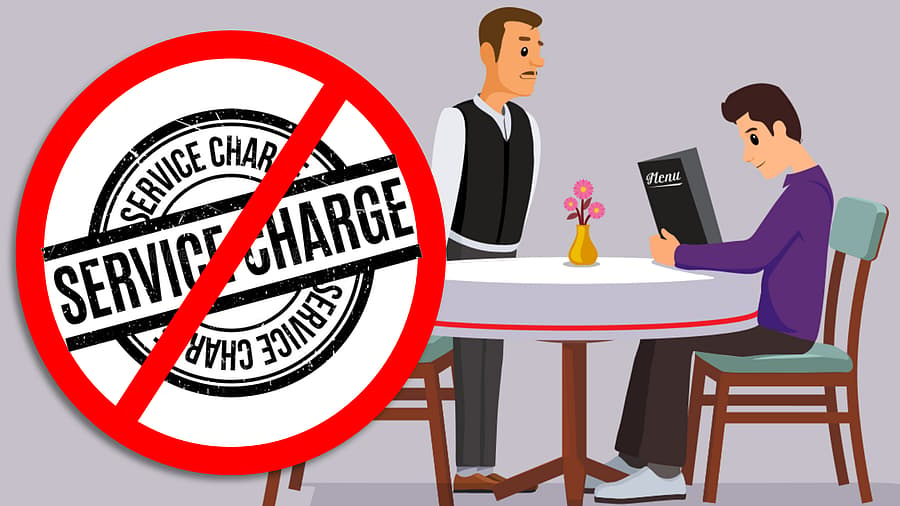
Delhi High Court: No Interim Relief on Mandatory Service Charge Ban
Summary
- The Delhi High Court clarified that no interim relief has been granted to restaurants and hotels against the ban on mandatory service charges.
- A Division Bench, including Acting Chief Justice Nitin Wasudeo Sambre, confirmed the single-judge's March 28, 2025 order remains in effect.
- The court's statement followed concerns raised by the Additional Solicitor General about continued mandatory service charges in some establishments.
- The ban is based on July 2022 CCPA guidelines, which prohibit automatic service charges and were issued after numerous consumer complaints.
- Appeals filed by the NRAI and FHRAI against the single-judge's order have been admitted for hearing, but the prohibition remains active.
Court Reaffirms Ban on Mandatory Service Charges
Where is the interim relief? Where is the interim relief in their favour? We have not granted any interim prayer.
The Delhi High Court recently issued a definitive clarification, asserting that no interim relief has been granted to restaurants or hotels challenging the prohibition on mandatory service charges. This statement came from a Division Bench, presided over by Acting Chief Justice Nitin Wasudeo Sambre and Justice Sanjay Sharma, who explicitly stated that the single-judge's order from March 28, 2025, remains in full effect without any temporary suspension.
The court's clarification was prompted by Additional Solicitor General (ASG) Chetan Sharma, representing the government, who informed the bench that some restaurants were reportedly still imposing mandatory service charges. Sharma highlighted that this practice directly contravened the single-judge's ruling, which had upheld the Central Consumer Protection Authority (CCPA) guidelines issued in 2022. These guidelines specifically forbid hotels and restaurants from automatically or by default adding service charges to food bills. The bench firmly responded to the ASG's submission, with ACJ Sambre remarking, "Ball is in your court. It is for you to take action. We can't take action. Where is the interim relief? Where is the interim relief in their favour? We have not granted any interim prayer."
Regulatory Framework and Consumer Protection
The underlying regulatory framework for this directive stems from comprehensive guidelines issued by the Central Consumer Protection Authority (CCPA) in July 2022. These CCPA service charge guidelines India explicitly prohibit the forcible collection of service charges by hospitality establishments. The move by the CCPA was a direct response to a significant volume of consumer complaints regarding the practice of restaurants and hotels automatically adding a service charge, typically ranging from 5 to 20 percent, to customers' bills.
The single-judge's order, which the Division Bench confirmed has not been stayed, effectively validated these consumer protection measures. This means that the restaurants hotels service charge ban, as outlined by the CCPA, is legally enforceable. The Delhi High Court's recent pronouncement reinforces the stance that consumers should not be compelled to pay a service charge, and any such levy must be entirely voluntary, if applied at all.
Ongoing Legal Challenges and Implications
The Delhi High Court's recent session involved hearing appeals filed by two prominent industry bodies: the National Restaurant Association of India (NRAI) and the Federation of Hotel and Restaurant Associations of India (FHRAI). These organizations are challenging the single-judge's order that upheld the CCPA's prohibition on mandatory service charges. The court formally admitted these NRAI FHRAI service charge appeal cases for further hearing.
Despite the admission of these appeals, the Delhi High Court service charge clarification underscores that the legal status quo remains unchanged. The absence of any interim relief means that the ban on mandatory service charges continues to be fully operative across India. This situation places a clear onus on hospitality businesses to adhere to the existing guidelines, as non-compliance could lead to consumer complaints and potential regulatory action under India consumer protection laws, irrespective of the ongoing legal proceedings.
Practical Implications
Lawyers advising hospitality clients must ensure continued compliance with the CCPA guidelines prohibiting mandatory service charges, as the Delhi High Court has confirmed no interim relief has been granted to industry associations. This means the ban remains fully in effect, and non-compliance could lead to consumer complaints and regulatory action, despite ongoing appeals.
Source
How does this affect you?
Get an AI analysis of this article grounded in your jurisdictions, practice areas, and any policy documents you've uploaded to Wansom.
Finish Reading the Full Story and the Expert Analysis.
Get the latest legal & regulatory intelligence in India
Wansom is AI and can make mistakes.