
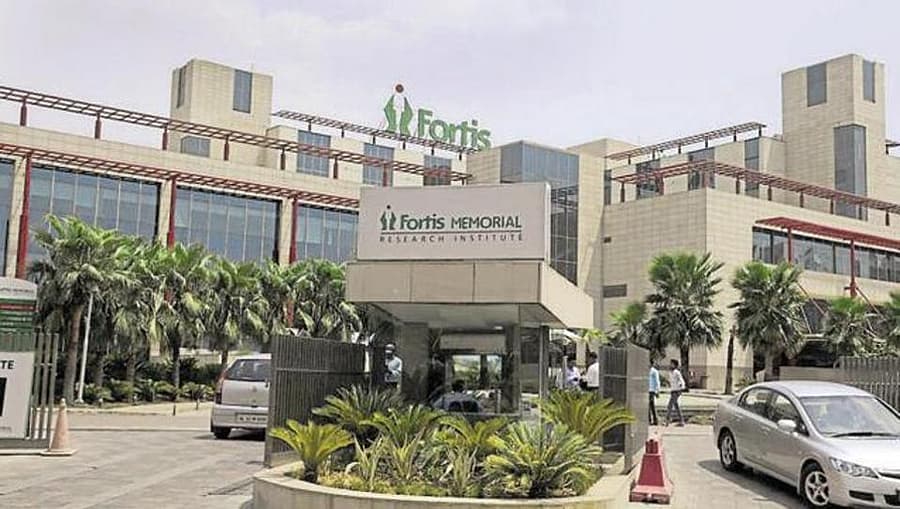
Delhi High Court Fortis Forensic Audit: Tracing Assets for Daiichi Award
Summary
- The Delhi High Court has ordered a comprehensive forensic audit to trace the dissipation of Fortis Healthcare Limited (FHL) shares and other assets.
- This audit aims to help Japanese pharmaceutical company Daiichi Sankyo recover a ₹2,562 crore arbitral award against former Ranbaxy promoters Malvinder Mohan Singh and Shivinder Mohan Singh.
- Justice Subramonium Prasad appointed S Ramanand Aiyar & Co as the auditor, mandating completion within six months to reconstruct transactions and identify involved parties.
- The dispute originated from Daiichi's 2008 acquisition of Ranbaxy and allegations of concealed US regulatory investigations, leading to a 2016 Singapore tribunal award.
- Despite nearly a decade of enforcement proceedings and a 2022 Supreme Court directive for forensic audits, Daiichi has yet to receive the awarded amount.
Court Mandates Extensive Forensic Audit
For lawyers advising on arbitral award enforcement or asset recovery in India, this decision highlights the court's willingness to employ comprehensive investigative tools, such as forensic audits, to ensure justice is served.
The Delhi High Court has issued a significant directive, ordering a comprehensive forensic audit aimed at uncovering the dissipation of assets, specifically shares in Fortis Healthcare Limited (FHL). This crucial step is intended to facilitate the recovery of an arbitral award secured by the Japanese pharmaceutical giant Daiichi Sankyo against former Ranbaxy promoters Malvinder Mohan Singh and Shivinder Mohan Singh. Justice Subramonium Prasad, overseeing the case of Daichii Sankyo Vs Malvinder Mohan Singh, appointed the chartered accountancy firm S Ramanand Aiyar & Co to conduct this detailed investigation.
The court has set a stringent timeline, requiring the appointed auditor to complete the entire exercise within six months. The scope of this audit is broad, encompassing the reconstruction of the complete chain of transactions related to the FHL shares and other assets. Furthermore, it mandates the identification of all individuals, companies, banks, and financial institutions that played a role in the depletion of these assets, which were originally available to satisfy the substantial arbitral award.
Decade-Long Enforcement Battle
This latest judicial intervention stems from a protracted legal battle that originated with Daiichi's acquisition of Ranbaxy from the Singh brothers in 2008. The core of the dispute involved allegations that the brothers deliberately concealed information regarding ongoing US regulatory investigations. This led to a Singapore tribunal issuing an arbitral award of ₹2,562 crore in favor of Daiichi in 2016. However, the enforcement of this award in India has been fraught with challenges.
Despite assurances from various courts during the enforcement proceedings, the value of Fortis shares, which were identified as assets available for recovery, experienced a sharp decline. The complexities of the case escalated to the Supreme Court, which in 2022, found the Singh brothers guilty of contempt of court. Crucially, the Supreme Court also directed the Delhi High Court to explore the possibility of forensic audits into transactions involving banks, financial institutions, FHL, and RHT Health Trust. This specific directive from the apex court directly paved the way for the initiation of the current litigation and the subsequent order for a comprehensive audit, highlighting the persistent difficulties Daiichi has faced in recovering the awarded amount over nearly a decade.
Tracing Asset Dissipation
The Delhi High Court's order for a forensic audit underscores a determined effort to penetrate layers of complex financial maneuvers. Justice Prasad's directive is not merely for a superficial review but for a deep dive into the financial history surrounding the Fortis shares and other assets. The chosen auditor, S Ramanand Aiyar & Co, is tasked with meticulously reconstructing every transaction, aiming to create a clear picture of how these assets were moved, transferred, or otherwise diminished.
This comprehensive approach is vital for identifying all entities, whether individuals or corporate bodies, that participated in or facilitated the asset depletion. By pinpointing the involvement of banks and financial institutions, the court seeks to understand the full ecosystem through which the assets were allegedly dissipated. This level of scrutiny is particularly relevant in cases involving high-net-worth individuals and intricate corporate structures, where assets can be strategically concealed across multiple jurisdictions and entities. The court's intent is to leave no stone unturned in tracing the true beneficiaries and facilitators of the asset movements.
Implications for Award Enforcement
This ruling by the Delhi High Court sets a significant precedent for the enforcement of arbitral awards and asset recovery efforts within India. It signals the judiciary's robust stance against sophisticated asset concealment tactics, particularly in complex corporate disputes involving substantial sums and prominent individuals. For lawyers advising on arbitral award enforcement or asset recovery in India, this decision highlights the court's willingness to employ comprehensive investigative tools, such as forensic audits, to ensure justice is served.
The persistent inability of Daiichi Sankyo to recover its awarded amount, despite nearly ten years of enforcement proceedings and a Supreme Court intervention, underscores the challenges faced by award creditors. The Delhi High Court's proactive measure to order a detailed forensic audit demonstrates a commitment to overcoming these hurdles, ensuring that arbitral awards are not rendered nugatory by asset dissipation. This approach strengthens the enforceability framework in India, offering a powerful mechanism for creditors to trace and recover assets, even when faced with intricate financial structures and alleged corporate fraud.
Practical Implications
Lawyers advising on arbitral award enforcement or asset recovery in India should note this ruling as a strong precedent for the Delhi High Court's willingness to order comprehensive forensic audits to trace dissipated assets, particularly in complex corporate disputes involving high-net-worth individuals. This indicates a robust judicial approach to ensuring award enforceability against sophisticated asset concealment tactics.
Source
How does this affect you?
Get an AI analysis of this article grounded in your jurisdictions, practice areas, and any policy documents you've uploaded to Wansom.
Finish Reading the Full Story and the Expert Analysis.
Wansom is AI and can make mistakes.