
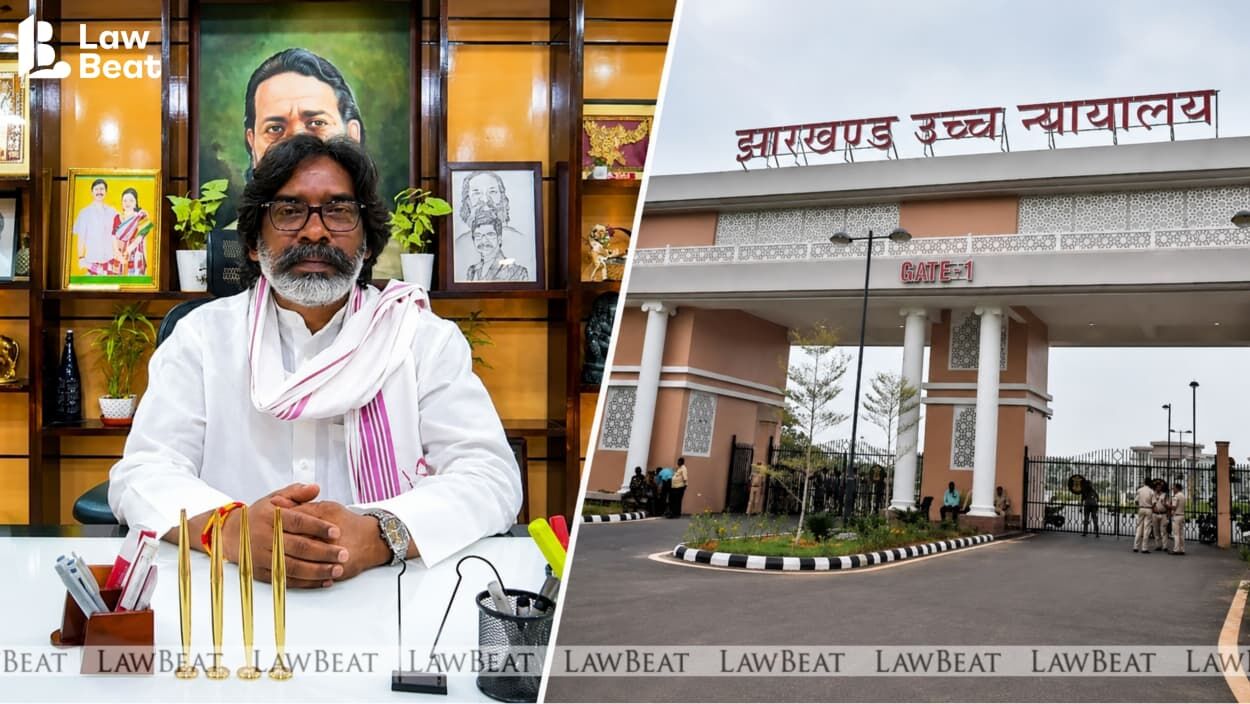
Hemant Soren: Jharkhand HC PMLA Discharge Plea Rejection Challenged
Summary
- Jharkhand Chief Minister Hemant Soren has challenged the rejection of his discharge plea in a money laundering case before the Jharkhand High Court.
- The Special PMLA Court in Ranchi had ruled in June 2026 that the Enforcement Directorate's evidence established a prima facie case against Soren.
- The case involves allegations of illegal acquisition and control of an 8.86-acre land parcel in Ranchi's Bariatu area.
- The ED's evidence includes witness statements, such as a caretaker who saw Soren visiting the property, and documents found with a revenue official.
- Soren's appeal questions the lower court's finding of a prima facie case, particularly regarding the sufficiency of evidence and witness reliability.
Challenge to Discharge Plea Rejection
Soren's challenge to the PMLA discharge application rejection now places the onus on the High Court to review the evidentiary standards applied at the preliminary stage of the proceedings.
Jharkhand Chief Minister Hemant Soren has initiated proceedings before the Jharkhand High Court, challenging a recent decision by the Special PMLA Court in Ranchi. This legal action, filed on September 1, 2026, contests the Special PMLA Court's June 2026 order which denied Soren's application for discharge in a significant money laundering case. The core of Soren's appeal focuses on the lower court's determination that the evidence presented by the Enforcement Directorate (ED) was sufficient to establish a prima facie case against him.
The ongoing investigation by the Enforcement Directorate centers on allegations of illegal land acquisition. Specifically, the case involves an 8.86-acre parcel of land situated in Ranchi's Bariatu area. The ED contends that this property was unlawfully acquired and subsequently controlled by Hemant Soren, forming the basis of the money laundering charges. Soren's challenge to the PMLA discharge application rejection now places the onus on the High Court to review the evidentiary standards applied at the preliminary stage of the proceedings.
The Special PMLA Court's Rationale
In its June 8, 2026, order, Special PMLA Judge Yogesh Kumar meticulously outlined the parameters of the court's review at the discharge stage. The court clarified that its examination was strictly limited to ascertaining the existence of a prima facie case, rather than delving into a full determination of guilt beyond reasonable doubt. After considering the primary complaint, supplementary complaints, statements recorded under Section 50 of the Prevention of Money Laundering Act (PMLA), various documentary evidence, and the surrounding circumstances presented by the prosecution, the court concluded that the material on record went beyond mere suspicion.
The Special PMLA Court, Ranchi, explicitly stated that the collected evidence raised a "prima facie case" against Soren, who was identified as A-2 in the proceedings. Judge Kumar further elaborated that a detailed appreciation of evidence or the resolution of disputed factual questions was inappropriate at this preliminary juncture, reserving such matters for the trial phase. This judicial stance underscores the distinct evidentiary thresholds applied at different stages of a PMLA investigation in India.
Enforcement Directorate's Evidentiary Basis
The Enforcement Directorate's case against Hemant Soren is constructed upon a combination of circumstantial evidence and critical witness testimonies. The agency alleges that Soren engaged in the unlawful acquisition and control of the 8.86-acre land parcel. Central to the ED's submission are statements from key individuals, including Circle Officer Manoj Kumar, Soren's former press advisor Abhishek Prasad, also known as Pintu, and Santosh Munda, who served as a caretaker for the disputed property.
Furthermore, the ED has presented documentary evidence recovered during its investigation, which includes property records and other materials purportedly found in the possession of revenue official Bhanu Pratap Prasad. The agency claims that documents directly pertaining to the 8.86-acre property were discovered within a file in Prasad's official chamber, with records and endorsements allegedly connecting the land to Soren. The Special PMLA Court specifically highlighted the statement of Santosh Munda, who reportedly testified to working as a caretaker and laborer during the construction of a boundary wall around the land, and also claimed to have observed Soren and his wife, Kalpana Soren, visiting the site on multiple occasions. The court interpreted Munda's statement as indicative of Soren exercising control over the property, thereby supporting the allegation of conscious possession and beneficial enjoyment.
Legal Scrutiny and Precedent
The challenge brought by Hemant Soren to the Jharkhand High Court represents a significant development in the ongoing Hemant Soren money laundering case. This appeal will provide the High Court with an opportunity to meticulously review the standards applied by the Special PMLA Court in determining a prima facie case, particularly concerning the sufficiency and nature of evidence required at the discharge stage. The court's decision will offer crucial insights into how judicial bodies assess the Enforcement Directorate's reliance on witness statements, circumstantial evidence, and the handling of defence arguments regarding witness credibility and alleged hearsay.
The outcome of this Jharkhand High Court PMLA challenge holds potential implications for future PMLA investigations and the scope of discharge pleas in India. It will be closely watched by legal practitioners for any precedents that may emerge regarding the threshold for establishing a prima facie case under the PMLA, especially concerning the judicial scrutiny of evidence standards and the reliance on witness accounts. This case could refine understanding of when a PMLA discharge application rejection is legally sound, particularly in complex land acquisition money laundering cases.
Practical Implications
This development offers insight into the judicial scrutiny of 'prima facie case' findings by PMLA courts at the discharge stage, particularly concerning evidence standards and witness reliance. Lawyers advising clients in PMLA investigations should monitor this case for potential precedents on challenging ED's evidence and the scope of discharge pleas.
Source
How does this affect you?
Get an AI analysis of this article grounded in your jurisdictions, practice areas, and any policy documents you've uploaded to Wansom.
Finish Reading the Full Story and the Expert Analysis.
Wansom is AI and can make mistakes.