
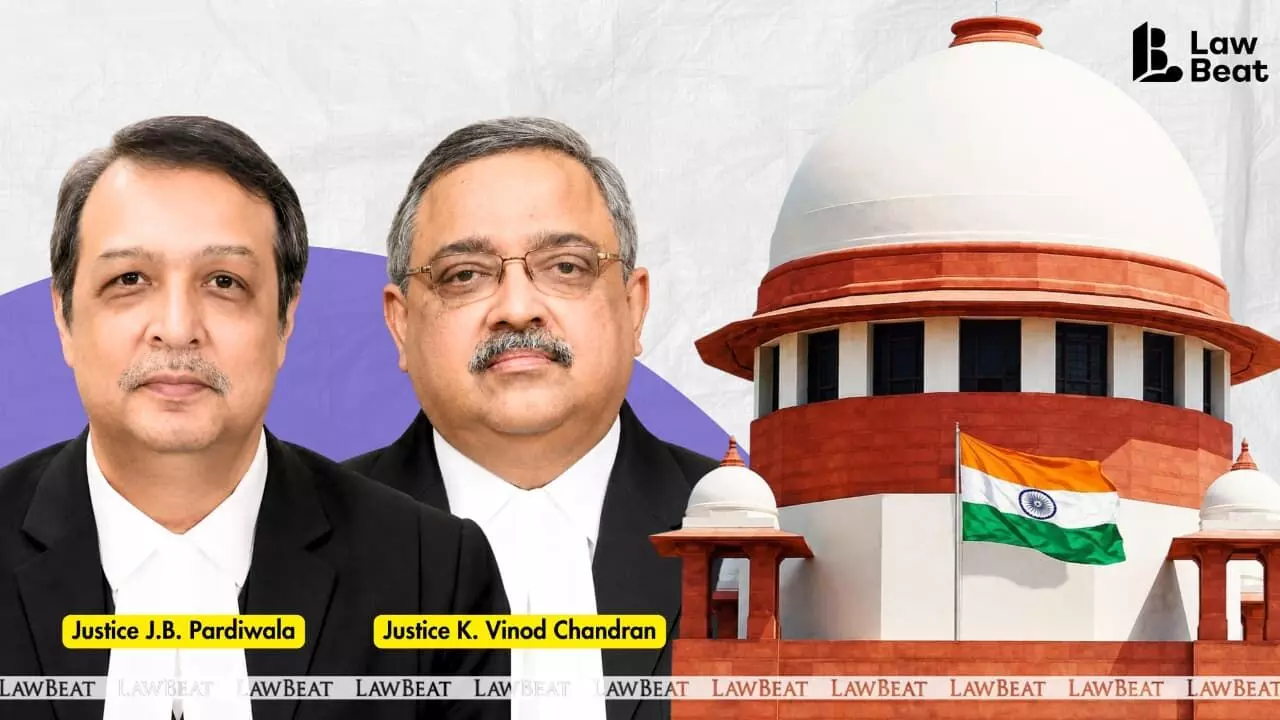
Supreme Court of India: Non-Party Can Appeal Consent Decree Affecting Rights
Summary
- India's Supreme Court clarified that non-parties can challenge consent decrees if their independent legal rights are prejudicially affected.
- Such challenges require the non-party to establish a prima facie case of prejudice and obtain leave from the appellate court.
- The statutory bar on appealing consent decrees under Section 96(3) and Order XXIII Rules 3 and 3A CPC applies only to the original parties to the compromise.
- The limitation period for a non-party's challenge is not fixed from the decree date but depends on when they reasonably gained knowledge of the decree and its prejudice.
- Appellate courts can grant interim protection to preserve the subject matter during the pendency of such appeals.
The Supreme Court's Landmark Ruling
When a non-party successfully demonstrates a prima facie case of prejudice, the court is obligated to strike a balance between preventing irreparable harm or the proliferation of legal proceedings and upholding the rights of the original parties involved.
The Supreme Court of India has recently clarified the circumstances under which an individual not directly involved in a legal dispute can challenge a consent decree. This significant ruling establishes that non-parties are not automatically barred from appealing such decrees, particularly when their independent legal rights are adversely affected. The decision came as the Court dismissed an appeal filed by Girishbhai Natwarlal Patel, which contested a High Court's decision to permit an appeal by respondents who were not original parties to a compromise.
The High Court in question had not only granted leave for these non-parties (respondent Nos. 1-9) to appeal but also condoned an 11-year delay in filing and maintained an interim injunction throughout the appeal's pendency. Patel had argued that an appeal under Section 96 of the Code of Civil Procedure, 1908 (CPC) is not maintainable against a consent decree and that a non-party to a compromise could not establish a valid cause of action to challenge its legality. The Supreme Court, however, rejected these arguments, underscoring that the statutory bar on challenging consent decrees applies specifically to the parties who agreed to the compromise.
Legal Framework for Non-Party Challenges
The Supreme Court's pronouncement clarifies the application of Section 96(3) read with Order XXIII Rules 3 and 3A of the CPC, which typically restricts appeals against consent decrees. The Court, comprising Justices J B Pardiwala and K Vinod Chandran, emphasized that this statutory prohibition is intended for the parties directly involved in the compromise, acting as an estoppel solely for them. It cannot be extended to a third party who asserts an independent legal interest that is prejudicially impacted by the decree. Therefore, a stranger to a compromise decree is not precluded from challenging it under these provisions.
However, the Court also stipulated that merely being a non-party does not grant an unfettered right to appeal. To successfully challenge a compromise decree, the applicant must first demonstrate a prima facie case that the decree detrimentally affects their distinct rights or interests. Subsequently, they must obtain explicit leave from the appellate court to proceed with the appeal. The Court further noted that a person who was neither a participant in the original proceedings nor a party to the compromise cannot be presumed to have given their consent to the decree simply because others agreed to it.
Crucial Procedural Nuances and Limitations
Beyond establishing the right to appeal, the Supreme Court also provided critical guidance on procedural aspects, particularly concerning the limitation period for such challenges. The Court ruled that the limitation period for a non-party challenging a consent decree cannot be calculated rigidly from the date the decree was issued. Instead, the court must consider the point at which the aggrieved individual gained, or could reasonably have gained, knowledge of the decree and the specific prejudice it caused. This flexible approach acknowledges that non-parties may not be immediately aware of decrees affecting their rights.
Furthermore, the Bench observed that an appellate court possesses the authority to grant interim protection to safeguard the subject matter of the dispute while the appeal is being adjudicated. When a non-party successfully demonstrates a prima facie case of prejudice, the court is obligated to strike a balance between preventing irreparable harm or the proliferation of legal proceedings and upholding the rights of the original parties involved. In the Girishbhai Natwarlal Patel case, the Court found that the circumstances surrounding the land transaction raised serious questions regarding how the appellant claimed to have acquired the property, noting doubts about the subsisting right or title of Purshottam Punjabhai's legal heirs to convey. The appellant had allegedly acted under a power of attorney from these original defendants.
Implications for Legal Practice and Due Diligence
This landmark decision significantly impacts legal professionals advising on settlements and property matters in India, particularly those involving consent decrees. The ruling clarifies that the risk of challenges from non-parties is a tangible consideration, necessitating thorough due diligence on potential third-party interests during the settlement process. Lawyers must now proactively assess whether a proposed compromise decree could prejudicially affect any independent legal rights of individuals or entities not directly involved in the primary litigation.
The Court's emphasis on establishing prima facie prejudice and the flexible approach to the limitation period means that even long-standing consent decrees could be susceptible to challenge if a non-party can demonstrate a legitimate, previously unknown impact on their rights. This framework for assessing when a non-party can successfully appeal, requiring proof of prejudice to independent legal rights and a flexible approach to limitation, necessitates thorough due diligence on potential third-party interests. This ruling ensures that justice is accessible to those whose rights are genuinely affected by agreements made between others, reinforcing the principle that legal agreements should not inadvertently harm innocent third parties.
Practical Implications
Lawyers advising on settlements or property matters involving consent decrees in India must now consider the clarified risk of challenges from non-parties. This ruling provides a framework for assessing when a non-party can successfully appeal, requiring proof of prejudice to independent legal rights and a flexible approach to limitation, which necessitates thorough due diligence on potential third-party interests.
Source
How does this affect you?
Get an AI analysis of this article grounded in your jurisdictions, practice areas, and any policy documents you've uploaded to Wansom.
Finish Reading the Full Story and the Expert Analysis.
Get the latest legal & regulatory intelligence in India
Wansom is AI and can make mistakes.