
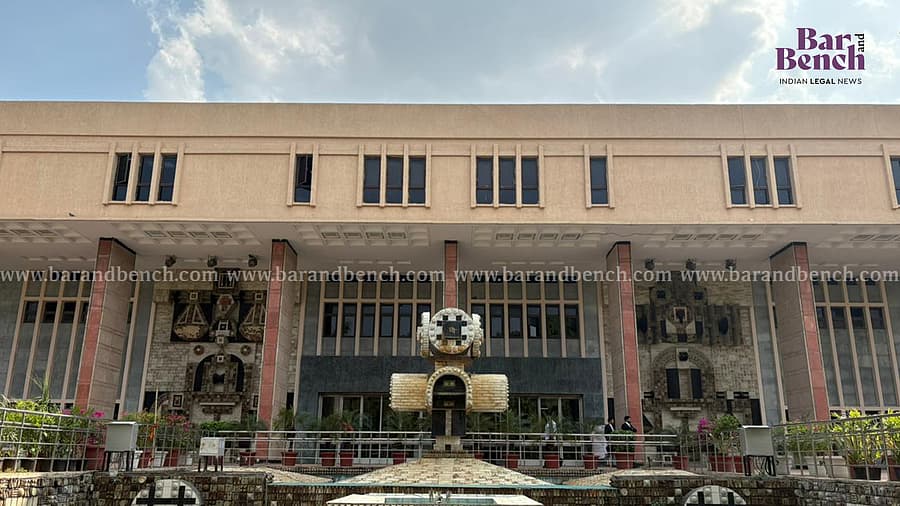
Delhi High Court: Denies Kshatriya Karni Sena Urgent Listing
Summary
- The Delhi High Court declined to urgently list a plea by the Kshatriya Karni Sena challenging the Delhi Police's denial of permission for an anti-quota protest.
- The court instructed the Kshatriya Karni Sena to formally file their petition before it could be listed for hearing.
- The proposed protest, scheduled for September 20 at Jantar Mantar, targets reservation policies and the University Grants Commission (Promotion of Equity in Higher Education Institutions) Regulations, 2026, which have been stayed by the Supreme Court.
- The Delhi Police had initially denied permission for a September 6 protest due to preparations for the BRICS Summit.
- Previous court interventions had led to the organization rescheduling the protest and a directive for the police to reconsider a fresh application for September 20.
Recent Court Development
The court instructed the Kshatriya Karni Sena to formally file their petition first, after which it would be scheduled for listing on the following day.
The Delhi High Court, on Wednesday, declined to grant an urgent listing for a petition filed by the Kshatriya Karni Sena. The organization had sought immediate judicial intervention to challenge the Delhi Police's refusal to permit an anti-quota protest scheduled for September 20 at Jantar Mantar. The proposed demonstration was intended to voice opposition to existing reservation policies and the University Grants Commission (Promotion of Equity in Higher Education Institutions) Regulations, 2026, which have been stayed by the Supreme Court.
A bench comprising Chief Justice Devendra Kumar Upadhyaya and Justice Tejas Karia heard the request. However, the court instructed the Kshatriya Karni Sena to formally file their petition first, after which it would be scheduled for listing on the following day. This decision underscores the procedural requirements for seeking expedited judicial review, even in matters concerning public demonstrations.
Chronology of the Protest Application
This recent development follows a series of attempts by the Kshatriya Karni Sena to secure permission for their protest. Initially, the organization had applied to hold the demonstration at Jantar Mantar on September 6. However, the Delhi Police denied this initial request on August 28, citing extensive preparations underway for the BRICS Summit in the national capital as the reason for their refusal.
Following this initial denial, Dr. Raj Shekhawat, the president of the Kshatriya Karni Sena, approached the Delhi High Court to challenge the police's decision. On September 3, Justice Amit Mahajan heard the matter and advised the petitioner to consider altering the proposed date for the protest. Responding to this judicial suggestion, the organization subsequently decided to reschedule their demonstration for September 20.
Further judicial engagement occurred on September 7, when Justice Swarana Kanta Sharma issued a directive to the Delhi Police. This order mandated the police to review a fresh application from the Kshatriya Karni Sena specifically for the rescheduled September 20 protest, indicating a path forward for the organization's plans despite prior rejections.
Procedural Requirements for Judicial Intervention
Despite the prior judicial directives and the organization's efforts to comply by changing the protest date, the Delhi High Court's recent decision highlights the critical importance of adhering to formal court procedures. The urgent listing for the Kshatriya Karni Sena's plea was denied because the petition itself had not yet been formally filed with the court. The bench made it clear that proper documentation and filing are prerequisites for a matter to be taken up, even for expedited consideration.
This procedural stance by the court emphasizes that while the right to protest is fundamental, the process for challenging administrative denials of protest permission must follow established legal channels. The court's directive ensures that all necessary paperwork is in order before judicial time is allocated, regardless of the urgency perceived by the petitioner or the nature of the anti-quota protest against the UGC Regulations 2026.
Implications for Public Demonstrations
The outcome of this urgent listing request by the Kshatriya Karni Sena offers a significant lesson for organizations planning public demonstrations and seeking judicial recourse for protest denial. It underscores the procedural challenges and judicial discretion involved when seeking urgent court intervention for protest permissions in India, particularly regarding the need for proper filing before a matter is listed.
This instance reinforces that even with a history of engagement with the courts and police regarding permission for a demonstration at Jantar Mantar, the fundamental requirement of a properly filed petition remains paramount. Organizations must ensure all legal documentation is complete and submitted according to court rules to avoid delays and ensure their pleas are considered in due course.
Practical Implications
This development underscores the procedural challenges and judicial discretion involved when seeking urgent court intervention for protest permissions in India, particularly regarding the need for proper filing before a matter is listed. Lawyers advising clients on public demonstrations should anticipate such procedural hurdles and ensure all filings are complete to avoid delays.
Source
How does this affect you?
Get an AI analysis of this article grounded in your jurisdictions, practice areas, and any policy documents you've uploaded to Wansom.
Finish Reading the Full Story and the Expert Analysis.
Get the latest legal & regulatory intelligence in India
Wansom is AI and can make mistakes.