
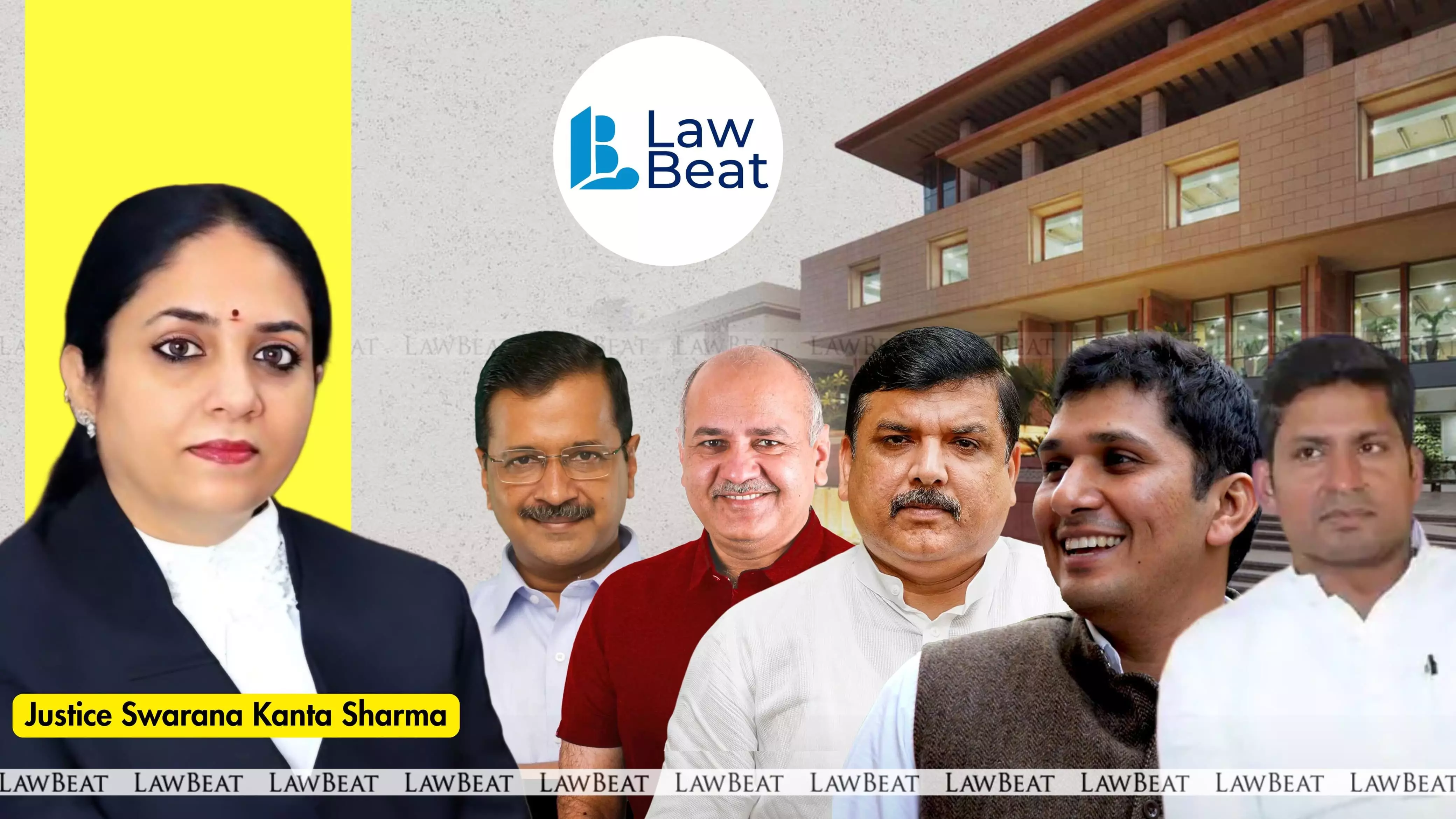
Delhi HC: Kejriwal, AAP Leaders Face Deadline in Justice Sharma Contempt
Summary
- The Delhi High Court issued a final three-week deadline for Arvind Kejriwal and other AAP leaders to file replies in a suo motu criminal contempt case.
- The court warned that their right to file a defense would be closed if they fail to comply, stating, "You are taking us for a ride."
- The contempt proceedings, initiated by Justice Swarana Kanta Sharma, concern alleged social media attacks against her during the excise policy case.
- This warning follows previous missed deadlines and complaints about incomplete records, which the court's Registry has since addressed.
- The case involves multiple AAP leaders, including Manish Sisodia, Sanjay Singh, and Saurabh Bhardwaj, and stems from alleged "defamatory and vilifying" remarks.
Recent Court Directive
The Delhi High Court's firm stance in the Justice Swarana Kanta Sharma contempt case highlights the critical importance of adhering to court-mandated deadlines, particularly in matters involving alleged attacks on the judiciary.
The Delhi High Court recently issued a stern warning to Arvind Kejriwal and several other prominent Aam Aadmi Party (AAP) leaders, expressing profound frustration over their repeated failure to submit replies in ongoing suo motu criminal contempt proceedings. These proceedings were initiated following alleged social media attacks directed at Justice Swarana Kanta Sharma. The bench explicitly stated, "You are taking us for a ride. We have a report from the registry that Court records have been served to you. Now you file your replies; otherwise, we will be closing your right."
This directive marked a final opportunity, granting the respondents a three-week period to file their responses. The court made it unequivocally clear that no further extensions would be granted, and their right to present a defense would be closed if they failed to comply within the stipulated timeframe. This recent development came after the respondents had already missed an earlier four-week deadline for filing their replies in the Justice Swarana Kanta Sharma contempt case.
Genesis of the Contempt Case
The contempt action, formally titled 'Court on its own motion v Arvind Kejriwal and Ors', was initiated by Justice Swarana Kanta Sharma herself. It targets several prominent AAP figures, including Arvind Kejriwal, Manish Sisodia, Sanjay Singh, Durgesh Pathak, Vinay Mishra, Saurabh Bhardwaj, Gopal Rai, and journalist and Chief Spokesperson of the Cockroach Janta Party (CJP) Saurav Das. The core of the allegations revolves around a purported social media campaign designed to defame and vilify Justice Swarana Kanta Sharma.
These alleged remarks emerged while Justice Sharma was presiding over the Central Bureau of Investigation's challenge to the discharge of Kejriwal and other accused in the excise policy case. Following the emergence of these allegations, Justice Sharma not only initiated the Arvind Kejriwal contempt proceedings but also mandated the transfer of the excise policy case to a different bench, citing the involvement of Kejriwal and Sisodia as accused parties. The Delhi High Court appointed Senior Advocate Rajdipa Behura as Amicus Curiae in May to assist with the contempt petition. Notices were issued to Gopal Rai and Saurav Das in May, with subsequent notices to Kejriwal, Sisodia, Sanjay Singh, Durgesh Pathak, Vinay Mishra, and Saurabh Bhardwaj on May 19.
Procedural History and Judicial Stance
The foundation for these Delhi High Court suo motu contempt proceedings traces back to a judgment issued on May 14, 2026, in CRL.REV.P. 134/2026, titled Central Bureau of Investigation vs. Kuldeep Singh and Ors. This particular judgment referenced social media posts and other electronic and published records as part of its findings. A significant point of contention arose when Kejriwal, Sisodia, and Durgesh Pathak sought Justice Sharma’s recusal from the excise policy case.
This application was firmly rejected by the judge on April 20, who underscored that litigants are not permitted to undermine judicial authority or "sow seeds of mistrust" against the institution. The alleged social media posts targeting the judge surfaced subsequent to this recusal attempt, directly leading to the initiation of the contempt proceedings. Furthermore, Justice Sharma took cognizance of letters penned by Kejriwal, Sisodia, and Pathak indicating an intention to boycott proceedings, alongside a video released by Kejriwal explaining the rationale behind this boycott. Prior to the latest warning, the court had directed its Registry to supply the alleged contemnors with the necessary records, following complaints from their legal representatives that the initial documentation provided was incomplete. An earlier order had explicitly allowed the respondents to contact the concerned Deputy Registrar to obtain all relevant documents and had granted them a four-week period to file their replies, with the matter subsequently listed for November 16.
Implications for Legal Practice
The Delhi High Court's firm stance in the Justice Swarana Kanta Sharma contempt case highlights the critical importance of adhering to court-mandated deadlines, particularly in matters involving alleged attacks on the judiciary. The court's warning that the right to file replies would be closed underscores the severe repercussions of procedural non-compliance. For legal practitioners, this case serves as a stark reminder that failure to meet judicial timelines or to comply with directions, such as filing responses, can severely prejudice a client's defense.
The court's explicit reprimand and refusal to grant further extensions demonstrate an intolerance for delays, reinforcing the principle that judicial processes must be respected and followed diligently. This outcome emphasizes that lawyers representing clients in such sensitive contempt proceedings must ensure meticulous adherence to all procedural requirements to safeguard their client's ability to present their case effectively, especially when dealing with AAP leaders Delhi High Court contempt matters.
Practical Implications
Lawyers representing clients in contempt proceedings, especially those involving alleged attacks on the judiciary, must ensure strict adherence to court-mandated deadlines. Failure to file replies or comply with directions can result in the right to present a defense being closed, severely prejudicing the client's position and underscoring the court's intolerance for procedural delays in such matters.
Source
How does this affect you?
Get an AI analysis of this article grounded in your jurisdictions, practice areas, and any policy documents you've uploaded to Wansom.
Finish Reading the Full Story and the Expert Analysis.
Get the latest legal & regulatory intelligence in India
Wansom is AI and can make mistakes.