
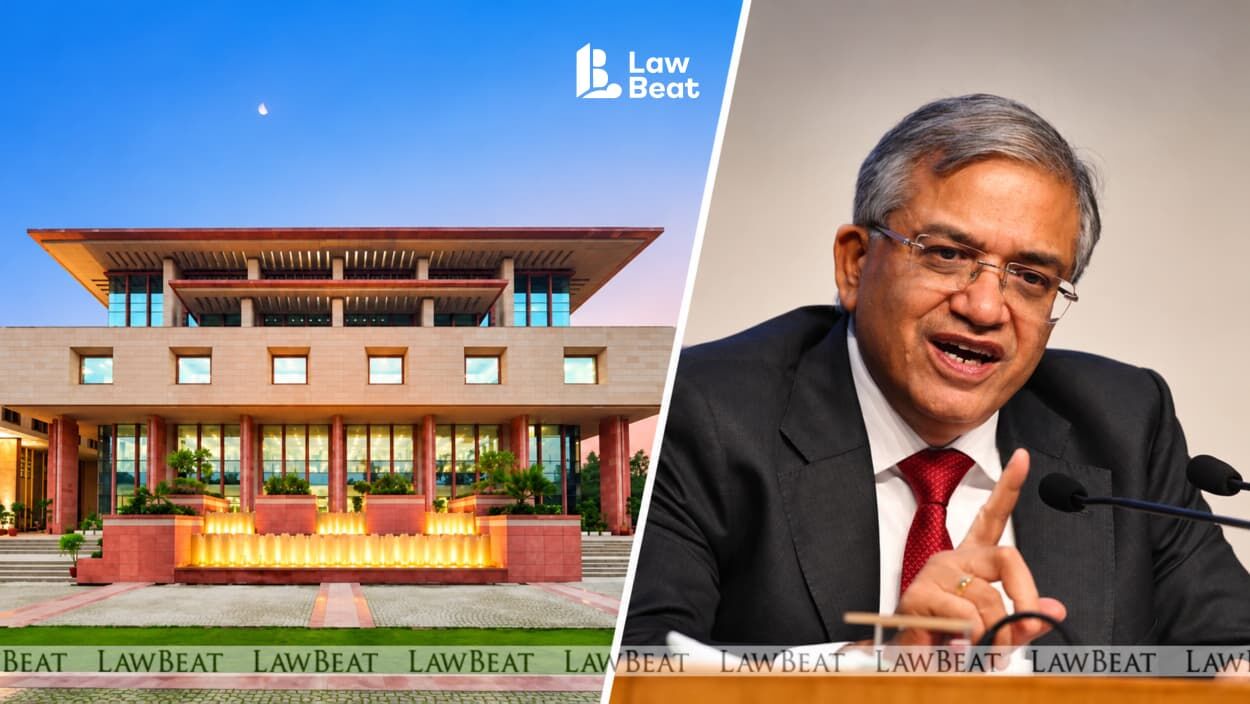
Delhi High Court: IYC Challenges Protest Permission Denial
Summary
- The Indian Youth Congress (IYC) challenged the Delhi Police's denial of permission for a protest against CEC Gyanesh Kumar at Jantar Mantar.
- The police cited law and order, traffic, and existing guidelines as reasons for rejecting the IYC's application for a protest involving 100-150 people.
- IYC Senior Advocate Siddharth Luthra amended the petition to challenge the arbitrary manner of the denial and blanket restrictions, rather than seeking permission for the protest itself.
- The Delhi High Court issued notice on specific prayers challenging the lack of individualized assessment and the treatment of advance notice requirements.
- The IYC's petition invokes Articles 14, 19(1)(a), and 19(1)(b) of the Constitution, concerning equality, freedom of speech, and peaceful assembly.
The Challenge to Protest Denial
This ongoing legal battle in the Delhi High Court carries significant implications for the exercise of fundamental rights in India, particularly the freedom of assembly and expression.
The Indian Youth Congress (IYC) recently brought a petition before the Delhi High Court, contesting the Delhi Police's decision to refuse permission for a planned demonstration at Jantar Mantar. The protest aimed to demand the resignation of Chief Election Commissioner (CEC) Gyanesh Kumar, citing alleged irregularities in the Special Intensive Revision (SIR) of electoral rolls. The IYC had submitted its application on September 25, proposing a peaceful gathering of approximately 100 to 150 individuals between October 1 and October 25.
On October 1, the Deputy Commissioner of Police for New Delhi rejected the IYC's request. The police cited concerns regarding law and order within the New Delhi district, potential traffic disruptions, and existing guidelines that limit dharnas or demonstrations at Jantar Mantar and the Central Vista area to a single continuous day. Additionally, intelligence inputs suggesting the possibility of mass gatherings and their impact on security and traffic management were referenced as reasons for the denial.
During the High Court proceedings before Justice Amit Mahajan, Additional Solicitor General Chetan Sharma, representing the respondents, initially argued that the IYC's plea had become infructuous because Jantar Mantar had been denotified as a protest site. However, Senior Advocate Siddharth Luthra, appearing for IYC President Uday Bhanu Chib, clarified that while he was no longer pursuing the initial prayers (a) and (b) seeking permission to protest at Jantar Mantar, the IYC intended to amend its petition to challenge the broader issues surrounding the alleged arbitrary manner in which permission was denied and the curbing of the petitioner's rights. The court subsequently issued notice on prayers (c), (d), and (f) of the petition, scheduling a further hearing for November 17.
Legal Arguments and Constitutional Rights
The core of the IYC's amended challenge, as outlined in prayers (c), (d), and (f), focuses on several key legal principles. The petition specifically contests the imposition of blanket restrictions on peaceful protests without an individualized assessment of the proposed gathering. It also seeks a fresh and reasoned reconsideration of the IYC’s request, emphasizing the need to examine whether concerns related to security, traffic, and public order could be adequately addressed through reasonable conditions rather than an outright prohibition. Furthermore, the IYC disputes the treatment of the 10-day advance notice requirement as an absolute bar to considering applications filed within a shorter timeframe.
IYC President Uday Bhanu Chib's petition asserts that the police cannot utilize their power to regulate peaceful assemblies as a means to effectively prohibit them. The organization argues that the decision to deny permission was made without a proportionate and individualised assessment of the planned demonstration. The IYC's legal challenge invokes fundamental constitutional provisions, specifically Articles 14, 19(1)(a), and 19(1)(b) of the Constitution. These articles guarantee equality before the law, freedom of speech and expression, and the right to assemble peacefully without arms, respectively. The IYC has also indicated its willingness to comply with any lawful conditions related to security and traffic management.
Implications for Freedom of Assembly
This ongoing legal battle in the Delhi High Court carries significant implications for the exercise of fundamental rights in India, particularly the freedom of assembly and expression. The outcome of this case could provide crucial clarity on the extent of police authority in regulating public demonstrations versus the outright prohibition of such events. The IYC's challenge directly addresses the balance between maintaining public order and security, and upholding the constitutional rights of citizens to protest peacefully.
The court's eventual ruling will impact the interpretation and application of Articles 19(1)(a) and 19(1)(b) of the Constitution, potentially setting a precedent for how future protest applications are assessed and managed by authorities. A decision in favor of the IYC's arguments could reinforce the principle that restrictions on protests must be proportionate, reasoned, and based on individual assessments rather than blanket denials. Conversely, a ruling upholding the police's actions could be seen as broadening the scope for authorities to restrict public gatherings, making this a pivotal case for civil liberties and the right to dissent in India.
Practical Implications
Lawyers advising clients on public demonstrations or fundamental rights cases should closely monitor the outcome of this Delhi High Court challenge. The ruling could clarify the scope of police authority in regulating protests versus outright prohibition, impacting the interpretation and application of constitutional rights to freedom of speech, expression, and peaceful assembly in India.
Source
How does this affect you?
Get an AI analysis of this article grounded in your jurisdictions, practice areas, and any policy documents you've uploaded to Wansom.
Finish Reading the Full Story and the Expert Analysis.
Get the latest legal & regulatory intelligence in India
Wansom is AI and can make mistakes.