
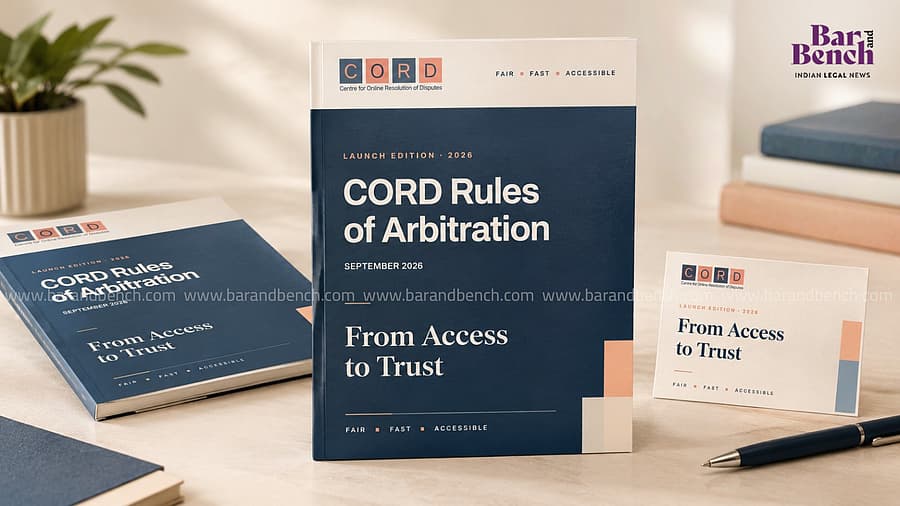
CORD Releases 2026 Arbitration Rules With AI Guardrails, Opt-in Appeal
Many complaints about arbitration have become recurring. Timelines slip and nothing happens. An award that gets the law wrong becomes – for all practical purposes – final. Arbitrator fees track the amount claimed and little else. And, more recently, nobody is quite sure who in the room is using artificial intelligence, and for what.On 4 September 2026, the Centre for Online Resolution of Disputes (“CORD”) released its revised Rules of Arbitration (“2026 Rules”), which take each of those four complaints in turn. That is a broad agenda for a single revision, and it is worth examining what the 2026 Rules require.CORD is headquartered in Bengaluru, and administers arbitration, mediation, and facilitated negotiation on its digital platform. The 2026 Rules give that model sharper teeth. They issue detailed guidance on AI, create an opt-in appellate mechanism, mandate automatic financial consequences for missed deadlines, and arbitrator remuneration is tied to case complexity, not just value.AI: The question is who is using it, and for whatRule 38 states five principles for the use of AI in a CORD arbitration – transparency, accountability, confidentiality, fairness and human oversight – and fixes responsibility for its use on the user. Whoever deploys AI answers for how they use it.The detail sits in CORD’s accompanying AI Practice Note, which does something most institutional guidance has, thus far, avoided: it draws the line differently based on who is holding the
How does this affect you?
Get an AI analysis of this article grounded in your jurisdictions, practice areas, and any policy documents you've uploaded to Wansom.
Finish Reading the Full Story and the Expert Analysis.
Get the latest legal & regulatory intelligence in India
Wansom is AI and can make mistakes.