
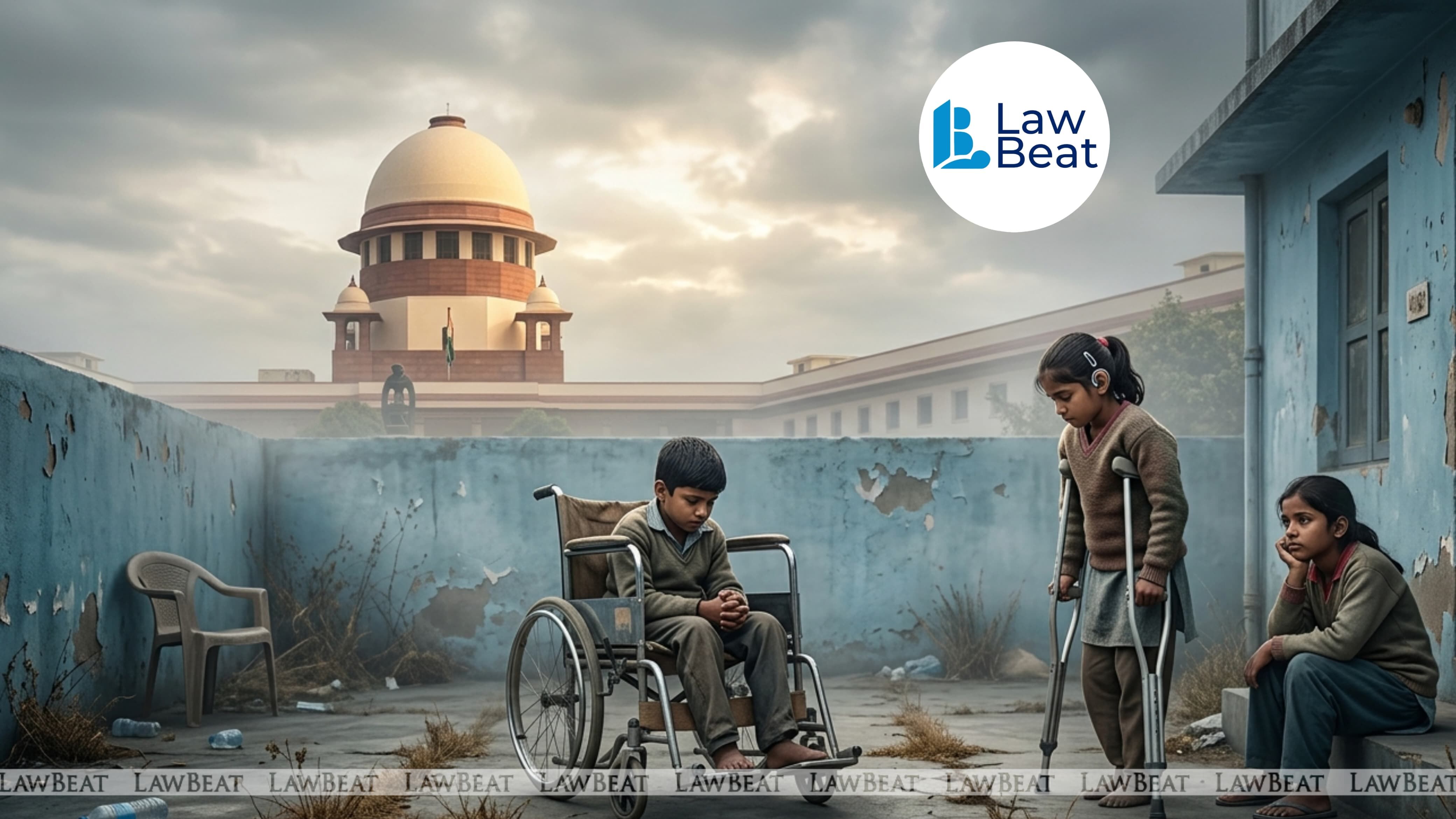
Supreme Court: Addresses Inhuman Treatment In Disabled Children Rehab
Summary
- The Supreme Court has ordered all States and Union Territories to submit compliance reports on the regulation and standards of rehabilitation centers for disabled children.
- This directive follows a Public Interest Litigation (PIL) alleging inhuman treatment and systemic regulatory failures in these facilities.
- The PIL highlights deficiencies in the implementation of existing laws like the RPwD Act, RCI Act, and MHCA, claiming many institutions operate unregistered.
- The petition seeks mandatory registration of all rehabilitation centers with the RCI and a comprehensive regulatory framework for mental health professionals.
- The Union government must coordinate data collection and submit affidavits before the next hearing on October 22, 2026.
Court Mandates Compliance Reports on Rehab Centers
The Supreme Court's intervention marks a critical step towards ensuring that the rights and well-being of disabled children in rehabilitation and mental health facilities are upheld.
India's Supreme Court has initiated a significant move to address concerns regarding the alleged inhuman treatment of children with disabilities in rehabilitation facilities. A bench, led by Chief Justice of India Surya Kant, has directed the Union government to coordinate with all States and Union Territories to compile and submit comprehensive compliance reports. These reports are specifically requested to detail the regulation, registration processes, and established standards governing rehabilitation centers, child development centers, and mental health establishments that cater to disabled children across the nation.
This directive stems from a Public Interest Litigation (PIL) that brought to light serious regulatory failures and claims of mistreatment within these institutions. The Supreme Court had initially issued notice on this PIL in June, acknowledging the gravity of the allegations. The Union government is now tasked with gathering essential data concerning the implementation of existing statutory frameworks, the establishment of regulatory bodies, and the overall oversight mechanisms for these facilities. This information must be presented to the Court via affidavits, with the next hearing scheduled for October 22, 2026.
Unveiling Systemic Failures and Demands for Reform
The PIL, filed by disability rights lawyer Rahul Bajaj alongside Zaheer Abbas Jan, and presented through AoR Ashutosh Sengar, specifically highlights what it describes as "deficiencies in the implementation of the legal framework for the regulation of rehabilitation facilities," particularly concerning children with disabilities. The petition argues that despite robust legal safeguards, "systemic failures persist," leading to dire consequences for vulnerable children. Citing various media reports, the plea details instances where children are allegedly denied necessary therapies due to a lack of trained staff, face unsafe environments because of negligence, and receive inadequate basic medical care due to outdated equipment.
To rectify these issues, the petitioners are seeking two primary outcomes: mandatory registration for all rehabilitation centers with the Rehabilitation Council of India (RCI), and the establishment of a comprehensive regulatory framework designed to govern mental health professionals and establishments serving children with disabilities. The scale of the problem is significant, with the 2011 Census indicating 2.68 crore persons with disabilities in India. Furthermore, applying the World Health Organization's 2011 estimate that approximately 15 percent of the global population lives with some form of disability suggests that India could have between 19 to 20 crore persons with disabilities, a substantial number of whom are children.
Statutory Safeguards Under Scrutiny
The petition underscores that several key statutes are intended to protect children with disabilities, including the Rights of Persons with Disabilities Act, 2016 (RPwD Act), the Rehabilitation Council of India Act, 1992 (RCI Act), and the Mental Healthcare Act, 2017 (MHCA). However, the PIL contends that the implementation of these laws is severely lacking. For instance, Section 50 of the RPwD Act explicitly mandates that no institution for persons with disabilities can be established or maintained without obtaining a certificate of registration from the competent authority.
Despite this clear legal requirement, the petition asserts that "a large number of institutions working for persons with disabilities are in fact not registered under the RPwD Act," which consequently prevents any meaningful oversight or accountability. The plea also points to deficiencies in the execution of the Mental Healthcare Act, 2017, noting that while the legislation envisions the creation of State Mental Health Authorities and the formulation of regulations prescribing minimum quality standards, these provisions are not being adequately enforced.
Ensuring Dignity and Oversight
The Supreme Court's intervention marks a critical step towards ensuring that the rights and well-being of disabled children in rehabilitation and mental health facilities are upheld. By demanding detailed compliance reports from states and union territories, the Court aims to gain a clear picture of the current regulatory landscape and identify specific areas where statutory frameworks are failing. This judicial oversight is crucial for addressing the alleged inhuman treatment and systemic failures that have been highlighted.
The outcome of these proceedings could lead to more stringent enforcement of existing laws, improved registration processes, and the development of more robust regulatory mechanisms. Ultimately, the Court's actions seek to foster an environment where children with disabilities receive the necessary care, therapies, and protection in facilities that are properly regulated and held accountable.
Source
Source: Original reporting via Live Law
How does this affect you?
Get an AI analysis of this article grounded in your jurisdictions, practice areas, and any policy documents you've uploaded to Wansom.
Finish Reading the Full Story and the Expert Analysis.
Get the latest legal & regulatory intelligence in India
Wansom is AI and can make mistakes.