
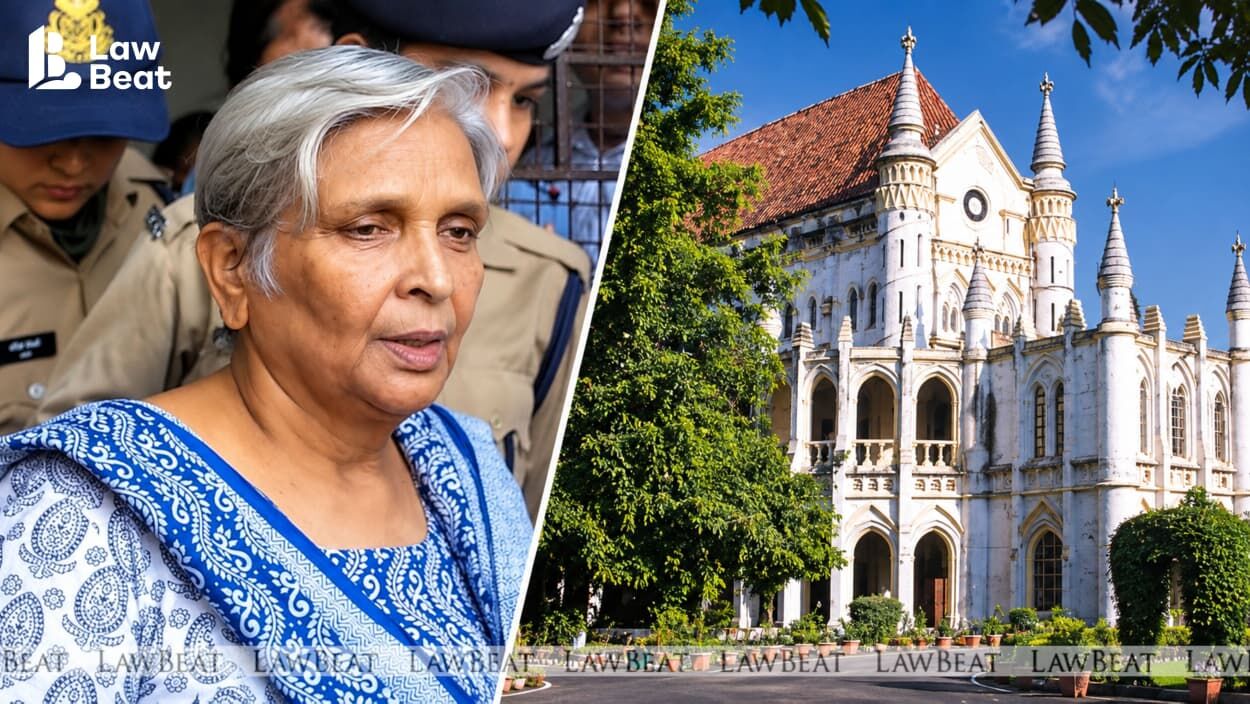
Twisha Sharma Death Case: CBI: Dowry Death Probe Still Ongoing
Summary
- The Madhya Pradesh High Court partly allowed an amendment to Giribala Singh's bail plea in the Twisha Sharma death case.
- The amendment was limited to incorporating the newly added charge of abetment of suicide under Section 108 of the Bharatiya Nyaya Sanhita.
- The Central Bureau of Investigation (CBI) confirmed that its probe into dowry death allegations remains active and has not been dropped.
- The court clarified that the absence of dowry-related offenses from the initial chargesheet did not signify their abandonment.
- The accused is required to complete the amendment within two working days and provide a copy to the opposing parties.
Court Partially Allows Bail Plea Amendment
The court's decision underscored that while the chargesheet did not initially include dowry-related offenses, the Central Bureau of Investigation's inquiry into these allegations was far from concluded.
The Madhya Pradesh High Court recently issued a ruling in the Twisha Sharma death case, partially granting an application by accused Giribala Singh to amend her pending bail plea. The court's decision specifically permitted the amendment to incorporate the newly added charge of abetment of suicide, codified under Section 108 of the Bharatiya Nyaya Sanhita (BNS), which corresponds to Section 306 of the Indian Penal Code (IPC).
This development followed the Central Bureau of Investigation (CBI)'s filing of a chargesheet in the case. The chargesheet includes allegations under Sections 85 (cruelty by husband or relatives), 108 (abetment of suicide), and 3(5) (acts done with common intention) of the BNS, which are equivalent to Sections 498A, 306, and 34 of the IPC, respectively. Notably, offenses related to dowry death under Section 80(2) BNS (Section 304B IPC) and violations of Sections 3 and 4 of the Dowry Prohibition Act were not listed in this chargesheet, leading to a key point of contention during the hearing.
CBI Affirms Ongoing Dowry Death Probe
A central aspect of the court proceedings revolved around the status of the dowry death investigation. The CBI firmly asserted that its probe into dowry death allegations remains active and has not been concluded. The agency clarified that its objection to the amendment was not to the inclusion of the abetment charge, but specifically to the accused's contention that the dowry-related charges had been effectively dropped due to their absence from the chargesheet.
Justice Ajay Kumar Nirankari, presiding over the matter, questioned the CBI's opposition, to which the agency responded that the investigation was "still going on" with the trial court's explicit permission, citing Section 193(9) of the Bharatiya Nagarik Suraksha Sanhita (BNSS). The court itself observed that there had been "no dropping" of charges, noting that only Section 108 had been added to the existing allegations in the First Information Report (FIR), rather than replacing any.
Legal Arguments and Pending Evidence
Counsel for the accused, Adv. Surendra Singh, argued that five months had elapsed since the incident, and statements from all close relatives of the deceased had been recorded without yielding any proof of dowry demand. Singh characterized the continuing probe as a "ploy to defeat the ends of justice," invoking Article 21, which guarantees the right to an expeditious investigation. He also contended that the statutory 90-day period for investigation had expired, entitling the accused to default bail, and expressed concern about prolonged incarceration without conclusive evidence.
In response, the CBI countered that legal provisions permit further investigation even beyond the 90-day limit. The agency also maintained that once a chargesheet is filed for some offenses, an accused cannot claim default bail. Senior Advocate Siddharth Aggarwal, representing the complainant, further supported the CBI's stance by pointing to paragraph 16.62 on page 28 of the chargesheet, which explicitly states that the investigation into dowry demand and dowry death would continue. Aggarwal also highlighted that data extracted from the deceased's iPhone, potentially revealing incriminating material, other accused, or new witnesses, was still awaited. Additionally, data from a Digital Video Recorder (DVR) installed at the accused's residence had been sent to the Central Forensic Science Laboratory in Delhi for analysis regarding potential tampering, with any findings to be investigated.
Implications of the Court's Ruling
The court's decision underscored that while the chargesheet did not initially include dowry-related offenses, the Central Bureau of Investigation's inquiry into these allegations was far from concluded. Justice Nirankari explicitly stated, "I am just partly allowing this application, permitting the amendment up to the extent of allegation of Section 108 only. We are not allowing this application in full." This means the abetment of suicide charge will now formally be part of the bail application's scope, alongside the original allegations in the FIR.
The ruling mandates that the accused must carry out the necessary amendment to her bail application within two working days and provide a copy to the opposing parties. This procedural step ensures that the bail plea accurately reflects the charges currently being pursued, while simultaneously acknowledging the CBI's ongoing, broader investigation into the circumstances surrounding Twisha Sharma's death.
Source
How does this affect you?
Get an AI analysis of this article grounded in your jurisdictions, practice areas, and any policy documents you've uploaded to Wansom.
Finish Reading the Full Story and the Expert Analysis.
Get the latest legal & regulatory intelligence in India
Wansom is AI and can make mistakes.