
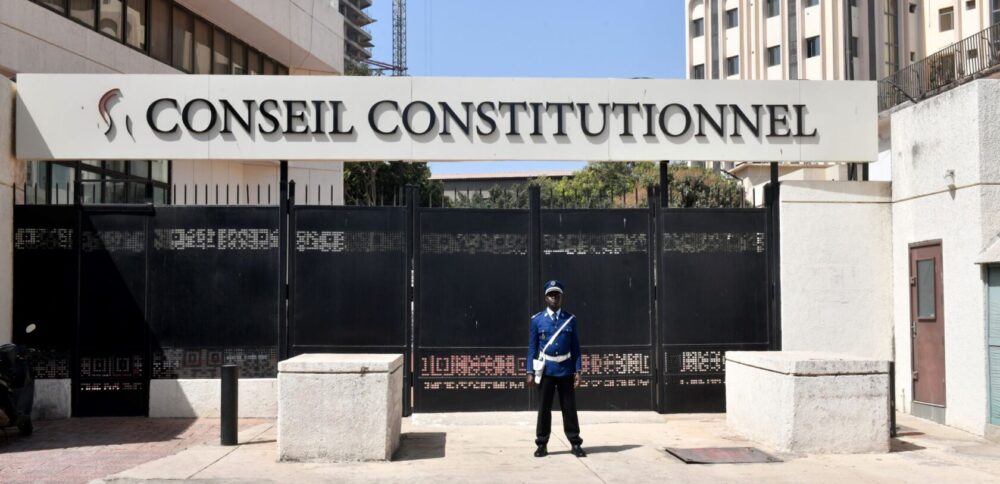
Conseil constitutionnel Sénégal: Décision 7/C/2026 Crédits Spéciaux Inadmissible
Summary
- On August 25, 2026, the Senegalese Conseil constitutionnel declared Proposition de loi n° 36/2026, concerning special credits, inadmissible.
- The ruling, Decision 7/C/2026, found the National Assembly exceeded its legislative competence by encroaching on matters reserved for organic law and regulatory decrees.
- The court determined an ordinary law could not create new public credit categories or define expenditure rules, which fall under organic law n° 2020-07 and decree n° 2020-978, respectively.
- The Prime Minister had referred the bill on August 18, 2026, arguing certain provisions belonged to the regulatory domain.
- The inseparability of the unconstitutional provisions led to the rejection of the entire legislative proposal.
Key Ruling on Special Credits
The Conseil constitutionnel's decision underscores a strict interpretation of the constitutional division of powers, particularly regarding the legislative and regulatory domains in public finance.
The Senegalese Conseil constitutionnel issued a significant ruling on August 25, 2026, declaring Proposition de loi n° 36/2026, which sought to establish the legal framework for `crédits spéciaux`, inadmissible. This decision, numbered 7/C/2026, came after the Prime Minister referred the bill to the constitutional body on August 18, 2026, just one day before its scheduled examination in a plenary session under urgent procedure. The government had contested the admissibility of the proposal, arguing that several of its provisions fell within the regulatory domain, as defined by articles 67 and 76 of the Constitution.
Prior to the referral, the executive branch had already attempted to narrow the scope of the proposed legislation. On August 13, the Minister of Justice introduced an amendment to Article 1, aiming to specify that `crédits spéciaux` would be allocated exclusively to the Presidency, the National Assembly, and the Primature. This initiative reflected the government's intention to confine the law to general principles, delegating the practical modalities to the regulatory authority. However, the Conseil constitutionnel's subsequent ruling went further, addressing fundamental questions of legislative competence.
Constitutional Basis for the Decision
In its `Décision 7/C/2026 crédits spéciaux`, the Conseil constitutionnel invoked Article 92 of the Constitution, which empowers it to resolve conflicts of competence between the executive and legislative branches. The court concluded that the National Assembly had overstepped its domain of intervention. Two primary grounds underpinned this finding, highlighting critical aspects of `droit budgétaire Sénégal`.
The first grievance centered on the exclusive domain reserved for organic law, specifically concerning finance laws. The Conseil constitutionnel affirmed that an ordinary law, such as Proposition de loi n° 36/2026, lacks the authority to create an autonomous category of public credits or to define its comprehensive legal regime. These matters are explicitly governed by `loi organique n° 2020-07` of February 26, 2020, in accordance with Article 67, paragraph 3, of the Constitution. The second ground for inadmissibility related to the detailed rules for the commitment, liquidation, ordering, and control of public expenditures. The Conseil constitutionnel determined that these operational aspects fall squarely within the regulatory power, as stipulated by Article 118 of decree n° 2020-978 of April 23, 2020, and therefore do not belong to the legislative domain outlined in Article 67.
Implications for Legislative Drafting
The `Conseil constitutionnel Sénégal crédits spéciaux` ruling emphasized that the provisions deemed non-compliant could not be separated from the remainder of the legislative proposal. Consequently, their invalidity rendered the entire text inadmissible, leading to the `irrecevabilité proposition loi 36/2026`. This decision serves as a crucial precedent for legislative drafting in Senegal, particularly concerning public finance.
The ruling decisively resolves a `conflit compétence exécutif législatif Sénégal`, reinforcing the strict demarcation between legislative and regulatory powers. It underscores that while the legislature defines general principles, the detailed implementation and specific categories of public credits, especially `crédits spéciaux`, must adhere to the framework established by organic laws and regulatory decrees. This interpretation of `article 67 Constitution Sénégal` and related texts provides clear guidance for future legislative initiatives, ensuring that proposed laws respect the constitutional allocation of powers.
Practical Implications
Lawyers and compliance officers involved in legislative drafting or public finance in Senegal must note this decision's strict interpretation of constitutional competence. It reinforces that specific aspects of public finance, such as creating new public credit categories or detailed expenditure rules, are reserved for organic law or regulatory decrees, not ordinary legislation, thereby guiding future legislative initiatives and compliance assessments.
Source
Source: Original reporting via Xibaaru
How does this affect you?
Get an AI analysis of this article grounded in your jurisdictions, practice areas, and any policy documents you've uploaded to Wansom.
Wansom is AI and can make mistakes.