
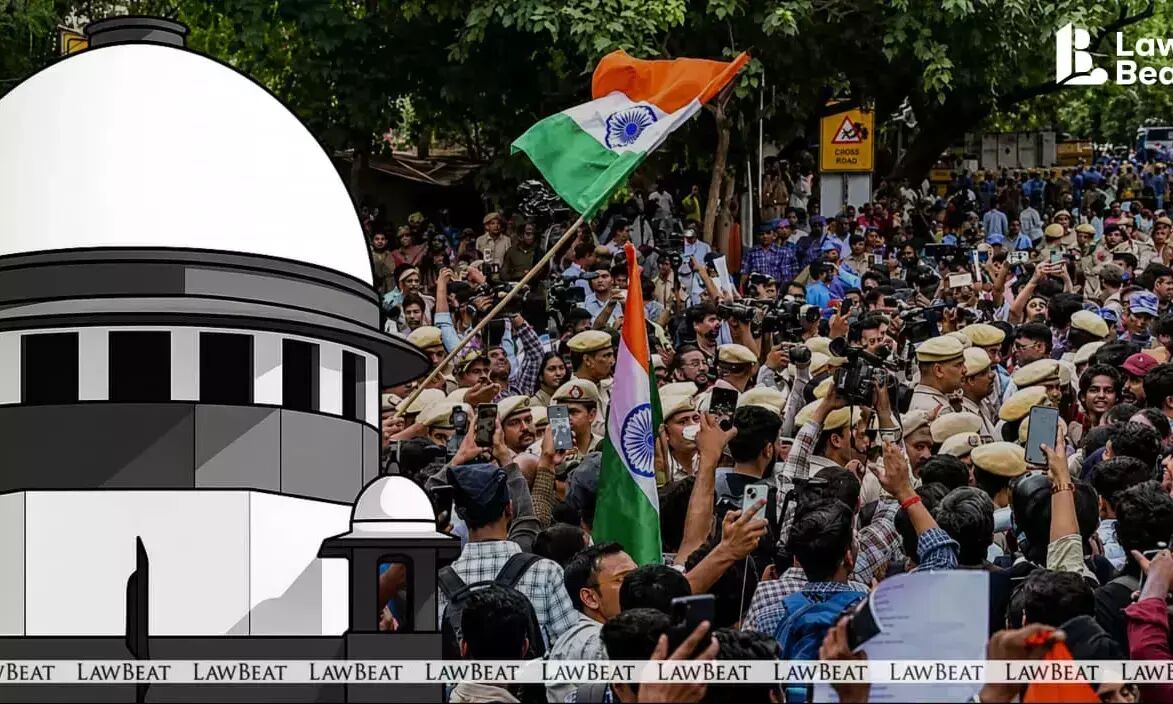
Centre Moves Supreme Court Quash NEET FIRs Against Protesters
Summary
- The Centre has moved the Supreme Court to quash FIRs registered against students involved in NEET paper leak protests, invoking Article 142 of the Constitution.
- Solicitor General Tushar Mehta informed a CJI Surya Kant-led bench of this application, which was met with the CJI's agreement if parties were "reconciling."
- The Supreme Court previously allowed state governments to withdraw FIRs but clarified that those involving "grave and heinous offences" would not be quashed.
- SG Mehta confirmed that 2700 FIRs, linked to serious charges like rape or murder, would not be withdrawn.
- On August 20, the Supreme Court constituted a High-Powered Enquiry Committee, led by Justice (Retd.) R. Subhash Reddy, to investigate violence during the protests.
Centre Seeks Quashing of Protest FIRs
The Centre has moved the Supreme Court to quash FIRs registered against students involved in the NEET paper leak protests, leveraging its special powers under Article 142 of the Constitution.
The Union government has formally approached the Supreme Court of India, seeking to quash First Information Reports (FIRs) that were lodged against students involved in the widespread NEET paper leak protests. This significant legal maneuver invokes the Supreme Court's extraordinary powers under Article 142 of the Constitution, allowing it to pass any order necessary for doing complete justice in a case. The application was brought to the attention of a bench led by Chief Justice of India Surya Kant by Solicitor General Tushar Mehta, who, despite the bench rising for the day, emphasized the importance of the matter.
Solicitor General Mehta informed the court that the Centre had filed an application concerning the protests, specifically requesting the quashing of FIRs and explicitly stating the invocation of Article 142. Chief Justice Kant acknowledged the submission, indicating the bench had no objection if the parties were "reconciling," signaling a positive reception to the Centre's initiative. This development underscores the government's intent to address the legal repercussions faced by student protestors following the contentious NEET paper leak incidents that sparked nationwide demonstrations.
Judicial Directives and Key Distinctions
This latest move by the Centre builds upon earlier directives from the Supreme Court, which had previously granted state governments the discretion to withdraw FIRs filed against individuals participating in the NEET paper leak protests. However, a critical clarification was issued by the CJI Surya Kant-led bench: FIRs registered against individuals already implicated in "grave and heinous offences" would not be eligible for withdrawal. This distinction is crucial, ensuring that while general protest-related charges might be dropped, serious criminal allegations remain subject to legal process.
Solicitor General Tushar Mehta subsequently informed the bench that approximately 2700 such FIRs, involving serious charges, would indeed not be withdrawn. He clarified that the government was committed to its earlier assurances regarding case withdrawals but emphasized that individuals with criminal antecedents, specifically those involved in cases like rape, murder, or offenses under the Protection of Children from Sexual Offences (POCSO) Act, would not be spared. The bench further elucidated that its previous reference to "criminal antecedents" specifically pertained to "grave and heinous offences," thereby narrowing the scope of non-withdrawable cases.
Ongoing Oversight and Protective Measures
Beyond the quashing of FIRs, the Supreme Court has also established a robust oversight mechanism to address the broader implications of the NEET paper leak protests. On August 20, the apex court constituted a High-Powered Enquiry Committee (HPEC), chaired by Justice (Retd.) R. Subhash Reddy, a former judge of the Supreme Court of India. This committee is tasked with conducting an independent and impartial investigation into the alleged acts of violence that occurred during the protests.
The court mandated that the HPEC's inquiry would not be a one-time exercise but rather a continuous and periodic assessment of the issues. The committee is required to submit interim findings regularly, enabling the Supreme Court to take appropriate measures and issue necessary directions as the situation evolves. Furthermore, earlier in the process, a bench comprising Chief Justice of India Surya Kant, Justice Joymalya Bagchi, and Justice V Mohana had directed that no coercive action should be taken against the protestors. This bench also ordered the immediate release of minors detained by police across various states, with the explicit exception of those with existing criminal backgrounds.
Political Response and Government Assurance
Despite the Centre's recent application and earlier commitments, the issue continues to draw political attention. The "Cockroach Janata Party" announced a protest march in Delhi for September 5, alleging that the Centre has not honored its pledge to withdraw cases against protestors who participated in the July demonstrations across the country concerning the NEET paper leak. This planned protest highlights ongoing concerns among certain groups regarding the implementation of the government's assurances.
Earlier, Solicitor General Mehta had conveyed to the Supreme Court that the government was serious about its commitment to address the FIRs, acknowledging some "misapprehensions" about the process. This assurance, coupled with the Centre's current move to invoke Article 142, indicates a concerted effort to resolve the legal challenges faced by many student protestors, while simultaneously drawing a clear line for those accused of more serious crimes.
Practical Implications
This development clarifies the Supreme Court's stance on the withdrawal of FIRs against protestors, particularly distinguishing between general protest-related charges and grave offenses. Lawyers representing clients involved in protests should note the potential for government-initiated quashing of FIRs under Article 142, while also understanding the limitations for serious criminal charges.
Source
How does this affect you?
Get an AI analysis of this article grounded in your jurisdictions, practice areas, and any policy documents you've uploaded to Wansom.
Finish Reading the Full Story and the Expert Analysis.
Wansom is AI and can make mistakes.