
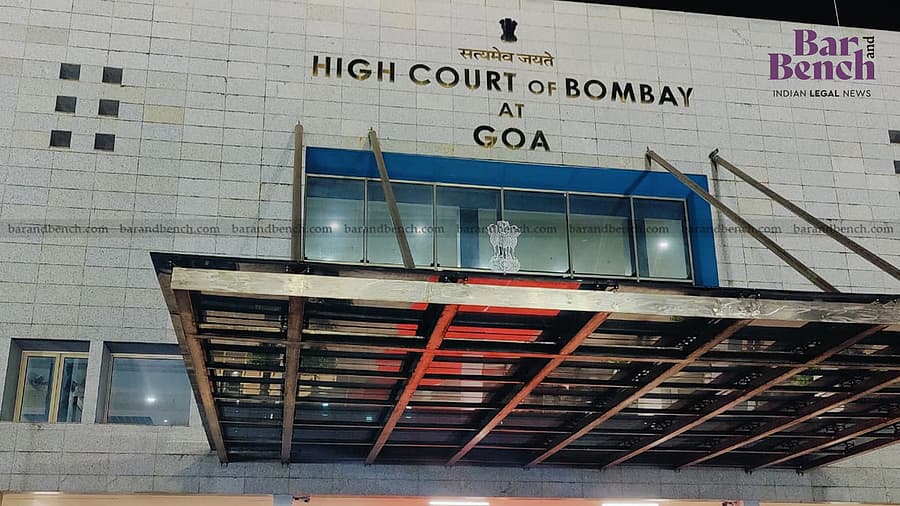
Bombay High Court: BNSS Section 163 Illegal Detention Frees Protestors
Summary
- The Bombay High Court at Goa ordered the immediate release of seven individuals detained during anti-ECI protests in Panaji.
- The court found the detention illegal due to the absence of formal prohibitory orders under Section 163 of the Bharatiya Nagarik Suraksha Sanhita (BNSS).
- Justices Valmiki Menezes and Amit S Jamsandekar presided over a special Sunday hearing for the urgent habeas corpus petition.
- Oral instructions from an Executive Magistrate and a prior rejection of a gathering application were deemed insufficient to justify the detention.
- This ruling clarifies that police must issue formal prohibitory orders under BNSS Section 163 for lawful detention of protestors.
Court Orders Immediate Release
By unequivocally stating that police detention of protestors without formal prohibitory orders issued under Section 163 of the Bharatiya Nagarik Suraksha Sanhita (BNSS) is likely to be deemed illegal, the Bombay High Court has reinforced the procedural safeguards intended to protect citizens.
The Bombay High Court at Goa, in a special Sunday sitting on October 11, mandated the immediate release of seven individuals who had been detained by police. These individuals were apprehended at Azad Maidan in Panaji while participating in protests directed against the Election Commission of India (ECI). The urgent habeas corpus petition, filed by advocate Malisa Zemira Simoes, prompted the court's swift intervention.
The seven protestors, identified as Afreen Shaikh, Jack Sukhija, Bupesh Bind, Aditya Parulekar, Listan Noronha, Shamino Fernandes, and Milind Rane, were reportedly "bodily lifted" from the protest site in Panaji. Following their apprehension, they were transported and held at the Pernem Police Station. The petition highlighted that their detention occurred without any formal prohibitory orders being issued or specific reasons for their confinement being provided at the time of their arrest.
Legal Basis for Illegal Detention
A division bench comprising Justices Valmiki Menezes and Amit S Jamsandekar critically examined the circumstances surrounding the detention, concluding that it appeared to be illegal. The court's primary reasoning stemmed from the complete absence of formal prohibitory orders, which are mandated under Section 163 of the Bharatiya Nagarik Suraksha Sanhita (BNSS). This specific legal provision outlines the procedure for issuing orders to prevent unlawful assemblies or disturbances.
The bench explicitly stated, "Considering that there are no prohibitory orders under Section 163 of the BNSS, we are of the opinion that the detention may not have been authorised." This declaration underscores the necessity of adhering to established legal frameworks for restricting public gatherings and detaining individuals. While Executive Magistrate Mr. Dattaprasad Toraskar was present at the site and had given oral instructions to the police to detain the seven individuals for allegedly "barging into Azad Maidan, Panaji," the court found these oral directives insufficient in the absence of a formal prohibitory order. Furthermore, police inspectors from Panaji and Pernem had indicated that the group's application for a public gathering had been rejected on October 9, yet this administrative rejection did not substitute the requirement for a Section 163 order for detention.
Wider Implications for Protest Rights
The ruling in Malisa Simoes & Ors v. State of Goa & Ors carries significant weight for the exercise of protest rights and the scope of police authority in India. By unequivocally stating that police detention of protestors without formal prohibitory orders issued under Section 163 of the Bharatiya Nagarik Suraksha Sanhita (BNSS) is likely to be deemed illegal, the Bombay High Court has reinforced the procedural safeguards intended to protect citizens. This decision clarifies that mere oral instructions from an executive magistrate, or the prior rejection of a gathering application, do not provide a lawful basis for detaining individuals if the specific prohibitory orders under BNSS Section 163 are not in place.
This judgment serves as a crucial reminder to law enforcement agencies regarding the strict legal requirements for curtailing public assembly and individual liberty. It emphasizes that any action leading to the detention of protestors must be grounded in explicit legal provisions, particularly those concerning prohibitory orders. For citizens and legal practitioners, the ruling provides a clear precedent, highlighting that the absence of such formal orders can be a strong ground for challenging detentions through mechanisms like habeas corpus, thereby upholding fundamental rights even during demonstrations. The Bombay High Court's swift action and clear pronouncement on this matter underscore the judiciary's role in safeguarding civil liberties against arbitrary state action.
Practical Implications
This ruling clarifies that police detention of protestors without formal prohibitory orders issued under Section 163 of the Bharatiya Nagarik Suraksha Sanhita (BNSS) is likely to be deemed illegal. Lawyers advising clients on protest rights or defending individuals detained during demonstrations should scrutinize the existence and validity of such orders, as their absence can be grounds for immediate release via habeas corpus.
Source
How does this affect you?
Get an AI analysis of this article grounded in your jurisdictions, practice areas, and any policy documents you've uploaded to Wansom.
Finish Reading the Full Story and the Expert Analysis.
Get the latest legal & regulatory intelligence in India
Wansom is AI and can make mistakes.