
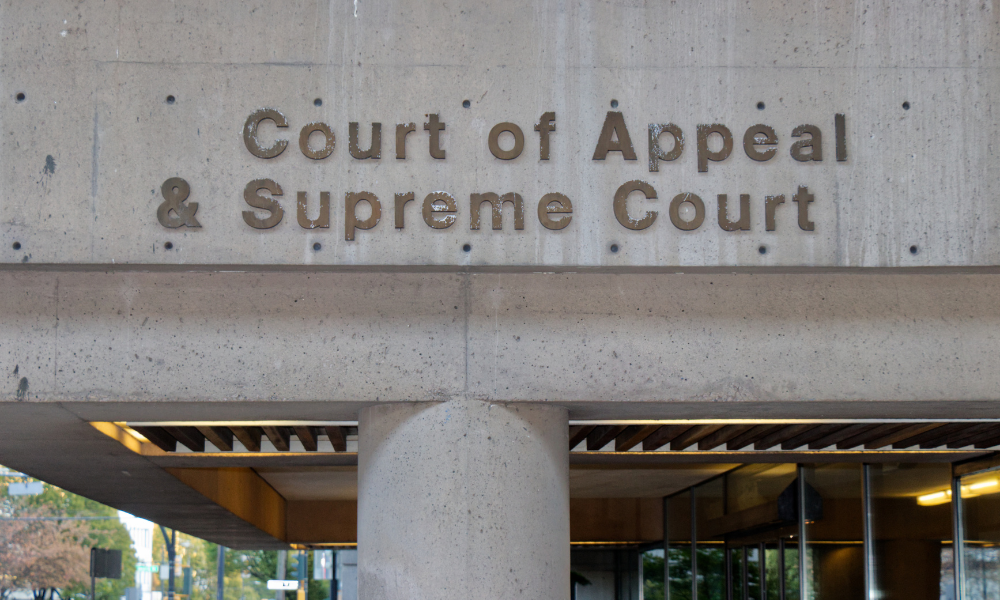
BCSC: Prison Negligence Claim Dismissed Despite Officer Error
Summary
- The British Columbia Supreme Court dismissed a prison negligence claim despite an officer's protocol breach leading to an inmate stabbing.
- Nolan Swallow was stabbed by Dennis Fletcher at Matsqui Institution moments before Swallow's day parole release.
- The court found the officer's error was a factual cause but ruled the attack was not reasonably foreseeable.
- Foreseeability requires actual or constructive knowledge of a specific threat, not just general awareness of prison dangers.
- The ruling sets a high bar for establishing foreseeability in BCSC prison negligence claims, even with officer error.
The Incident and Initial Ruling
This ruling clarifies the high bar for establishing foreseeability in prison negligence claims in British Columbia, even when officer error is present.
Nolan Swallow, an inmate at Matsqui Institution, was tragically stabbed by fellow prisoner Dennis Fletcher just moments before his scheduled release on day parole. This violent incident formed the basis of a negligence claim against the Correctional Service of Canada (CSC), represented by the Attorney General of Canada. Despite a correctional officer's clear breach of institutional protocol by releasing Fletcher without verifying a claimed counselling appointment, the British Columbia Supreme Court (BCSC) ultimately dismissed the claim.
The court's decision in Swallow v. Canada (Attorney General), 2026 BCSC 2213, highlights the complex legal hurdles in establishing liability for inmate-on-inmate violence within correctional facilities. The BCSC acknowledged that the officer's failure to follow procedure constituted a breach of the standard of care and was a factual cause of the subsequent attack. However, these findings alone were insufficient to establish the Crown's liability. The case underscores a critical distinction between an officer's error and the institution's overall responsibility for an unforeseeable event, particularly in the inherently unpredictable environment of a prison. This ruling clarifies the high bar for establishing foreseeability in prison negligence claims in British Columbia, even when officer error is present.
Legal Context and Foreseeability Standard
Under the Corrections and Conditional Release Act (CCRA), the Correctional Service of Canada is mandated to provide safe and humane custody for federal offenders. The Crown Liability and Proceedings Act (CLPA) further stipulates that the Attorney General of Canada is vicariously liable for the torts committed by CSC employees. To succeed in a prison negligence claim, a plaintiff must typically demonstrate four elements: a duty of care, a breach of that duty, causation, and damages. While the duty of care is frequently conceded in such cases, given the recognized dangers and unpredictable nature of inmate behavior within correctional settings, the standard of care is not one of absolute perfection.
The BCSC emphasized that courts rigorously examine the concept of foreseeability, particularly in cases involving inmate assaults. Drawing upon established legal precedents, the court reiterated a consistent framework: an assault is considered foreseeable only if the institution possessed actual or constructive knowledge of a specific threat, especially in the absence of known incompatibles between inmates or prior indicators of violence. This stringent requirement means that general awareness of prison dangers is not enough; a concrete, identifiable risk must have been known or ought to have been known by the correctional authorities.
Court's Analysis of the Attack
Despite the acknowledged officer error and its causal link to the stabbing, the BCSC concluded that the attack on Nolan Swallow was not reasonably foreseeable. The court systematically rejected each of Swallow's four arguments presented to establish foreseeability. Firstly, the absence of any prior violence-related incidents between Swallow and Fletcher at Matsqui Institution did not, in the court's view, make the attack foreseeable. Secondly, the fact that a "June attacker" had been transferred to another facility, with no known connection to Fletcher, also failed to establish foreseeability.
Furthermore, there was no evidence presented to suggest that correctional officers were aware that Swallow was perceived as an informant, which might have elevated his risk. Finally, the court determined that the timing of the attack, occurring just before Swallow's release, gained significance only in hindsight and did not constitute a foreseeable risk at the time. A secondary claim, alleging that officers should have intervened when Fletcher was observed loitering in a corridor for approximately 90 seconds before the assault, also failed. The court found no evidence that any officer actually saw Fletcher loitering, nor was a duty to act on such behavior established within that specific institutional context.
Implications for Prison Negligence Claims
The BCSC's dismissal of the negligence claim, despite clear evidence of an officer's protocol breach and its direct causal link to the injury, provides significant clarification on the high threshold for establishing foreseeability in prison negligence cases in British Columbia. This ruling reinforces that even when an officer's actions fall below the expected standard of care, and those actions contribute to an inmate's harm, liability will not automatically attach to the Correctional Service of Canada. The institution must have had actual or constructive knowledge of a specific, identifiable threat to the victim.
This decision underscores that the unpredictable nature of the prison environment means that not every adverse event, even those facilitated by an officer's mistake, will result in a successful negligence claim. For victims' legal representatives, this means demonstrating a correctional institution's specific awareness of a threat is paramount. Conversely, for correctional services, the ruling provides a strong precedent emphasizing the strict foreseeability requirement in defending against claims of negligence, particularly when officer error is present but a specific, known threat was absent.
Practical Implications
This ruling clarifies the high bar for establishing foreseeability in prison negligence claims in British Columbia, even when officer error is present. Lawyers representing victims must demonstrate the correctional institution had actual or constructive knowledge of a specific threat, while those advising correctional services can emphasize this strict foreseeability requirement in defending against such claims.
Source
How does this affect you?
Get an AI analysis of this article grounded in your jurisdictions, practice areas, and any policy documents you've uploaded to Wansom.
Finish Reading the Full Story and the Expert Analysis.
Get the latest legal & regulatory intelligence in Canada
Wansom is AI and can make mistakes.