
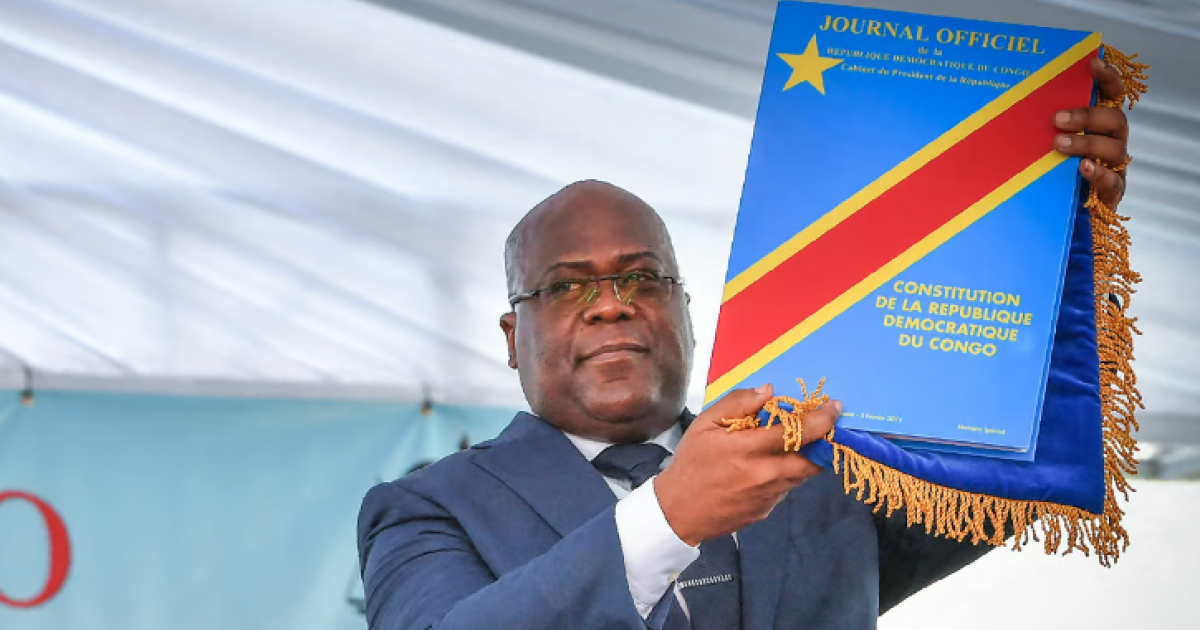
Azarias Ruberwa: RDC Constitution 2006 Verrous Are Unalterable
Summary
- Former Vice-President Azarias Ruberwa stated that the DRC's 2006 Constitution contains unalterable "verrous" or locks.
- Ruberwa, a key architect of the 2006 Constitution, made these remarks during a "Space live" event hosted by journalist Stanis Bujakera Tshiamala.
- He believes these constitutional locks cannot be lifted by anyone, emphasizing the document's inherent stability.
- His statement, made public on August 23, 2026, highlights a strong legal and political resistance to any attempts at constitutional revision targeting fundamental provisions.
What Happened
Former Vice-President Azarias Ruberwa recently asserted that the Democratic Republic of Congo's 2006 Constitution contains fundamental 'locks' that are impervious to alteration.
Former Vice-President Azarias Ruberwa recently articulated a strong defense of the Democratic Republic of Congo's 2006 Constitution, emphasizing its inherent stability. Speaking during a "Space live" event, an online discussion forum hosted by journalist Stanis Bujakera Tshiamala on a Thursday evening, Ruberwa asserted that the foundational document contains specific "verrous," or constitutional locks, which are designed to be unalterable. His remarks, made public on Sunday, August 23, 2026, underscored his belief that these entrenched provisions cannot be legitimately removed or circumvented by any authority.
As one of the principal architects involved in drafting the 2006 Constitution, Ruberwa's perspective carries considerable weight in the ongoing national dialogue concerning constitutional integrity and potential reforms. His statement serves as a significant "avis constitutionnel RDC," highlighting the deliberate intent behind embedding these protective mechanisms within the supreme law of the land. This public declaration reinforces the idea that certain aspects of the Congolese constitutional framework are meant to be permanent, resisting any attempts at casual or politically motivated amendment.
Legal Context: The 2006 Constitution's "Verrous"
The concept of "verrous" within the 2006 Constitution, as championed by Azarias Ruberwa, refers to specific articles or principles deemed so fundamental that they are explicitly protected from revision. These "DRC 2006 Constitution locks" are intended to safeguard the core identity and democratic principles of the Congolese state, ensuring that essential elements like the republican form of government, national unity, and territorial integrity remain beyond the reach of ordinary legislative or even extraordinary constitutional amendment processes. Ruberwa's unique position as a former Vice-President and a key contributor to the constitutional drafting process lends particular authority to his interpretation of these provisions.
His assertion of the "intangibilité" of these elements underscores a critical aspect of "droit constitutionnel congolais": the idea that a constitution can contain clauses that are inherently unamendable, even by the constituent power itself, once the document has been promulgated. This legal philosophy aims to prevent a future government or political faction from dismantling the democratic foundations established by the original constitutional consensus. Ruberwa's intervention thus serves as a powerful reminder of the deliberate design choices made to embed long-term stability and prevent constitutional backsliding.
Broader Implications for Governance
Azarias Ruberwa's emphatic declaration regarding the unalterable "verrous" of the 2006 Constitution carries substantial implications for the political landscape and future governance in the Democratic Republic of Congo. His statement effectively signals a strong legal and political resistance to any potential "révision constitutionnelle RDC 2006" that might seek to modify these fundamental provisions. Such an "avis constitutionnel RDC" from a figure of his stature can significantly influence public and political discourse, setting a high bar for any proposed amendments.
The former Vice-President's stance highlights the enduring tension between the need for constitutional adaptability and the imperative to protect core democratic principles. For legal practitioners and international observers, Ruberwa's remarks underscore the robust nature of the "DRC 2006 Constitution locks" and the potential challenges associated with any attempts to circumvent them. This discourse is crucial for understanding the stability of the constitutional order and for assessing political risk in a nation where constitutional fidelity is a recurring theme. It reinforces the idea that the "Ruberwa Constitution 2006 intangibilité" is not merely a theoretical concept but a deeply held conviction among some of its principal architects, shaping expectations for the country's constitutional future.
Practical Implications
This statement from a key architect of the DRC's 2006 Constitution signals significant legal and political resistance to any attempts at constitutional amendment, particularly concerning fundamental provisions. Lawyers advising clients on political risk, constitutional law, or long-term investments in the DRC should monitor this discourse, as it highlights potential challenges to future governance changes or reforms that might require constitutional alterations.
Source
How does this affect you?
Get an AI analysis of this article grounded in your jurisdictions, practice areas, and any policy documents you've uploaded to Wansom.
Wansom is AI and can make mistakes.