
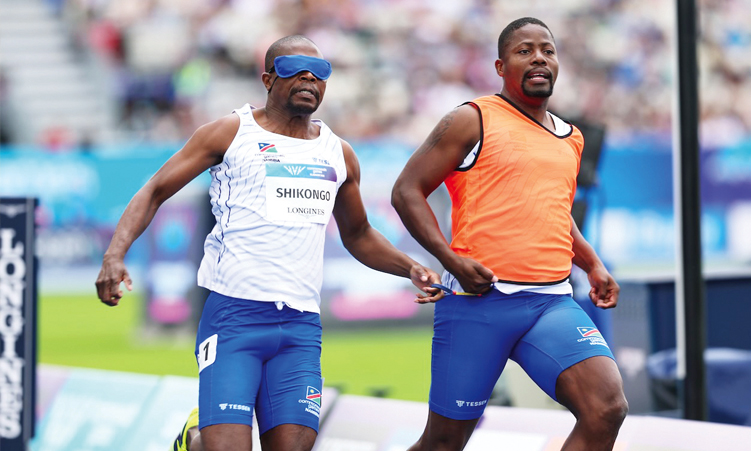
Ananias Shikongo NNPC Disqualification: Games License Failure Cited
Summary
- Gold medalist Ananias Shikongo was disqualified from the Commonwealth Games last month.
- His disqualification resulted from the Namibia National Paralympic Committee's failure to obtain a valid competition license.
- This administrative oversight occurred amidst a years-long power struggle within the NNPC leadership.
- The NNPC had previously suspended its former general secretary, Michael Hamukwaya, late last year.
Athlete Disqualification Amidst Internal Strife
The incident involving Ananias Shikongo's disqualification from the Commonwealth Games serves as a stark reminder of the critical importance of robust governance and compliance within sports federations, particularly for bodies like the Namibia National Paralympic Committee.
Gold medalist Ananias Shikongo faced a significant setback last month when he was formally disqualified from participating in the Commonwealth Games. This unfortunate outcome directly resulted from a critical administrative failure by Namibia’s Paralympic committee, which neglected to secure a valid competition license essential for his participation. The absence of this crucial document rendered the celebrated athlete ineligible for the international event.
This administrative oversight did not occur in isolation but was deeply intertwined with ongoing internal turmoil within the governing body. The disqualification of a high-profile athlete like Shikongo, known for his achievements, underscores the severe repercussions that organizational instability can have on individual careers and national representation on the global stage. The inability to complete fundamental administrative tasks, such as obtaining a necessary license, points to deeper systemic issues within the committee responsible for supporting its athletes.
Governance Failures and Leadership Disputes
The administrative lapse that led to Ananias Shikongo's disqualification is symptomatic of a protracted and intense power struggle that has plagued the leadership of the Namibia National Paralympic Committee (NNPC) for several years. This internal strife has created an environment of instability, directly impacting the committee's operational efficiency and its capacity to fulfill core responsibilities towards its athletes. The ongoing disputes have evidently diverted focus and resources from essential administrative duties, such as ensuring athlete eligibility.
Further illustrating the depth of these internal conflicts, the NNPC took disciplinary action against its former general secretary, Michael Hamukwaya, suspending him from his duties late last year. Such high-level suspensions within the organization's leadership highlight the severe disarray and fractured governance structures currently afflicting the committee. These leadership disputes have demonstrably compromised the NNPC's ability to function effectively, culminating in critical failures like the one that sidelined Shikongo from a major international competition.
Implications for Namibian Sports
The incident involving Ananias Shikongo's disqualification from the Commonwealth Games serves as a stark reminder of the critical importance of robust governance and compliance within sports federations, particularly for bodies like the Namibia National Paralympic Committee. When internal disputes escalate into administrative failures, the direct consequence is often borne by the athletes, whose rights to compete and represent their nation are jeopardized. This situation underscores how internal organizational issues can directly impede Commonwealth Games athlete eligibility for Namibia, affecting not just individual careers but also the nation's sporting prestige.
This episode highlights broader sports governance legal issues in Namibia, where athlete rights in sports federation disputes become a central concern. The failure to secure a basic competition license due to a "years-long power struggle" and the suspension of a key official like Michael Hamukwaya within the NNPC leadership demonstrate a profound breakdown in organizational integrity. Such administrative shortcomings not only deny athletes like Shikongo their rightful place in competition but also raise questions about accountability and the future stability of Paralympic sports in the country. The ongoing Namibia National Paralympic Committee dispute thus carries significant implications for the trust placed in sports bodies and the welfare of their athletes.
Practical Implications
This incident underscores the critical importance of robust governance and compliance within sports federations. Lawyers advising sports bodies or athletes should be aware of the potential for internal disputes to lead to administrative failures, athlete disqualifications, and subsequent legal challenges regarding athlete rights or organizational liability.
Source
How does this affect you?
Get an AI analysis of this article grounded in your jurisdictions, practice areas, and any policy documents you've uploaded to Wansom.
Wansom is AI and can make mistakes.