
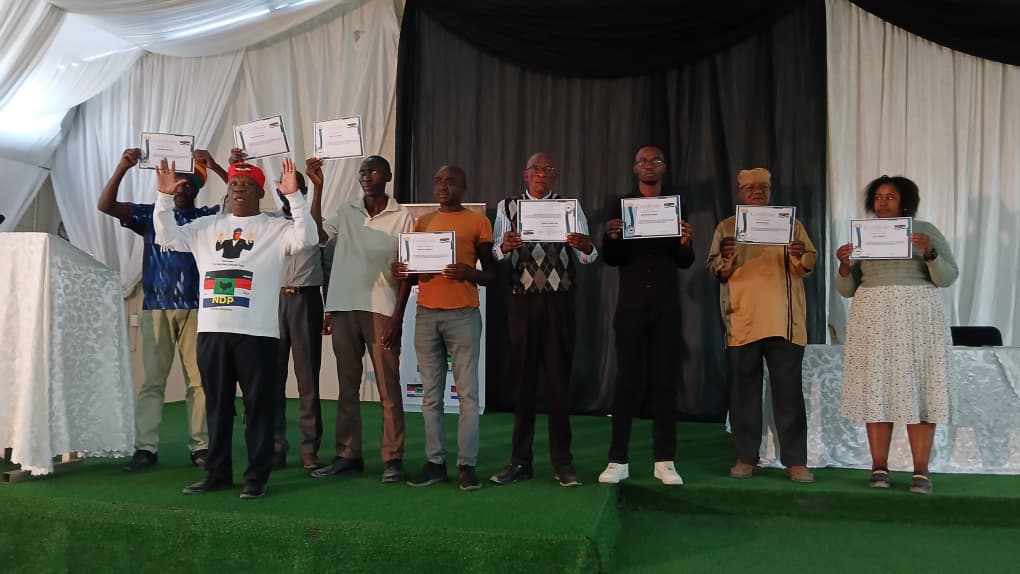
NDP Namibia: Fires 3 Members Amid Lukato Dictatorship Row
Summary
- The National Democratic Party (NDP) has expelled three senior leaders from its ranks.
- The expulsions followed accusations of dictatorial behavior against NDP President Martin Lukato.
- Fired members include Secretary General Alex Linyando, Regional Coordinator Allen Mwilima, and Presidential Affairs Manager Obrien Lisulo.
- The ousted officials publicly claimed President Lukato was running the party as a one-man operation.
Internal Strife at the NDP
The accusation of a 'Lukato dictatorship' suggests a perceived lack of internal democratic mechanisms, where dissenting voices are not tolerated but rather met with punitive measures.
The National Democratic Party (NDP) in Namibia has recently undertaken disciplinary action, resulting in the expulsion of three prominent figures from its top leadership structure. This significant internal upheaval follows allegations of dictatorial conduct leveled against the party's president, Martin Lukato. The individuals removed from their posts are Alex Linyando, who served as the secretary general; Allen Mwilima, the regional coordinator; and Obrien Lisulo, the presidential affairs manager. These expulsions underscore a deepening internal dispute within the NDP, bringing to light fundamental disagreements over leadership style and party governance.
The core of the controversy revolves around public accusations made by the now-expelled members. They reportedly asserted that President Martin Lukato was managing the National Democratic Party in a manner akin to a one-man operation, effectively centralizing power and stifling dissent. Such claims of a "Lukato dictatorship" within the NDP highlight a critical challenge to the party's internal democratic processes and its stated principles. The decision to fire these members, particularly those holding such senior positions, signals a firm response from the party leadership to these public criticisms. The National Democratic Party Namibia expulsions represent a pivotal moment for the organization, potentially reshaping its internal dynamics and public perception.
Governance and Member Rights in Focus
The internal dispute within the National Democratic Party, culminating in the firing of key officials, brings into sharp focus broader questions surrounding Namibia political party governance and the rights of their members. When senior figures like Alex Linyando, Allen Mwilima, and Obrien Lisulo are dismissed for publicly criticizing the party president, it raises concerns about the scope of free expression within political organizations. The accusation of a "Lukato dictatorship" suggests a perceived lack of internal democratic mechanisms, where dissenting voices are not tolerated but rather met with punitive measures. This scenario prompts an examination of how political parties balance the need for cohesive leadership with the imperative to allow for open debate and accountability among their ranks.
Such actions can have significant implications for NDP member rights dispute, potentially setting precedents for how internal disagreements are handled moving forward. While political parties typically have internal rules and disciplinary procedures, the public nature of the accusations and the high-profile expulsions highlight a breakdown in communication or an inability to resolve conflicts internally. The Martin Lukato NDP internal dispute, therefore, transcends a mere personnel matter; it becomes a case study in the challenges faced by political entities in maintaining democratic principles within their own structures. The manner in which these expulsions were carried out and the underlying reasons could influence future debates on the legal and ethical boundaries of party leadership authority versus member autonomy.
Broader Implications for Namibian Politics
The recent events within the National Democratic Party carry significant weight beyond the immediate internal conflict, impacting the broader landscape of Namibian politics. The public airing of accusations regarding a "Lukato dictatorship" and the subsequent expulsions could damage the NDP's credibility and public image, particularly as it seeks to present itself as a viable political force. Such internal strife often leads to a perception of instability and disunity, which can deter potential supporters and voters. For any political party, maintaining a semblance of internal democracy and transparency is crucial for garnering public trust and demonstrating its commitment to the democratic ideals it purports to uphold.
Furthermore, the situation involving the NDP fires members Lukato dictatorship Namibia could spark wider discussions about the health of internal democracy across all political parties in the nation. The ability of members to voice concerns without fear of reprisal is a cornerstone of democratic practice, even within private organizations like political parties. Should the fired members, Alex Linyando, Allen Mwilima, and Obrien Lisulo, choose to pursue legal avenues, this case could potentially establish important precedents regarding member protections and the limits of presidential power within political structures. While no immediate legal action has been reported, the circumstances surrounding these expulsions underscore the ongoing importance of robust internal governance frameworks for all political entities operating within Namibia's democratic framework.
Practical Implications
This article reports an internal political party dispute. While it doesn't detail any immediate legal action, lawyers specializing in constitutional law or administrative law might monitor such events for potential challenges to party governance or member rights, should the fired members pursue legal recourse.
Source
How does this affect you?
Get an AI analysis of this article grounded in your jurisdictions, practice areas, and any policy documents you've uploaded to Wansom.
Wansom is AI and can make mistakes.