
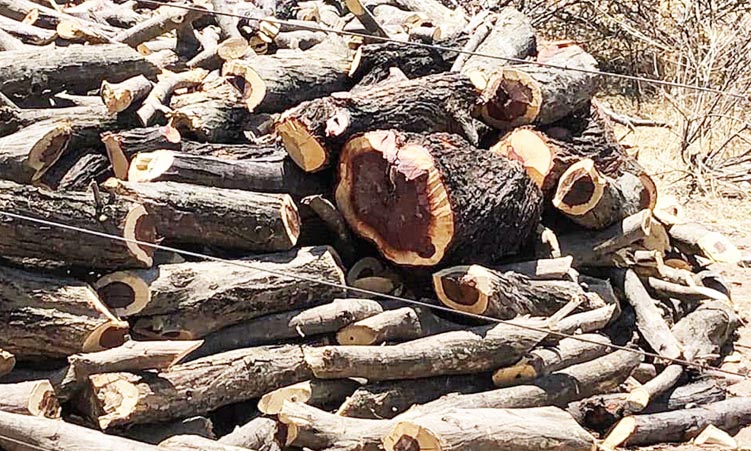
Namibia: Officials Warn on Shana, Omusati Illegal Firewood Logging
Summary
- Illegal firewood logging is a growing concern in Namibia's Shana and Omusati regions.
- Officials are warning against unnecessary environmental destruction caused by these activities.
- The problem is particularly acute in the Uuvudhiya constituency and parts of Otamanzi constituency, including Onkani and Efo-etalala.
- Akwilinus Hinananye of the Ministry of Environment, Forestry and Tourism in Uuvudhiya has highlighted the severity of the issue.
- The Ministry of Environment, Forestry and Tourism is focused on addressing this deforestation in Namibia's northern regions.
Heightened Scrutiny on Illegal Firewood Logging
The persistent challenge of Namibia deforestation in its northern regions, exacerbated by the demand for firewood, poses a substantial threat to ecological stability and sustainable resource management.
Officials in Namibia are expressing significant apprehension regarding the escalating issue of unlawful tree felling for firewood, particularly within the northern regions of Shana and Omusati. This illicit activity is contributing to considerable and avoidable damage to the natural environment, prompting warnings from authorities. The problem is not uniformly distributed but is especially pronounced in specific localities, drawing focused attention from environmental watchdogs.
The Uuvudhiya constituency has been identified as a primary hotspot for this concerning trend. Within the neighboring Otamanzi constituency in the Omusati region, areas such as Onkani, Efo-etalala, and their immediate surroundings are also experiencing severe impacts from illegal tree cutting. These locations represent critical zones where environmental degradation due to unauthorized logging is most visible and concerning to local authorities.
Akwilinus Hinananye, an official representing the Ministry of Environment, Forestry and Tourism (MEFT) stationed in the Uuvudhiya constituency, has publicly articulated these concerns. His statements underscore the gravity of the situation and the urgent need for intervention to curb the widespread destruction of natural resources. The Ministry of Environment, Forestry and Tourism Namibia logging efforts are clearly focused on these affected northern regions.
Environmental and Regulatory Challenges
The persistent challenge of Namibia deforestation in its northern regions, exacerbated by the demand for firewood, poses a substantial threat to ecological stability and sustainable resource management. The unauthorized removal of trees not only depletes vital natural assets but also contributes to soil erosion, habitat loss, and altered microclimates, impacting biodiversity and agricultural viability. Such activities undermine national conservation goals and the long-term well-being of local communities.
Namibia's environmental law enforcement mechanisms are increasingly being tested by the scale and frequency of these illegal operations. While legislation exists to protect forests and regulate resource extraction, the practical implementation and monitoring in vast, often remote, areas like Shana and Omusati present considerable difficulties. The focus on Uuvudhiya Otamanzi illegal tree cutting highlights the need for targeted interventions and community engagement to address the root causes of such practices.
The Ministry of Environment, Forestry and Tourism plays a pivotal role in safeguarding the nation's natural heritage. Their warnings about unnecessary environmental destruction signal a heightened commitment to enforcing regulations and protecting vulnerable ecosystems. This proactive stance is crucial for preserving the ecological integrity of areas heavily impacted by Namibia illegal firewood logging Shana Omusati, ensuring that natural resources are managed responsibly for future generations.
Broader Implications for Regional Sustainability
The ongoing illegal firewood logging in regions like Shana and Omusati carries significant implications beyond immediate environmental damage. It speaks to broader issues of resource scarcity, economic pressures, and the need for sustainable energy alternatives in rural communities. The depletion of tree cover can lead to desertification, affecting agricultural productivity and exacerbating poverty among populations reliant on natural resources.
The official concern voiced by the Ministry of Environment, Forestry and Tourism underscores the potential for more stringent environmental law enforcement Namibia in the affected areas. Businesses operating or sourcing materials from these northern regions, particularly those involved in forestry, agriculture, or resource extraction, should anticipate increased scrutiny regarding land use permits and environmental compliance. Due diligence in supply chains will become paramount to avoid association with unsustainable or illegal practices.
Ultimately, the challenge of Namibia illegal firewood logging Shana Omusati demands a multi-faceted approach, combining robust enforcement with community education and the promotion of alternative livelihoods and energy sources. Addressing the problem in areas like Uuvudhiya and Otamanzi is not merely about preventing illegal tree cutting but about fostering a sustainable relationship between communities and their environment, ensuring the long-term health of these vital northern regions.
Practical Implications
Lawyers advising businesses operating or sourcing from Namibia's northern regions, particularly Shana and Omusati, should be aware of heightened official concern and potential enforcement actions regarding illegal logging for firewood. This could impact land use permits, environmental compliance, and supply chain due diligence for clients involved in forestry, agriculture, or resource extraction in these areas.
Source
How does this affect you?
Get an AI analysis of this article grounded in your jurisdictions, practice areas, and any policy documents you've uploaded to Wansom.
Wansom is AI and can make mistakes.