
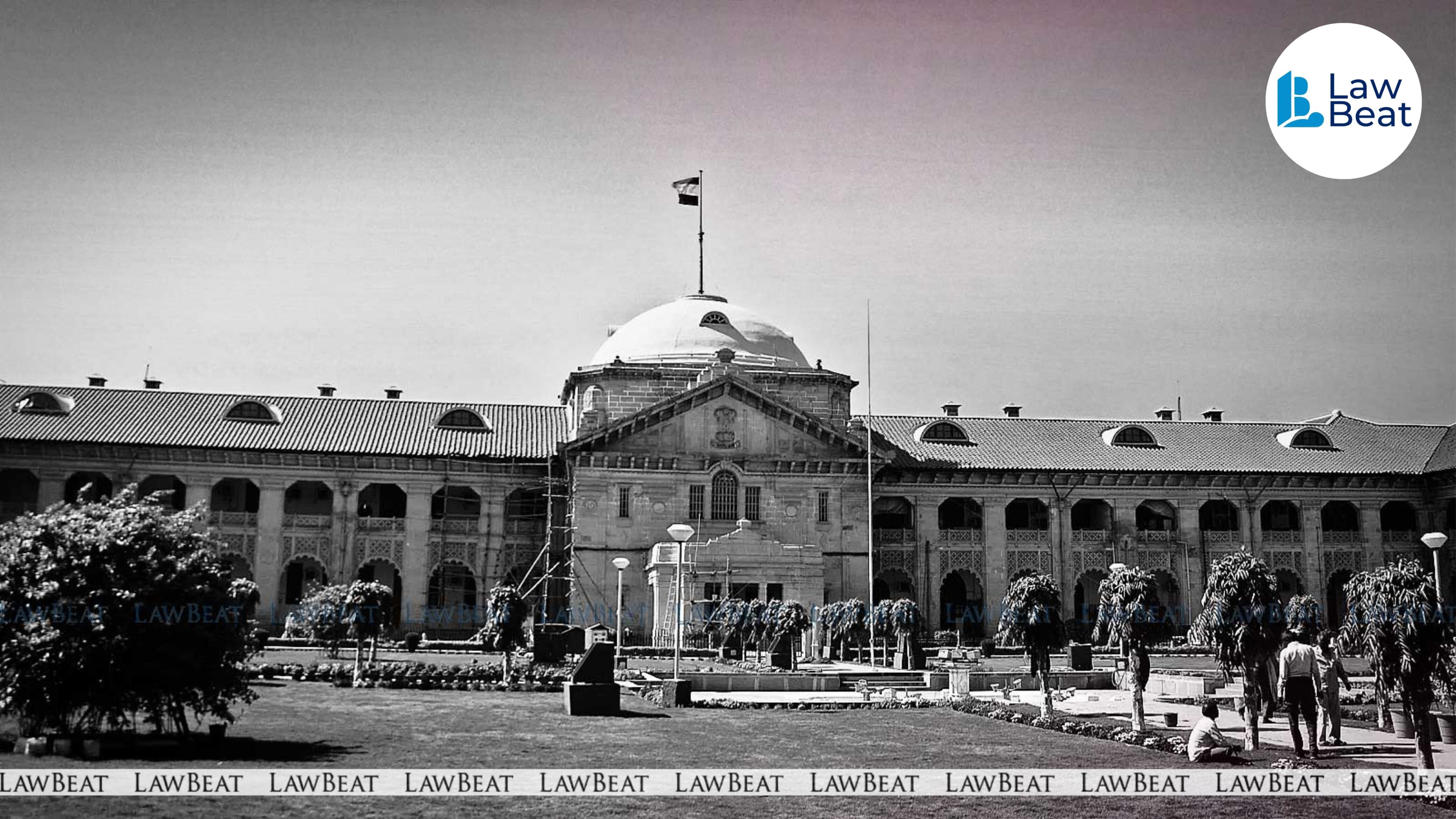
Allahabad HC: Cancels Dowry Death Bail, Cites Arbitrary Order
Summary
- The Allahabad High Court cancelled the bail of Satendra alias Sonu, accused in his wife's dowry death case.
- The High Court found the trial court's bail order arbitrary, despite the legal presumption of dowry death under Section 118 of the Bharatiya Sakshya Adhiniyam.
- Evidence showed the deceased died unnaturally within seven years of marriage, with prior cruelty for dowry, triggering the Section 118 BSA presumption.
- The trial judge admitted the applicability of the presumption but granted bail citing parity with other accused, a rationale rejected by the High Court.
- An administrative inquiry has been directed against the trial judge, Satish Chandra Dwivedi, to examine his exercise of power in granting the bail.
Allahabad High Court Overturns Dowry Death Bail
The Allahabad High Court determined that the initial decision by the trial court to release the accused was made arbitrarily, despite compelling evidence presented against him and the statutory presumption of guilt under Section 118 of the Bharatiya Sakshya Adhiniyam (BSA).
The Allahabad High Court has revoked the bail previously granted to Satendra alias Sonu, an individual accused in a dowry death case involving his wife. The High Court determined that the initial decision by the trial court to release the accused was made arbitrarily, despite compelling evidence presented against him and the statutory presumption of guilt under Section 118 of the Bharatiya Sakshya Adhiniyam (BSA).
The case, which was registered at Sirsakalaar police station, involved charges under Sections 85 and 80(2) of the Bharatiya Nyaya Sanhita (formerly Sections 304B and 498A of the Indian Penal Code), alongside Sections 3 and 4 of the Dowry Prohibition Act. The deceased had tragically died under unnatural circumstances within seven years of her marriage, with court materials indicating ante-mortem hanging and asphyxia. The applicant seeking the bail cancellation, Seema Devi, highlighted that there was also evidence demonstrating the deceased had been subjected to cruelty due to unfulfilled dowry demands shortly before her death.
Justice Arun Kumar Singh Deshwal, presiding over the High Court bench, found the bail order, issued on December 3, 2025, by Additional Sessions Judge, Court No. 1, Jalaun at Orai, to be fundamentally flawed. This ruling follows an earlier directive from the High Court on July 6, 2026, which had requested an explanation from the trial judge regarding the basis for granting bail without providing adequate reasons, particularly given the legal presumption applicable in such cases.
Strict Application of Dowry Death Presumption
A central aspect of the High Court's decision hinges on the robust legal framework established by Section 118 of the Bharatiya Sakshya Adhiniyam (BSA). This provision dictates that if a woman dies within seven years of her marriage under unnatural circumstances, and it is shown that she was subjected to cruelty or harassment for dowry shortly before her death, the court is mandated to presume that the accused person caused the dowry death. This legal presumption significantly shifts the burden in such cases, making bail a more stringent consideration.
In this instance, the trial judge, Satish Chandra Dwivedi, acknowledged that evidence of harassment related to dowry existed and that the deceased had indeed died within seven years of her marriage. He also conceded that, given these facts, the presumption under Section 118 of the BSA was clearly applicable. However, despite these admissions, the judge proceeded to grant bail to the husband, citing the principle of parity with the deceased's mother-in-law and father-in-law, who had also been granted bail.
Judicial Discretion Under Scrutiny
The Allahabad High Court was not convinced by the trial judge's explanation, asserting that the bail order, when read in conjunction with the judge's subsequent justification, unequivocally demonstrated an arbitrary exercise of discretion. The High Court noted that the trial judge could not adequately justify why bail was granted to the husband despite the substantial material against him and the clear applicability of the Section 118 BSA presumption. Furthermore, the High Court observed that the bail had been granted without providing any explicit reasons, a factor that raised suspicion regarding the exercise of judicial discretion.
Consequently, the High Court has directed its administrative committee to evaluate whether an inquiry should be initiated against Additional Sessions Judge Satish Chandra Dwivedi. This inquiry would focus on the manner in which he exercised his power when releasing the deceased's husband on bail, which the High Court described as an "erroneous and arbitrary exercise of power." The court, however, explicitly stated that it was not expressing any opinion on the trial judge's integrity, but rather on the procedural and substantive aspects of his decision-making process in this specific matter.
Reinforcing Legal Standards for Bail
This ruling by the Allahabad High Court serves as a significant reinforcement of the stringent application of dowry death presumptions under Section 118 of the Bharatiya Sakshya Adhiniyam. It underscores the judiciary's commitment to ensuring that statutory provisions designed to protect victims of dowry-related violence are not undermined by unwarranted judicial leniency. The cancellation of Satendra alias Sonu's bail signals a high bar for securing release in cases where the dowry death presumption is attracted, particularly when evidence of cruelty and unnatural death within the marital period is present.
Moreover, the directive for an administrative review of the trial judge's conduct sends a clear message to lower courts regarding the imperative of reasoned decision-making in bail matters, especially in serious offenses like dowry death. This increased scrutiny from higher courts aims to prevent arbitrary bail orders and uphold the integrity of the judicial process, ensuring that discretion is exercised judiciously and in accordance with established legal principles.
Practical Implications
This ruling reinforces the stringent application of dowry death presumptions under Section 118 BSA, signaling to legal practitioners the high bar for bail in such cases. It also serves as a warning to trial judges regarding arbitrary discretion in bail matters, indicating increased scrutiny from higher courts.
Source
How does this affect you?
Get an AI analysis of this article grounded in your jurisdictions, practice areas, and any policy documents you've uploaded to Wansom.
Finish Reading the Full Story and the Expert Analysis.
Wansom is AI and can make mistakes.