
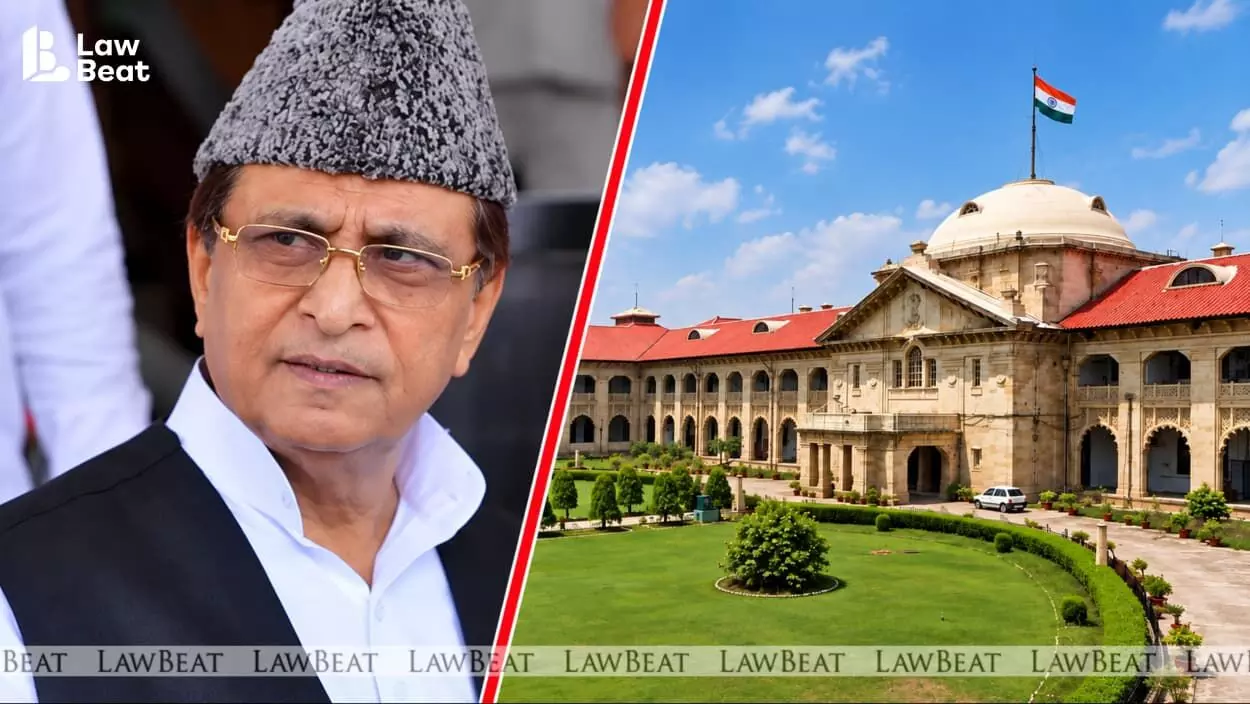
Allahabad High Court: Declines Azam Khan Conviction Suspension
Summary
- The Allahabad High Court granted bail to Azam Khan and Abdullah Azam Khan but refused to suspend their convictions in a 2017 election forgery case.
- Justice Samit Gopal cited the extensive criminal records of both individuals, including 92 cases for Azam Khan and 46 for Abdullah Azam Khan, as a primary reason for denying conviction suspension.
- The court emphasized the public interest in preventing individuals with criminal antecedents from participating in electoral politics.
- The forgery case involved allegations of using a fabricated PAN card to conceal Abdullah Azam Khan's age for his 2017 Assembly election nomination.
- The court rejected arguments that electoral disqualification under the Representation of the People Act, 1951, warranted the suspension of their convictions, stating it is an exceptional relief.
What Happened
Substantial efforts have to be undertaken to cleanse the polluted stream of politics by prohibiting people with criminal antecedents so that they do not even conceive of the idea of entering into politics.
The Allahabad High Court recently granted bail to prominent Samajwadi Party leader Mohd Azam Khan and his son, Abdullah Azam Khan, in a 2017 election forgery case. Despite this relief, the court explicitly declined to suspend their convictions stemming from allegations that documents were fabricated to obscure Abdullah's true age, thereby facilitating his nomination for the Uttar Pradesh Assembly elections. The decision by a single-judge bench, presided over by Justice Samit Gopal, underscores a critical distinction between suspending a sentence (allowing bail) and suspending a conviction itself.
The father and son had filed separate criminal revisions challenging their convictions and the enhanced sentences imposed in the forgery matter. While their applications for sentence suspension were approved, leading to their release on bail, the court mandated specific conditions. These included furnishing personal bonds, providing two sureties each, and immediately depositing half of the fine levied by the appellate court. The court noted that Azam Khan had already served 4 years, 1 month, and 9 days of imprisonment, including remission, while Abdullah Azam Khan had been incarcerated for 3 years, 6 months, and 13 days. Considering the nature of the offense, the time already spent in custody, and the fixed-term nature of the sentences, the court deemed it appropriate to grant bail, but this relief did not extend to overturning their convictions.
Legal Rationale for Refusal
Justice Samit Gopal's ruling highlighted the absence of any compelling justification to suspend the convictions, particularly in light of the extensive criminal histories of both individuals. The court recorded that Mohd Azam Khan is implicated in 92 criminal cases and has eight prior convictions, comprising two from sessions courts and six from magistrate courts. Appeals against two of his magistrate court convictions had previously been dismissed, and 81 cases remain pending against him. Similarly, Abdullah Azam Khan faces involvement in 46 criminal cases, with four prior convictions from magistrate courts, two of which had their appeals dismissed. An additional 44 cases are currently pending against him.
The court emphasized the broader public interest in preventing individuals with criminal backgrounds from participating in electoral politics. Justice Gopal articulated that "Substantial efforts have to be undertaken to cleanse the polluted stream of politics by prohibiting people with criminal antecedents so that they do not even conceive of the idea of entering into politics. They should be kept at bay." This stance reinforces the principle that the suspension of a conviction is an extraordinary remedy, not to be granted lightly, especially when considering the sheer volume of legal entanglements.
Context of the Forgery Case
The underlying election forgery case Uttar Pradesh originated from a First Information Report (FIR) lodged on December 6, 2019, by Akash Saxena. According to the prosecution's allegations, Abdullah Azam Khan possessed a PAN card that accurately reflected his date of birth as January 1, 1993, consistent with his academic records. However, a second PAN card, purportedly indicating a date of birth of September 30, 1990, was allegedly procured and subsequently utilized in his nomination papers for the 2017 Assembly elections, specifically for the Swar constituency. This alleged manipulation of identity documents formed the crux of the charges leading to their convictions.
Implications for Electoral Politics
The father-son duo had argued that their convictions would lead to their Representation of the People Act 1951 disqualification, thereby causing irreparable harm to their political careers and preventing them from contesting upcoming Uttar Pradesh Assembly elections. However, the Allahabad High Court firmly rejected this contention. The court reiterated that the suspension of conviction India is an exceptional form of relief, reserved only for rare and extraordinary circumstances, and cannot be automatically granted simply because an individual faces electoral disqualification. This Justice Samit Gopal ruling clarifies that the potential impact on political aspirations does not override the stringent criteria for such judicial intervention, aligning with the judiciary's stated aim of purifying the political landscape.
Practical Implications
This ruling clarifies the high bar for suspending convictions, particularly for individuals with extensive criminal records, even when it leads to electoral disqualification under the Representation of the People Act, 1951. Lawyers advising political clients or those with significant criminal antecedents on electoral eligibility should note that courts are increasingly prioritizing public interest in 'cleansing politics' over individual political aspirations, making such relief exceptional.
Source
How does this affect you?
Get an AI analysis of this article grounded in your jurisdictions, practice areas, and any policy documents you've uploaded to Wansom.
Finish Reading the Full Story and the Expert Analysis.
Wansom is AI and can make mistakes.