
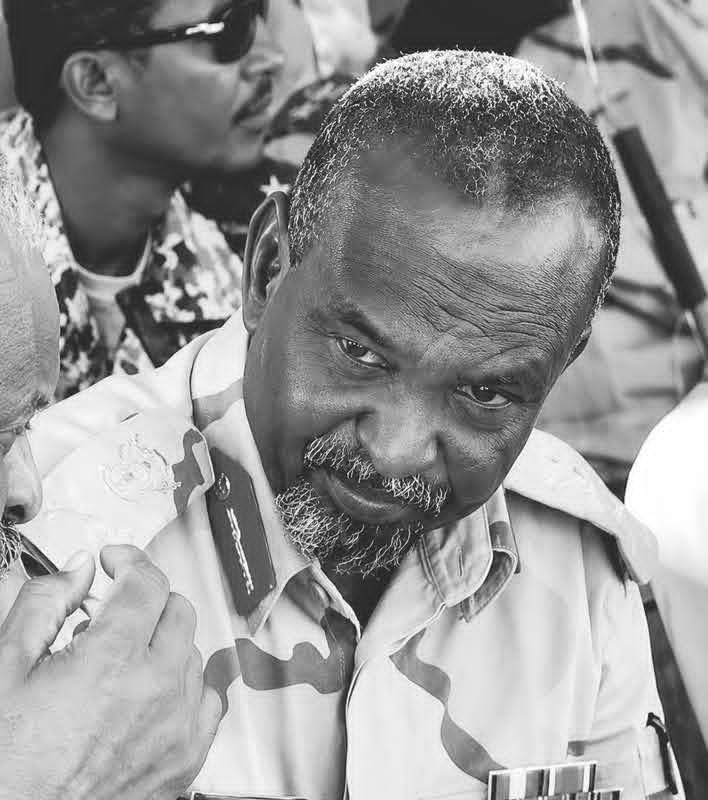
محكمة جنايات الخرطوم: علي النصيح القلع متهم بتقويض النظام الدستوري
Summary
- On November 15, 2026, Lieutenant General Ali Al-Naseeh Al-Qala was charged by the Khartoum North Criminal Court.
- The charges include undermining the constitutional order, inciting war against the state, and cooperating with the Rapid Support Forces.
- Al-Qala, a founding officer of the RSF, was reinstated in 2020 to lead training at Qari camp after retiring in 2015.
- He was arrested by military intelligence in January 2025 and detained for 18 months before being presented to court in September 2026.
- The prosecution rejected a defense request to dismiss the case under Article 141 of the Criminal Procedure Law of 1991, citing sufficient evidence for conviction.
Court Indictment for Senior Officer
This high-profile prosecution of a former military official for undermining the constitutional order and collaborating with the Rapid Support Forces signals the Sudanese judiciary's firm stance against perceived opposition.
On November 15, 2026, the Khartoum North Criminal Court, presided over by Judge Mohamed Sir Al-Khatim Othman, formally charged Lieutenant General Ali Al-Naseeh Al-Qala with grave offenses. The charges against Al-Qala include undermining the constitutional order, inciting war against the state, and collaborating with the Rapid Support Forces. This significant legal development follows an interrogation of the accused within the ongoing criminal proceedings, where the court determined that sufficient preliminary evidence existed to proceed with the indictment.
The indictment of الفريق علي النصيح القلع for such serious allegations underscores a firm judicial stance on matters of national security. The court's decision to move forward with these charges, particularly تقويض النظام الدستوري, highlights the gravity with which Sudanese authorities are addressing actions perceived to threaten the state's foundational structure. This case is poised to be a pivotal legal battle, given the high-profile nature of the accused and the severe implications of the charges.
Al-Qala's Military Career and Arrest
Lieutenant General Ali Al-Naseeh Al-Qala possesses a notable history within Sudan's security apparatus, having been among the founding officers of the Rapid Support Forces. His career saw him retire from service in 2015, holding the rank of Lieutenant General at that time. However, his association with the RSF was rekindled in 2020 when its commander, Mohamed Hamdan Dagalo, known as "Hemedti," brought him back into active duty. Following his reinstatement, Al-Qala was assigned a critical role, taking charge of training operations at the Qari camp, a position he maintained until the outbreak of the recent conflict.
Al-Qala's re-entry into the military sphere and subsequent responsibilities placed him in a prominent position leading up to his eventual arrest. Military intelligence apprehended him in January 2025, an event that occurred in the aftermath of the Al-Jaili area's liberation. Following his arrest, Al-Qala endured an eighteen-month period of detention before he was formally presented before the court in September of the preceding year, setting the stage for the current legal proceedings.
Prosecution's Stance and Legal Framework
The Prosecution for Crimes Against the State and Counter-Terrorism has taken an unyielding position in the case against Lieutenant General Ali Al-Naseeh Al-Qala. The defense team had sought to dismiss the charges, filing a request under Article 141 of the Criminal Procedure Law of 1991. However, this plea was explicitly rejected by the prosecution. First Prosecutor Abu Bakr Othman Sayed, addressing the محكمة جنايات الخرطوم شمال during its Saturday session, asserted that the evidence presented was not merely adequate for the formal charges but was robust enough to secure a conviction.
The legal framework underpinning these proceedings includes the Criminal Procedure Law of 1991, while the offenses such as inciting war against the state and collaborating with the Rapid Support Forces are defined in the Sudanese Criminal Law of 1991, as amended in 2020. The prosecution's case relies significantly on witness testimony, with the first and third prosecution witnesses providing crucial statements. These witnesses testified that the accused was observed at the Rapid Support Forces' detention facility located at the Al-Jaili refinery in February 2024, where detainees were reportedly informed of his presence.
Broader Implications for Sudanese Justice
This high-profile prosecution of a former military official for undermining the constitutional order and collaborating with the Rapid Support Forces signals the Sudanese judiciary's firm stance against perceived opposition. The charges of تقويض النظام الدستوري and inciting war against the state carry severe penalties, reflecting the state's determination to uphold its authority and constitutional framework. The rejection of the defense's motion to dismiss the case, coupled with the prosecutor's confidence in securing a conviction, indicates a rigorous application of the law.
Lawyers advising clients in Sudan should be acutely aware of the severe legal risks and potential charges under the Criminal Procedure Law of 1991 for activities deemed to threaten state security or support opposing factions. The case against الفريق علي النصيح القلع serves as a stark reminder of the judiciary's resolve to address actions perceived as destabilizing the nation. The ongoing proceedings at محكمة جنايات الخرطوم شمال will undoubtedly be closely watched as they unfold, setting a precedent for how the Sudanese legal system handles allegations of treason and collaboration in times of conflict.
Practical Implications
This high-profile prosecution of a former military official for undermining the constitutional order and collaborating with the Rapid Support Forces signals the Sudanese judiciary's firm stance against perceived opposition. Lawyers advising clients in Sudan should be aware of the severe legal risks and potential charges under the Criminal Procedure Law 1991 for activities deemed to threaten state security or support opposing factions.
Source
How does this affect you?
Get an AI analysis of this article grounded in your jurisdictions, practice areas, and any policy documents you've uploaded to Wansom.
Finish Reading the Full Story and the Expert Analysis.
Get the latest legal & regulatory intelligence in Sudan
Wansom is AI and can make mistakes.