
Sudanese Refugees: ICC Proceedings Delays Fuel Sudan Atrocities
Summary
- Sudanese refugees in eastern Chad have urged the International Criminal Court to expedite its proceedings, citing extreme slowness and a lack of arrests.
- The refugees believe the ICC's failure to apprehend accused individuals encourages further crimes across Sudan.
- The ICC delegation explained the court lacks its own enforcement mechanisms and relies on states for arrests.
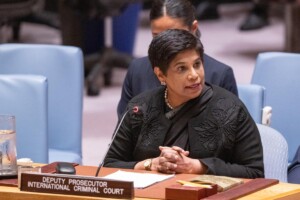
- ICC Deputy Prosecutor Nuzhat Shameem Khan reported progress in investigations into crimes in El Geneina and El Fasher, noting witness testimonies confirmed war crimes and crimes against humanity.
- The ICC has opened an investigation into alleged war crimes and crimes against humanity in Darfur following violence that began in April 2023.
Refugees Demand Faster Justice
The ICC's reliance on state cooperation for arrests means that without the political will or capacity of national governments, its mandates can be significantly hampered.
Sudanese refugees residing in eastern Chad have issued an urgent plea to the International Criminal Court (ICC), calling for an acceleration of its judicial processes. During a recent visit by an ICC delegation to the Gaga camp, refugees conveyed their profound frustration, characterizing the court's proceedings as "extremely slow." They expressed a strong belief that the ICC's inability to apprehend individuals accused of atrocities in Sudan actively contributes to the perpetration of additional crimes across the nation.
The refugees highlighted that, to date, the International Criminal Court Sudan has not successfully arrested any of the accused parties. They noted that only a single defendant has been brought to trial, and that individual had voluntarily surrendered. This perceived lack of enforcement, they argued, emboldens perpetrators and fosters an environment where further violations can occur with impunity, directly impacting the safety and well-being of countless Sudanese citizens.
ICC's Investigative Progress and Challenges
In response to these concerns, the ICC delegation clarified that the court is exerting every effort to ensure those responsible for crimes are brought to justice. However, they underscored a fundamental limitation: the International Criminal Court lacks its own military or police force, meaning it must rely entirely on the cooperation of states to execute arrests. This reliance presents significant ICC challenges arrests Sudan, particularly in conflict-ridden regions.
Despite these hurdles, ICC Deputy Prosecutor Nuzhat Shameem Khan provided an update in July, confirming advancements in investigations into crimes committed in El Geneina, El Fasher, and surrounding areas amidst the ongoing conflict. Khan, in her presentation of the Prosecutor’s 43rd report to the United Nations Security Council, detailed important interviews conducted with key witnesses. Their testimonies have been crucial in deepening the Office's understanding of the nature and patterns of these crimes, strengthening its ability to link them to senior-level perpetrators, and identifying previously unknown victims.
Darfur War Crimes Investigations Intensify
The progress made in these investigations reinforced earlier conclusions that war crimes and crimes against humanity were perpetrated in both El Geneina and El Fasher. The preliminary assessment by the Office suggests that the scale of these crimes could indeed amount to crimes against humanity and war crimes. Specifically, evidence gathered points to war crimes, including murder and outrages upon personal dignity, in El Fasher and its vicinity.
Further demonstrating its commitment to accountability, the ICC Prosecutor announced on July 13, 2023, the initiation of an investigation into alleged war crimes and crimes against humanity in Darfur. This inquiry was launched following the outbreak of violence on April 15, 2023, involving the Sudanese Armed Forces, the Rapid Support Forces (RSF), and their allied armed groups. Deputy Prosecutor Khan specifically cited a lack of cooperation from the RSF with the Office of the Prosecutor and urged the Sudanese government to hand over three wanted suspects. She also called for international intervention to prevent the recurrence of crimes witnessed in El Geneina and El Fasher in other areas, such as El Obeid.
The Broader Implications of Delays
The persistent delays in bringing alleged perpetrators to justice, as highlighted by the Sudanese refugees, underscore a critical vulnerability in the international legal framework. The ICC's reliance on state cooperation for arrests means that without the political will or capacity of national governments, its mandates can be significantly hampered. This situation not only prolongs the suffering of victims but also risks eroding confidence in international justice mechanisms.
For the refugees in eastern Chad, these delays are not merely procedural; they represent a direct threat to peace and stability, fostering an environment where impunity can thrive. The calls for swifter action and greater international support reflect a deep-seated desire for accountability and a belief that justice, however slow, is essential to prevent future atrocities and provide a measure of closure for those who have endured immense suffering.
Practical Implications
This article highlights the significant practical challenges faced by the International Criminal Court in enforcing its mandates, particularly its reliance on state cooperation for arrests in conflict zones like Sudan. Lawyers advising on international criminal law or human rights should note these limitations, as they impact the timeline and feasibility of prosecutions, and could inform strategies for accountability or client representation in similar contexts where state support is absent.
Source
How does this affect you?
Get an AI analysis of this article grounded in your jurisdictions, practice areas, and any policy documents you've uploaded to Wansom.
Finish Reading the Full Story and the Expert Analysis.
Get the latest legal & regulatory intelligence in Sudan
Wansom is AI and can make mistakes.