
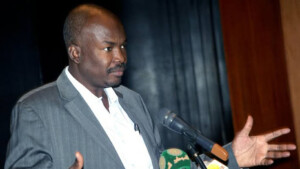
Sudan Emergency Lawyers: No Ahmed Haroun ICC Arrest Confirmation
Summary
- Reports of Ahmed Haroun's arrest, an ICC indictee, lack official confirmation from Sudanese authorities.
- Sudan’s Emergency Lawyers group demands clarity on Haroun's whereabouts and calls for his handover to the International Criminal Court if arrested.
- The group also seeks information on other ICC indictees, including Omar al-Bashir and Abdel Rahim Mohamed Hussein.
- Conflicting accounts and official silence reflect governmental inability to handle major judicial cases and raise concerns about accountability.
- Despite outstanding warrants, Haroun has been at liberty and moving freely in Sudanese army-controlled areas since leaving prison.
Unconfirmed Reports and Calls for Clarity
This step, they argue, is crucial to ensure he faces justice and can no longer evade accountability for the crimes he is accused of committing.
Reports circulated recently in international media, citing unnamed sources, suggesting the arrest of Ahmed Mohamed Haroun, an individual wanted by the International Criminal Court (ICC). These allegations, which emerged on Sunday, have not been officially substantiated. Sudan’s Emergency Lawyers group has publicly stated that there is no independent evidence or official confirmation to support claims of Haroun’s apprehension. The accuracy of these widespread reports has subsequently been called into question.
In response to the unconfirmed reports, Sudan’s Emergency Lawyers have urged authorities to provide clarity regarding Haroun’s current whereabouts. The group also demands that the government establish the truth behind the various accounts and disclose the fate of other individuals sought by the ICC. They emphasize that any actual arrest of Haroun must be promptly followed by the necessary legal procedures to facilitate his transfer to the International Criminal Court, thereby enforcing the existing arrest warrant against him. This step, they argue, is crucial to ensure he faces justice and can no longer evade accountability for the crimes he is accused of committing.
Broader Accountability Concerns
The situation surrounding Ahmed Haroun underscores broader concerns about accountability for International Criminal Court indictees in Sudan. The Emergency Lawyers group has also called upon authorities to reveal the whereabouts of other prominent figures wanted by the ICC, including former president Omar al-Bashir and Abdel Rahim Mohamed Hussein. All three individuals are sought by the International Criminal Court on allegations of war crimes and crimes against humanity, with al-Bashir additionally facing charges of genocide.
The legal group insists that the government must clarify what measures have been taken concerning these high-profile indictees. Their demand reflects a persistent call for transparency and adherence to international legal obligations, aiming to ensure that those accused of grave international crimes are brought before justice. The lack of official statements regarding Haroun's alleged arrest or the status of other ICC warrants highlights ongoing challenges to the rule of law and international criminal justice within Sudan.
Conflicting Narratives and Political Maneuvering
The absence of official confirmation and the conflicting information surrounding Haroun’s reported arrest have led to significant confusion and skepticism. Lawyer and human rights activist Rehab El Mubarak observes that this official silence, combined with contradictory accounts, reveals a lack of governmental clarity and an inability to decisively manage major judicial cases. She suggests that these alleged developments have been characterized by some as a "fabricated farce," questioning the genuine commitment of current authorities to upholding the law and achieving accountability. El Mubarak warns that without publicly announced charges and transparent investigations, a cycle of impunity is likely to persist.
Journalist and activist Qureshi Awad offers a different perspective, describing the incident not as a conventional arrest by authorities, but rather as the apprehension of a prisoner who had previously escaped justice. Awad notes that authorities were reportedly unaware of Haroun's location since he departed Kober Prison amidst deteriorating security conditions and the suspension of court hearings. He points to the continued silence from official bodies and the absence of a clear, documented statement, noting that authorities have confined their remarks to the circumstances of Haroun’s prior detention. Awad concludes that Haroun, who along with his dissolved party is attempting to position himself politically as a figure with solutions for the current crisis, rightfully belongs in the dock to face 42 charges, including war crimes and crimes against humanity, rather than participating in political life.
Haroun's Past and Present Liberty
Prior to these recent reports, Ahmed Haroun was detained at Kober Prison in Khartoum, alongside former president Omar Hassan Ahmed Al Bashir and former defence minister Abdel Rahim Mohamed Hussein. All three were wanted by the International Criminal Court for alleged war crimes and crimes against humanity, with Al Bashir also facing accusations of genocide. Haroun was also subject to domestic criminal proceedings, including Case No. 2868 of 2006, which pertained to crimes committed in Darfur, and investigations related to the killing of protesters during the December Revolution of 2018.
Despite the international and domestic warrants, Haroun has remained at liberty since his departure from prison. He has been observed moving freely between various cities and states across Sudan, specifically within areas controlled by the Sudanese army. This continued freedom, in light of the outstanding ICC arrest warrant and domestic charges, further complicates the narrative surrounding his alleged recent arrest and the broader issue of Sudan accountability for ICC indictees.
Practical Implications
Lawyers advising on international criminal law or human rights in Sudan should closely monitor official statements regarding the whereabouts and potential handover of ICC indictees like Ahmed Haroun, as the lack of transparency indicates ongoing challenges to accountability and the rule of law within the jurisdiction.
Source
How does this affect you?
Get an AI analysis of this article grounded in your jurisdictions, practice areas, and any policy documents you've uploaded to Wansom.
Finish Reading the Full Story and the Expert Analysis.
Get the latest legal & regulatory intelligence in Sudan
Wansom is AI and can make mistakes.