
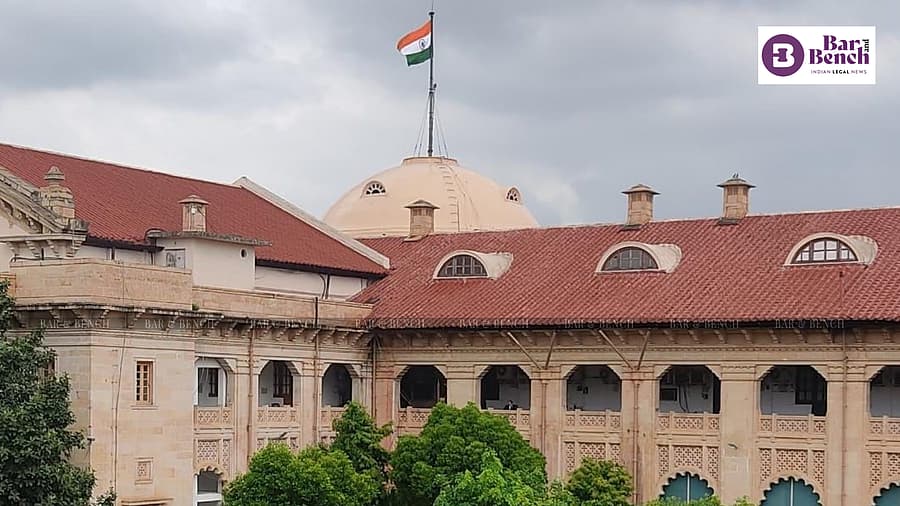
Allahabad HC: Akriti Chaudhary Case Reminds Noida DM of Constitutional Loyalty
Summary
- The Allahabad High Court recently admonished Indian Administrative Service and Indian Police Service officers, stating their loyalty must be to the Constitution, not the political executive.
- A Division Bench of Justice Atul Sreedharan and Justice Achal Sachdev issued this ruling, reportedly in connection with the Akriti Chaudhary case involving the Noida District Magistrate.
- The court warned that ignoring their constitutional oath could lead to public perception of officers as an oppressive colonial vestige, fostering angst, hatred, and civil unrest.
- It affirmed its readiness to issue severe orders, including compensation for citizens, when bureaucratic actions infringe upon civil liberties without due process.
- The High Court cautioned that unchecked bureaucratic excesses could transform the state of Uttar Pradesh into an "Orwellian Dystopia".
Judicial Rebuke on Bureaucratic Conduct
The Division Bench unequivocally stated that the loyalty of Indian Administrative Service and Indian Police Service officers is owed to the Constitution of India, rather than to the political executive.
The Allahabad High Court recently issued a stern reminder to India's top administrative and police officials, emphasizing that their primary allegiance lies with the Constitution, not the political executive. This significant pronouncement emerged from a Division Bench comprising Justice Atul Sreedharan and Justice Achal Sachdev, reportedly in the context of the Akriti Chaudhary case, which implicitly involved the Noida District Magistrate. The court's strong language underscores a critical aspect of Allahabad High Court bureaucrats constitutional loyalty, highlighting the judiciary's role in upholding democratic principles.
The Division Bench unequivocally stated that the loyalty of Indian Administrative Service and Indian Police Service officers is owed to the Constitution of India, rather than to the political executive. This declaration serves as a fundamental principle guiding the conduct of public servants, reinforcing the constitutional framework within which they operate.
Upholding Constitutional Loyalty
The Bench articulated that when officers from the Indian Administrative Service (IAS) and Indian Police Service (IPS) disregard their solemn constitutional oath and their allegiance to India, they risk being perceived by the populace as an oppressive remnant of the British Empire. Such a departure from their sworn duties, the court warned, could ignite public "angst and hatred," thereby fostering an environment conducive to civil unrest across the state of Uttar Pradesh. This judicial stance reinforces the fundamental importance of the IAS IPS constitutional oath India, stressing that public servants must remain loyal to the foundational legal document of the nation.
The court's admonition highlights the potential for widespread societal discontent if bureaucrats prioritize political directives over their constitutional obligations. It posits that such actions erode public trust and can lead to a breakdown in the relationship between the citizenry and the administrative machinery, ultimately threatening social harmony.
Safeguarding Citizen Rights
The Allahabad High Court further asserted its commitment to intervene decisively against bureaucratic excesses and illegalities, particularly when such actions infringe upon the civil liberties of citizens without adequate justification or due process, which is inherent in the procedure established by law. The court indicated its willingness to issue "harsh orders" to compensate individuals who have been wronged by such conduct, in addition to formally documenting the "despotic conduct" of the officials involved. This commitment highlights the judiciary's role in civil liberties protection India judiciary, ensuring that administrative power is exercised within constitutional bounds.
This judicial resolve serves as a critical safeguard against arbitrary state action, empowering citizens to seek redress when their rights are violated by administrative or police officials. The prospect of judicial compensation and the public recording of misconduct are intended to act as deterrents against unconstitutional behavior by public servants.
Preventing Authoritarian Governance
The judges delivered a stark warning, stating that if the judiciary fails to act against the overreach of bureaucrats, the state of Uttar Pradesh could swiftly devolve into an "Orwellian Dystopia." This powerful admonition underscores the critical need for Uttar Pradesh bureaucratic accountability and the judiciary's role as a bulwark against arbitrary power. The court's intervention is presented as essential to prevent a scenario where unchecked administrative authority undermines the rule of law and the fundamental rights of citizens, thereby preserving the democratic fabric of the state.
This judicial perspective emphasizes that the judiciary stands as the ultimate guardian of constitutional principles, tasked with ensuring that governance remains within democratic parameters. The warning about an "Orwellian Dystopia" serves as a potent reminder of the potential consequences of unchecked power and the vital importance of judicial oversight in a democratic society.
Practical Implications
This ruling provides a strong judicial precedent for challenging arbitrary or unconstitutional actions by Indian administrative and police service officers, empowering lawyers to advocate for civil liberties and potentially seek compensation for wronged citizens. Compliance officers advising government entities should note the heightened judicial scrutiny on bureaucratic conduct and ensure adherence to constitutional principles to avoid adverse court orders.
Source
How does this affect you?
Get an AI analysis of this article grounded in your jurisdictions, practice areas, and any policy documents you've uploaded to Wansom.
Finish Reading the Full Story and the Expert Analysis.
Wansom is AI and can make mistakes.