
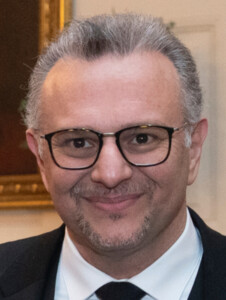
Ahmed Haroun Arrest: US Accountability for Sudan Atrocities
Summary
- The United States has called for accountability regarding atrocities against Sudanese civilians following the arrest of former official Ahmed Haroun.
- Massad Boulos, a senior US adviser, noted Haroun's arrest and emphasized the need to address extremist networks fueling the conflict.
- Haroun, a former Minister of State for the Interior and National Congress Party figure, was sanctioned by the US for his role in civilian atrocities.
- Journalist Rasha Awad stated that US remarks reflect opposition to the Islamic Movement's return to power, a stance shared by the Sudanese public.
- Awad argued that the former ruling National Congress Party and Islamic Movement must be excluded from future governance due to their past crimes and ongoing efforts to retain power through force.
International Pressure Mounts for Sudan Accountability
The unwavering determination of these groups to maintain military, security, and political dominance has been a primary catalyst for both the outbreak and the prolonged continuation of the devastating war in Sudan.
The United States has recently intensified its calls for accountability concerning the atrocities committed against Sudanese civilians, a demand that follows the apprehension of former government official Ahmed Haroun. This significant development was highlighted by Massad Boulos, who serves as US President Donald Trump’s senior adviser for Arab and African affairs, in a statement posted on X on Monday. Boulos confirmed that Washington had formally acknowledged Haroun's arrest, underscoring the international community's focus on justice in Sudan.
In his remarks, Boulos specifically identified Haroun as an individual previously sanctioned by the United States due to his involvement in severe human rights abuses against the Sudanese populace. Haroun, a prominent figure, formerly held the position of Minister of State for the Interior and was a senior member of the now-defunct National Congress Party. Boulos further stressed the critical necessity of addressing the role played by "violent extremist networks and Muslim Brotherhood-affiliated groups" in exacerbating the ongoing conflict, reiterating that all individuals responsible for perpetuating violence in Sudan must face consequences for their actions.
The Legacy of Ahmed Haroun and the National Congress Party
Ahmed Haroun's arrest brings renewed attention to the legacy of the National Congress Party (NCP) and its impact on Sudan. As a high-ranking official within the former ruling party, Haroun's past actions, particularly during his tenure as Minister of State for the Interior, led to his designation for sanctions by the US government. These sanctions were a direct response to his documented involvement in the perpetration of atrocities against Sudanese civilians, highlighting a period marked by widespread human rights violations.
The broader context of the NCP's rule and its association with the Islamic Movement remains a contentious issue in Sudan. Despite being removed from power following the December Revolution, leaders from both the former ruling National Congress Party and the Islamic Movement have consistently resisted international and regional efforts to prevent their political resurgence. This defiance underscores a persistent challenge to establishing stable and democratic governance in the country, as these groups continue to exert influence.
Underlying Dynamics of the Sudanese Conflict
Rasha Awad, the editor-in-chief of the online newspaper Al-Taghyeer, offered critical insights into the implications of Boulos's statements during an interview with Radio Dabanga. Awad explained that the US adviser's comments align with the Trump administration's stated objective of preventing the Islamic Movement from regaining power through military conflict. She emphasized that the opposition to the political return of these groups is not merely an international or regional stance, but is deeply rooted in the Sudanese public's widespread rejection of their past rule and continued influence.
Awad strongly advocated for the exclusion of these groups from any future transitional government or political processes, citing the severe crimes committed against the Sudanese people under their watch. She asserted that members of these organizations must abandon their pursuit of power through coercion and intimidation, and crucially, sever all ties with military and security institutions. According to Awad, the unwavering determination of these groups to maintain military, security, and political dominance has been a primary catalyst for both the outbreak and the prolonged continuation of the devastating war in Sudan.
Practical Implications
Lawyers advising clients with interests in Sudan or those involved in international human rights and criminal law should monitor the escalating international pressure for accountability regarding atrocities, as this may lead to further sanctions, asset freezes, or international criminal proceedings against individuals and entities associated with the former regime.
Source
How does this affect you?
Get an AI analysis of this article grounded in your jurisdictions, practice areas, and any policy documents you've uploaded to Wansom.
Finish Reading the Full Story and the Expert Analysis.
Get the latest legal & regulatory intelligence in Sudan
Wansom is AI and can make mistakes.