
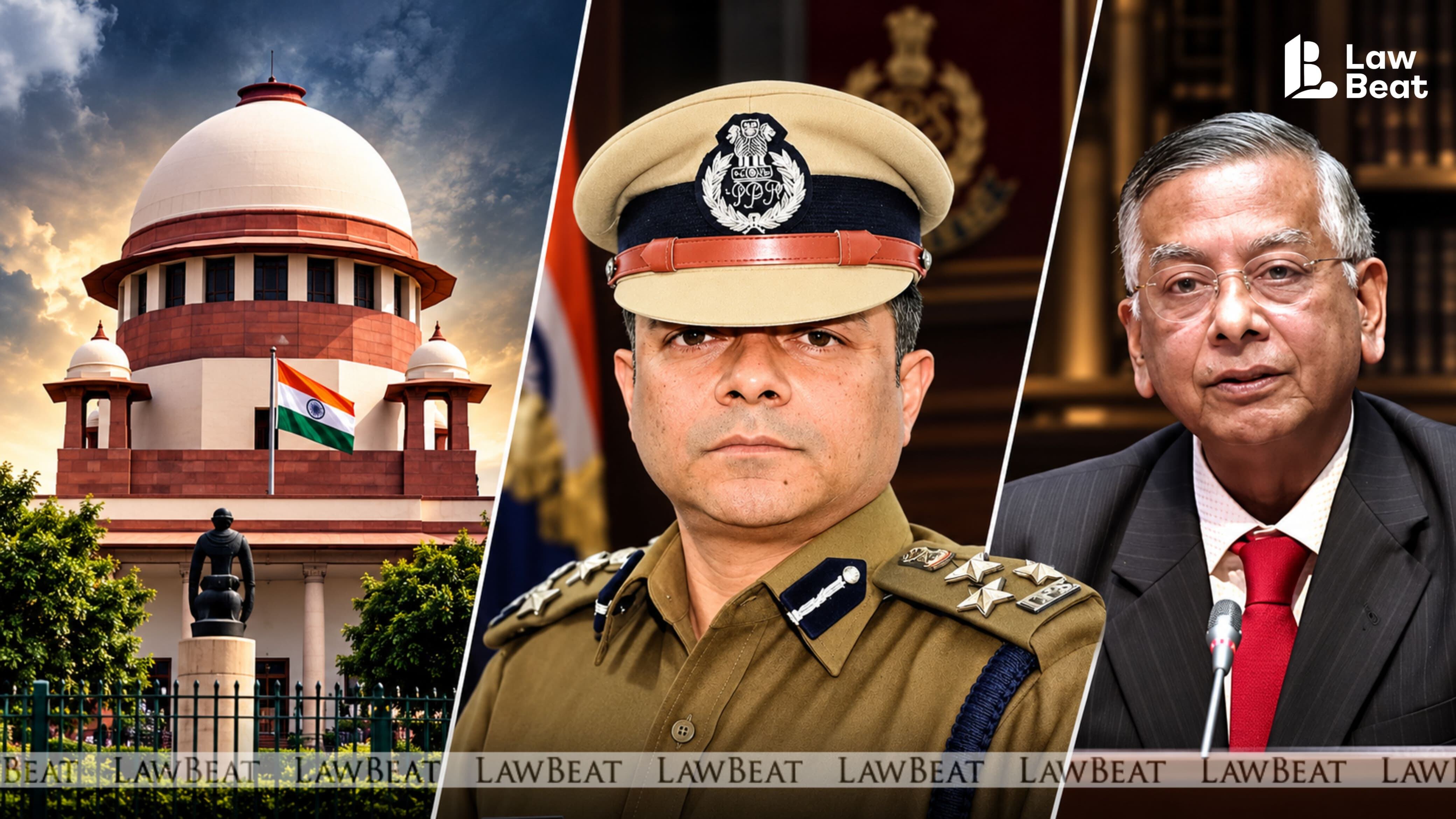
Delhi Police Commissioner Anurag Kumar: Contempt Request Over SC Order
Summary
- Advocate Brajesh Singh has sought the Attorney General's consent to initiate criminal contempt proceedings against Delhi Police Commissioner Anurag Kumar.
- The request stems from alleged breaches of a Supreme Court order issued on October 11, 2026, which protected journalists and lawyers.
- Singh's letter, dated October 12, alleges that Delhi Police detained journalists and peaceful protesters shortly after the Supreme Court's directives.
- The Supreme Court's order specifically mandated that professionals should not be hindered and prohibited illegal detentions.
- Consent from the Attorney General is a prerequisite for initiating such criminal contempt proceedings by a private individual under Section 15(1)(b) of the Contempt of Courts Act, 1971.
What Happened
This action underscores the judiciary's role in safeguarding professional duties and preventing unlawful detentions, particularly in the context of public demonstrations.
Advocate Brajesh Singh has formally requested the Attorney General for India to grant consent for initiating criminal contempt proceedings against Delhi Police Commissioner Anurag Kumar. This significant move follows allegations that the Delhi Police violated specific directives issued by the Supreme Court on October 11, 2026. The advocate's letter, dispatched to Attorney General R. Venkataramani on October 12, asserts that journalists and peaceful protesters were unlawfully detained in Central Delhi mere hours after the apex court's order was pronounced.
Singh's communication specifically accuses the Delhi Police of "intercepting, harassing, and detaining approximately a dozen journalists" who were covering protests in Central Delhi on the very day the Supreme Court's protective order was issued. The Supreme Court, convening on a Sunday, had explicitly mandated that "Lawyers, journalists and other professionals shall not be hindered in discharge of their professional duties in any manner whatsoever." The advocate's application seeks to hold Commissioner Kumar accountable for what is described as a "blatant, deliberate, and willful defiance" of these clear judicial instructions. As of now, no contempt proceedings have been formally initiated against the Commissioner, with the request currently awaiting review by the Attorney General's office.
The Supreme Court's Directives
The Supreme Court's crucial directives, which are at the heart of the contempt application, were issued on October 11, 2026, by a Bench comprising Justice Joymalya Bagchi and Justice V. Mohana. This special Sunday sitting was convened for an urgent hearing concerning applications that alleged violations of an earlier court order dated October 9, 2026, and reported illegal detentions of numerous individuals in Delhi on October 10, 2026. The Court's proceedings recorded an assurance from the Solicitor General that "lawyers, journalists and other professionals shall not be impeded in discharge of their professional duties."
Building upon this, the Bench issued several specific instructions. Key among these was the directive that there should be "no illegal detention, particularly in cases of peaceful unarmed assemblage of people beyond the area where Section 163 BNSS is in operation." Furthermore, it reiterated that "Lawyers, journalists and other professionals shall not be hindered in discharge of their professional duties in any manner whatsoever." The Court also mandated that metro and railway facilities should operate normally unless regulation was necessary under Article 19(2), that road barricades be reviewed immediately, and that internet services remain unhindered.
Legal Framework for Contempt
The legal basis for Advocate Singh's request is rooted in Section 15(1)(b) of the Contempt of Courts Act, 1971, read in conjunction with Section 2(c) of the Act and Rule 3 of the Rules to Regulate Proceedings for Contempt of the Supreme Court, 1975. Under this framework, initiating criminal contempt proceedings by a private individual against a public official requires the explicit written consent of either the Attorney General or the Solicitor General of India. This procedural safeguard ensures that such serious legal actions are not pursued frivolously.
The Contempt of Courts Act, 1971, outlines that the Supreme Court possesses the authority to initiate action for criminal contempt either on its own motion (suo motu), or based on a motion brought by the Attorney General or the Solicitor General. Alternatively, any other person can move the court, provided they have secured the necessary written consent from one of these high legal officers. Advocate Singh's letter specifically urges the Attorney General to provide this consent in a "time bound manner" to facilitate the formal filing and adjudication of the proposed criminal contempt petition before the Supreme Court.
Why It Matters
This application for criminal contempt against a high-ranking police official like Delhi Police Commissioner Anurag Kumar holds significant implications for the rule of law and the protection of civil liberties in India. It highlights the Supreme Court's resolve to ensure its directives are respected and followed, especially when they pertain to safeguarding the professional activities of lawyers and journalists during public demonstrations. The alleged defiance, occurring so swiftly after the court's order, challenges the authority of the judiciary and the principle that state actors must adhere to judicial pronouncements.
The case underscores the critical role of the Attorney General's consent in allowing private citizens to seek accountability for alleged judicial non-compliance by state authorities. By invoking the Contempt of Courts Act, Advocate Singh is seeking to reinforce the judiciary's power to enforce its orders and deter future instances of alleged disregard for fundamental rights, such as freedom of the press and the right to peaceful assembly. This action underscores the judiciary's role in safeguarding professional duties and preventing unlawful detentions, particularly in the context of public demonstrations. The outcome of this request will send a clear message regarding the enforceability of Supreme Court orders and the accountability of public officials.
Practical Implications
This development underscores the Supreme Court's commitment to upholding its directives, particularly those safeguarding the professional duties of lawyers and journalists and preventing illegal detention. Lawyers should be aware of the process for initiating criminal contempt proceedings against state actors for non-compliance with judicial orders, requiring the Attorney General's consent, and advise clients accordingly regarding potential remedies for rights violations during protests.
Source
How does this affect you?
Get an AI analysis of this article grounded in your jurisdictions, practice areas, and any policy documents you've uploaded to Wansom.
Finish Reading the Full Story and the Expert Analysis.
Get the latest legal & regulatory intelligence in India
Wansom is AI and can make mistakes.