
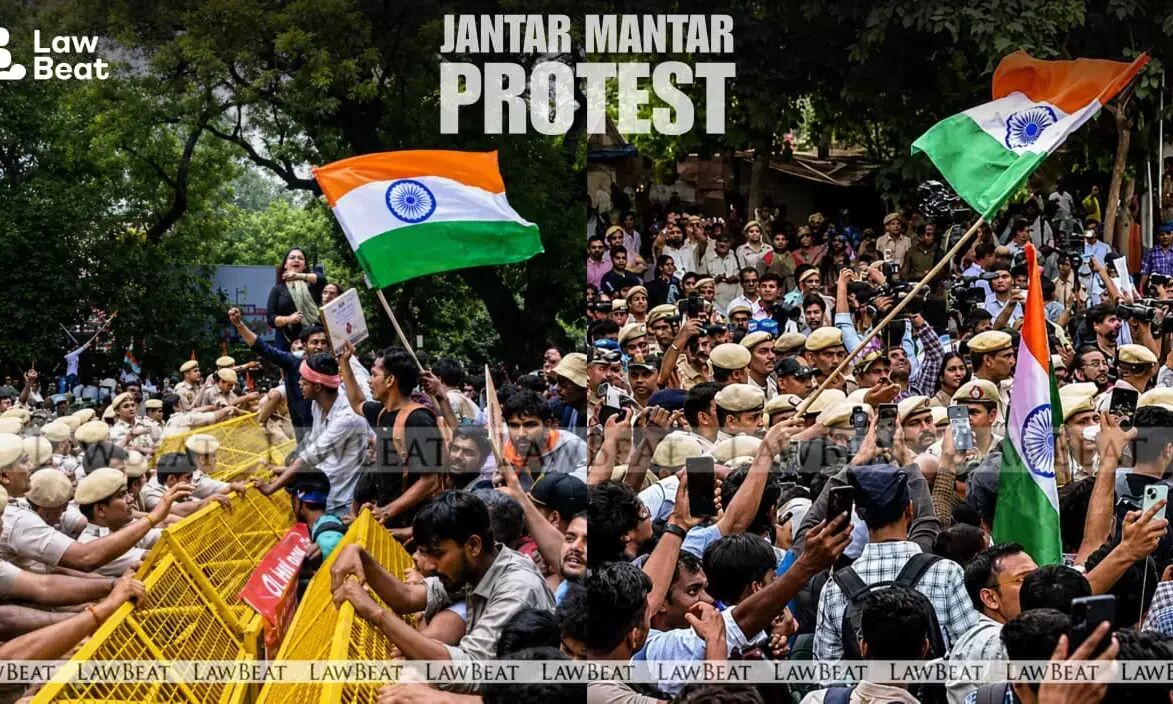
Delhi Police: Jantar Mantar Protest Site Denotified, New Venues Named
Summary
- The Delhi Police has denotified Jantar Mantar as a designated protest site.
- This decision follows recommendations from a Union Home Ministry committee and a Supreme Court directive.
- Three new alternative protest venues have been identified: Ramlila Ground, Burari Ground, and CBD Ground in East Delhi.
- Revised Standard Operating Procedures for organizing demonstrations at these new sites will be issued separately.
- The Supreme Court noted concerns regarding Jantar Mantar's safety, logistical challenges, and lack of essential amenities for large public gatherings.
The Denotification of Jantar Mantar
The Delhi Police has officially removed Jantar Mantar from its list of designated protest venues, marking a significant shift in the regulation of public demonstrations within the national capital.
The Delhi Police has officially removed Jantar Mantar from its list of designated protest venues, marking a significant shift in the regulation of public demonstrations within the national capital. This decision, formalized through a standing order issued on October 11, 2026, follows a recommendation from a committee established by the Union Home Ministry. The move comes in response to a recent directive from the Supreme Court, which urged authorities to identify and arrange alternative locations for public protests across Delhi.
In place of Jantar Mantar, the Delhi Police has identified three new sites where demonstrations can now be held. These alternative protest venues include Ramlila Ground, Burari Ground, and CBD Ground, all located in East Delhi. The police have indicated that detailed and revised Standard Operating Procedures (SOPs) for organizing protests and demonstrations at these newly designated locations will be released at a later date, providing clarity on the new regulatory framework.
Supreme Court's Intervention and Concerns
The Supreme Court's push for new arrangements stemmed from a plea filed in August, which argued that Jantar Mantar was no longer a suitable site for public protests. This petition highlighted several critical issues, including significant problems with ingress and egress, as well as difficulties in supplying essential medical provisions to demonstrators. A bench led by Chief Justice Surya Kant took serious note of these concerns, instructing the Solicitor General to obtain instructions and scheduling a separate hearing for the matter.
The court was also informed about the necessity of implementing measures to prevent the recurrence of clashes, similar to those observed during recent protests, particularly the 'Sansad Chalo' march on July 20. The Public Interest Litigation (PIL) further contended that Jantar Mantar is inadequately equipped to manage the scale and requirements of contemporary public demonstrations. The petitioner specifically pointed out the site's lack of fundamental amenities, such as proper sanitation facilities, access to water, and basic shelter, which are crucial for individuals participating in protests that often span several days or even weeks.
Jantar Mantar's Legacy and Future of Protests
Historically, Jantar Mantar has held a unique and prominent position as one of Delhi's most recognized locations for public dissent. It has consistently attracted a diverse array of participants, including political parties, various civil society organizations, students, and activists, all seeking to amplify their demands and draw public attention to critical issues. The recent decision to denotify this iconic site coincides with a period of heightened tensions surrounding demonstrations in Delhi.
Recent events underscore the challenges associated with the former protest site. These include protests demanding the resignation of Chief Election Commissioner Gyanesh Kumar, during which security was significantly increased around Jantar Mantar and other central Delhi areas. Furthermore, the site witnessed massive demonstrations in July against the NEET-UG paper leak, led by the Cockroach Janta Party (CJP) and climate activist Sonam Wangchuk, involving numerous students and their families. The court was also apprised of a similar demonstration called for by AAP leader Arvind Kejriwal, further illustrating the intense activity and logistical pressures on the location. The shift to new venues will undoubtedly reshape the landscape of public demonstrations in the capital.
Practical Implications
Lawyers advising clients on public demonstrations in Delhi must now direct them to the newly designated protest venues (Ramlila Ground, Burari Ground, CBD Ground) and await the revised Standard Operating Procedures, as Jantar Mantar is no longer an authorized site. This impacts planning and compliance for any organization or individual intending to protest.
Source
How does this affect you?
Get an AI analysis of this article grounded in your jurisdictions, practice areas, and any policy documents you've uploaded to Wansom.
Finish Reading the Full Story and the Expert Analysis.
Get the latest legal & regulatory intelligence in India
Wansom is AI and can make mistakes.