
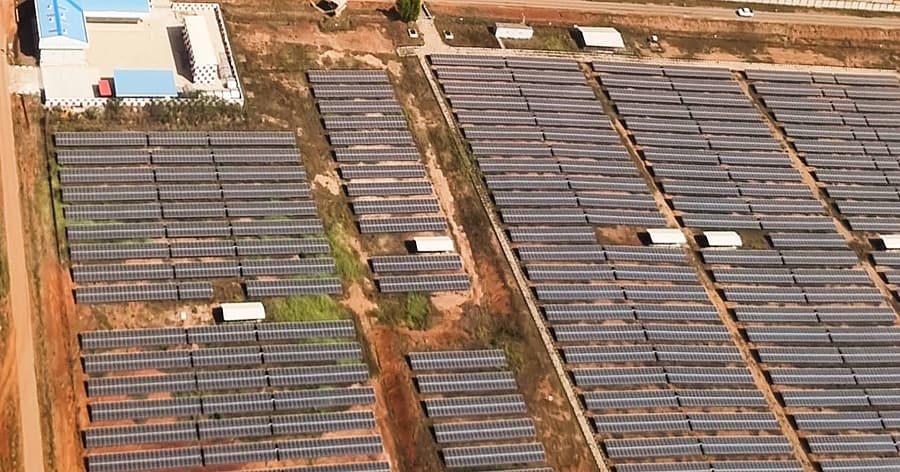
Adani Green Energy: Karnataka Solar Property Tax Rules Challenged
Summary
- Adani Green Energy (UP) Limited has challenged Karnataka's new 1% property tax on solar power plants in the High Court.
- The company disputes the classification of solar plants as regular industrial buildings under the Karnataka Grama Swaraj and Panchayat Raj Rules, 2025.
- Adani seeks to quash demand notices for the assessment year 2026-27, arguing solar plants are distinct infrastructure.
- Previously, renewable energy units, including solar, were taxed at ₹5,000 per megawatt per annum based on expert recommendations and government circulars.
- This case could set a significant precedent for property taxation of renewable energy projects in Karnataka and potentially across India.
What Happened
The outcome of Adani Green Energy's petition before the Karnataka High Court carries substantial implications for the renewable energy sector, particularly for solar power plant industrial building tax policies across India.
Adani Green Energy (UP) Limited has initiated legal proceedings in the Karnataka High Court, contesting new state government regulations that impose a significant property tax on solar power plants. The company's petition specifically targets the Karnataka Grama Swaraj and Panchayat Raj (Grama Panchayat Taxes, Rates and Fees) Rules, 2025, which were officially notified on October 17, 2025. These amended rules stipulate a property tax rate equivalent to one percent of the property's total value for solar energy installations.
The core of Adani Green Energy's challenge lies in the classification adopted by these new rules. The company argues that the regulations incorrectly categorize solar power plants as standard industrial buildings for the purpose of property taxation. This reclassification, according to the petitioner, fundamentally misrepresents the nature of solar energy infrastructure. Consequently, Adani Green Energy is seeking the annulment of demand notices and assessment proceedings that have been issued by gram panchayat authorities for the assessment year 2026-27, which are based on these contested rules.
Legal Context
Central to Adani Green Energy's legal argument is the assertion that solar power plants represent a distinct form of infrastructure, fundamentally different from conventional industrial buildings. The company contends that this unique nature should preclude them from being subjected to the same property tax framework as traditional industrial structures. This argument forms the basis of their challenge against the new 1% property tax, which is at the heart of the Adani Green Energy Karnataka solar property tax dispute.
The petitioner highlights a significant shift from previous taxation policies. Historically, the government had established a tax rate of ₹5,000 per megawatt per annum for renewable energy units, a category that explicitly included solar power plants. This prior rate was implemented following recommendations from an expert committee specifically tasked with evaluating taxation issues pertinent to small-scale industries. Adani Green Energy (UP) Limited supports its position by referencing government circulars dated February 27, 2018, and March 20, 2020, which, according to their petition, both prescribed and maintained this ₹5,000 per megawatt annual levy for renewable energy installations. The company's solar power plant, located in the Bengaluru South district, specifically within Channapattana and Magadi Taluku, MB Halli, H Byada, is directly impacted by these new regulations.
Why It Matters
The outcome of Adani Green Energy's petition before the Karnataka High Court carries substantial implications for the renewable energy sector, particularly for solar power plant industrial building tax policies across India. A ruling in favor of the state's new 1% property tax could set a precedent for how solar energy infrastructure is classified and taxed, potentially increasing the financial burden on such projects. Conversely, a decision supporting Adani's position could reaffirm the distinct nature of renewable energy assets and influence future tax legislation.
This legal challenge, centered on the Karnataka Grama Swaraj Panchayat Raj Rules 2025, underscores a broader debate regarding appropriate taxation frameworks for sustainable energy initiatives. The resolution of this Adani Green Energy UP Limited petition will be closely watched by developers and investors in the renewable energy space, as it could significantly impact the economic viability and growth trajectory of solar projects not just in Karnataka, but potentially inspire similar renewable energy property tax challenge India-wide. The Karnataka High Court property tax solar case therefore represents a pivotal moment for the industry's regulatory landscape.
Practical Implications
Lawyers and compliance officers advising renewable energy companies in Karnataka should closely monitor the outcome of Adani Green Energy's challenge to the 1% property tax, as it could significantly alter tax liabilities and set a precedent for how solar power plants are classified and taxed in the state.
Source
Source: Reporting from legal sources
How does this affect you?
Get an AI analysis of this article grounded in your jurisdictions, practice areas, and any policy documents you've uploaded to Wansom.
Finish Reading the Full Story and the Expert Analysis.
Get the latest legal & regulatory intelligence in India
Wansom is AI and can make mistakes.