
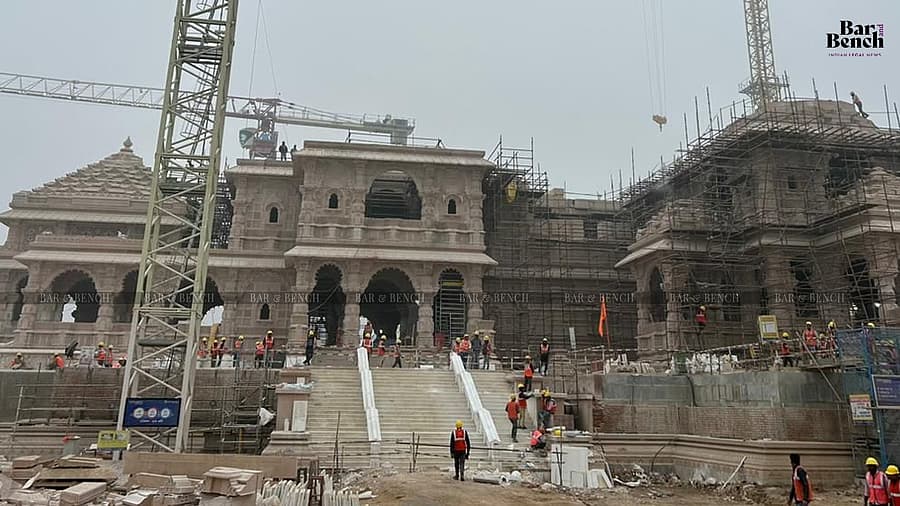
Abhishek Upadhyay: Supreme Court Hears Ghaziabad Police Digital Footprint Challenge
Summary
- Journalist Abhishek Upadhyay has petitioned the Supreme Court against the Ghaziabad Police's request for his digital footprint from X.
- The Ghaziabad Police's Criminal Investigation Department sought Upadhyay's digital activity from June 1, 2026, onwards.
- Upadhyay's counsel argues this data request is unrelated to a road rage case registered against him on August 18, which he claims was a "counterblast" to his Ram Mandir donation theft report.
- The Supreme Court had previously granted Upadhyay protection from coercive action in the road rage case.
- The case, heard by CJI Surya Kant and Justices Joymalya Bagchi and V Mohana, raises crucial questions about police data access and digital privacy in India.
What Happened
The ongoing case involving Abhishek Upadhyay's digital footprint before the Supreme Court holds significant implications for digital privacy in India, particularly for journalists and individuals interacting with law enforcement.
Journalist Abhishek Upadhyay has initiated proceedings before the Supreme Court of India, challenging a move by the Ghaziabad Police to obtain his digital activity records from the social media platform X. Upadhyay, known for his reporting on an alleged Ram Mandir donation theft in Ayodhya, brought this plea after the Criminal Investigation Department of the Ghaziabad Police sought his "entire digital footprint" from X's California headquarters. The request specifies a period beginning June 1, 2026, according to information conveyed to Upadhyay by X.
His legal representative, Advocate Anoop Prakash Awasthi, informed a Supreme Court bench comprising Chief Justice of India Surya Kant and Justices Joymalya Bagchi and V Mohana about the police's demand for these extensive digital records. This development follows earlier legal actions taken by Upadhyay, underscoring a continuing legal battle surrounding his journalistic work and personal data. The journalist's challenge centers on the perceived overreach of police powers in demanding such broad access to his online activities.
Legal Context
This current Supreme Court challenge by Abhishek Upadhyay is not his first encounter with the judiciary concerning alleged retaliatory actions. Previously, the apex court had granted him protection from coercive measures in connection with a road rage case. Upadhyay had publicly asserted that this road rage incident, which led to a First Information Report (FIR) being registered against him, was a direct "counterblast" to his earlier reporting on the alleged theft of donations intended for the Ram Mandir.
Advocate Awasthi, representing Upadhyay before the Supreme Court, highlighted a significant discrepancy regarding the police's current data request. He argued that the Ghaziabad Police's demand for digital footprint data starting from June 1, 2026, bears no relevance to the road rage incident, which occurred much earlier on August 18. This temporal disconnect forms a crucial part of Upadhyay's argument that the police's request for his digital activities is unwarranted and potentially an abuse of investigatory powers, especially given the future date specified in the data request.
Why It Matters
The ongoing case involving Abhishek Upadhyay's digital footprint before the Supreme Court holds significant implications for digital privacy in India, particularly for journalists and individuals interacting with law enforcement. The outcome could establish critical precedents regarding the scope of police authority to demand extensive digital activity records from social media platforms like X. This challenge directly addresses the balance between investigative needs and an individual's right to privacy in the digital realm.
For legal practitioners, this case is a crucial one to monitor, as it could redefine guidelines for responding to police data access social media requests. The Supreme Court's decision will likely clarify the permissible limits of such demands, especially when they appear unrelated to the specific incidents under investigation or when they involve future-dated data requests. The case underscores the growing importance of protecting journalistic sources and activities from potential overreach, making the Abhishek Upadhyay digital footprint Supreme Court proceedings a landmark event for digital rights in India.
Practical Implications
This ongoing Supreme Court case could establish crucial precedents regarding the scope of police powers to demand digital footprints from social media platforms and the extent of digital privacy protection for individuals, particularly journalists, in India. Lawyers should monitor the outcome for implications on advising clients about data privacy, responding to law enforcement data requests, and defending against potentially overreaching investigative tactics.
Source
How does this affect you?
Get an AI analysis of this article grounded in your jurisdictions, practice areas, and any policy documents you've uploaded to Wansom.
Finish Reading the Full Story and the Expert Analysis.
Wansom is AI and can make mistakes.