
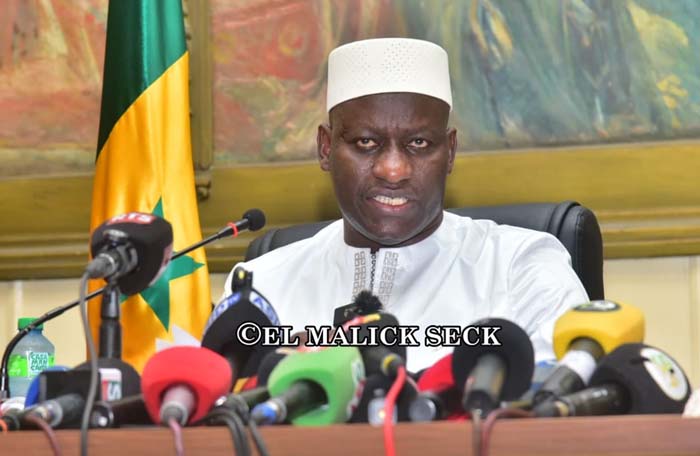
Abass Fall: Plainte DSC Contre Leuk Daour Pour Diffamation
Summary
- Dakar Mayor Abass Fall has filed a complaint against Daour Guèye, known as "Leuk Daour."
- The complaint was lodged with Senegal's Division spéciale de cybersécurité (DSC).
- Allegations against Daour Guèye include presumed defamation and the dissemination of false news.
- The legal action was initiated through Mayor Fall's counsel, Me Mor Sambou.
- This case highlights the increasing use of specialized cybersecurity units by public officials to address online content in Senegal.
Complaint Filed Against Online Personality
The proactive stance taken by Mayor Abass Fall, supported by his counsel Me Mor Sambou Abass Fall, serves as a potent reminder that online interactions are not immune from serious legal repercussions, especially under the purview of the nation's cybercrime legislation.
The Mayor of Dakar, Abass Fall, has formally initiated legal proceedings against Daour Guèye, an individual widely recognized by the moniker "Leuk Daour." This significant step saw Mr. Fall lodge a complaint with the Division spéciale de cybersécurité (DSC), marking a notable instance of a high-profile public figure leveraging specialized digital enforcement mechanisms in Senegal. The formal submission of the Abass Fall plainte DSC Leuk Daour was facilitated through his legal representative, Me Mor Sambou, underscoring the structured and official approach taken in this serious matter.
The core of the allegations brought forward by the Mayor centers on presumed acts of defamation and the dissemination of false news. These charges highlight the increasing scrutiny applied to online content, particularly when it pertains to public figures and their official duties, and the potential for such content to lead to legal action. The specific nature of the alleged diffamation fausses nouvelles Abass Fall, and the details surrounding the complaint, were initially brought to public attention through reporting by the journal Libération, providing initial insights into this developing legal situation and the specific grievances cited by the Mayor.
Senegal's Evolving Cybercrime Enforcement
This action by Abass Fall against Daour Guèye underscores a broader and increasingly prominent trend in Senegal concerning the regulation of digital spaces and online conduct. The direct involvement of the Division spéciale cybersécurité Sénégal signals a clear intent by public officials to utilize dedicated units for addressing online activities deemed problematic or unlawful. Such specialized bodies are increasingly becoming central to the enforcement of laws pertaining to digital communication, extending their investigative and prosecutorial reach into areas traditionally covered by conventional media law.
The case exemplifies the expanding scope of cybercrime enforcement within the nation's legal framework, reflecting a proactive stance against digital transgressions. It illustrates how Senegalese authorities, through entities like the DSC, are actively monitoring and responding to online commentary, especially when it involves allegations of false information or reputational damage against public figures. This development in cybercriminalité Sénégal droit indicates a robust and evolving approach to maintaining order and accountability in the digital realm, mirroring a global shift towards stricter oversight of internet content and its potential impacts.
Implications for Digital Expression and Legal Practice
The Daour Guèye plainte Dakar case carries significant implications for individuals engaged in online commentary and for legal practitioners alike across Senegal. It starkly highlights the new and evolving legal risks associated with digital expression, particularly when such expression targets public figures or government officials. The proactive stance taken by Mayor Abass Fall, supported by his counsel Me Mor Sambou Abass Fall, serves as a potent reminder that online interactions are not immune from serious legal repercussions, especially under the purview of the nation's cybercrime legislation.
For legal professionals, this situation necessitates a comprehensive and up-to-date understanding of both traditional media law and the rapidly evolving landscape of cybercrime regulations in Senegal. The intersection of these legal domains presents complex challenges, requiring lawyers to adeptly advise clients on the potential liabilities arising from online speech and the specific mechanisms of enforcement. As public officials increasingly turn to specialized cybersecurity units to address perceived online transgressions, the need for familiarity with these expanded enforcement mechanisms becomes paramount, fundamentally shaping the future of digital accountability and freedom of expression in the country.
Practical Implications
This case highlights the increasing trend of public officials leveraging specialized cybersecurity units (like Senegal's DSC) to address online defamation and the spread of false information. Lawyers should be aware of this expanded scope of cybercrime enforcement, as it presents new legal risks for clients engaged in online commentary, particularly concerning public figures, and necessitates familiarity with both media law and cybercrime regulations in Senegal.
Source
How does this affect you?
Get an AI analysis of this article grounded in your jurisdictions, practice areas, and any policy documents you've uploaded to Wansom.
Finish Reading the Full Story and the Expert Analysis.
Get the latest legal & regulatory intelligence in Senegal
Wansom is AI and can make mistakes.