
10th Circuit: United Nation of Islam Forced Labor Convictions Appealed
Summary
- Three members of the United Nation of Islam cult are appealing their forced labor conspiracy convictions to the 10th Circuit.
- The appeals challenge a jury instruction that allowed consideration of a general "climate of fear" in proving forced labor, alongside explicit threats.
- Aubrey Jenkins, grandson of cult founder Royall Jenkins, argues this instruction led to an erroneous conviction and his four-year sentence.
- Randolph Hadley, another appellant, also contested the instruction and argued the statute of limitations had passed on abuse claims.
- Dana Peach, one of Royall Jenkins' wives, appealed her conviction, citing issues with hearsay evidence and pre-trial information disclosure.
Background of the United Nation of Islam
The 10th Circuit's forthcoming decision on these appeals, particularly regarding the "climate of fear" jury instruction, holds significant weight for future forced labor and human trafficking prosecutions.
The United Nation of Islam, an organization founded by Royall Jenkins, is at the center of a significant legal challenge currently before the 10th Circuit. Jenkins, who established the group in Kansas City, Kansas, after relocating it from Maryland in the 1990s, promised his followers salvation from eternal damnation through diligent work and spiritual devotion. He claimed extraordinary experiences, including a spaceship journey with angels and acquiring magical powers after traversing the sun's core, which he asserted underpinned his teachings.
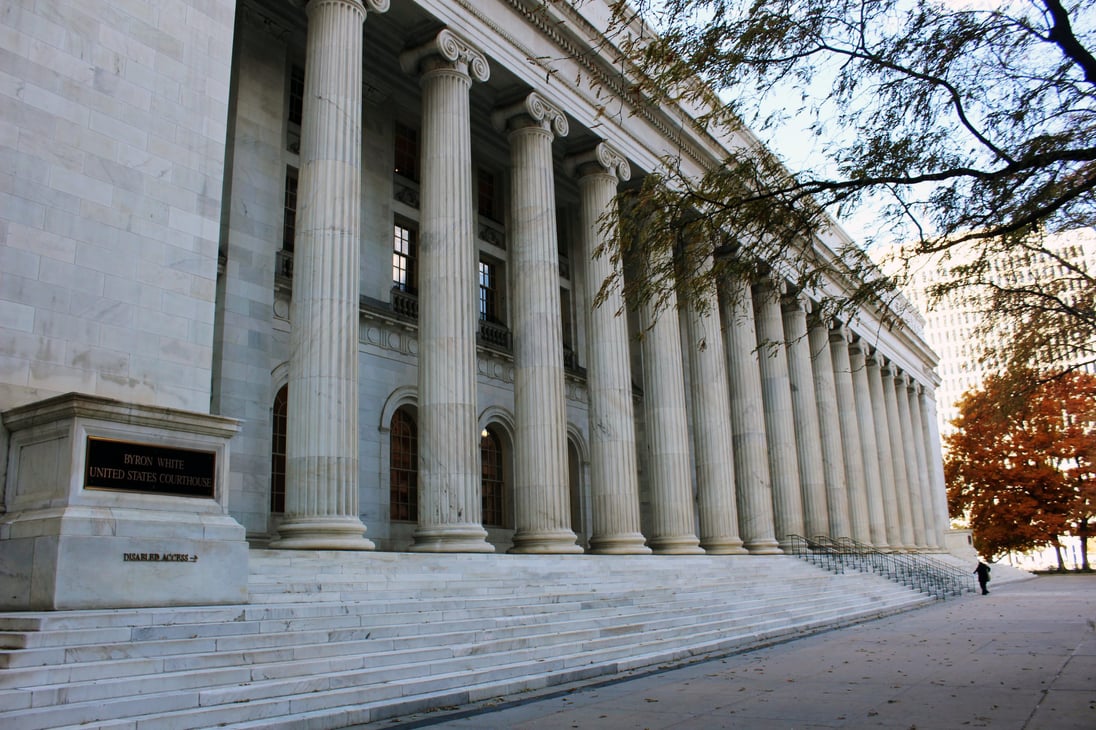
Under Jenkins' leadership, the cult enforced strict dietary rules and arranged marriages among its members. Adherents were also compelled to work without compensation in the organization's various businesses. Following Jenkins' death in September 2021, federal authorities initiated criminal proceedings against several members, leading to six convictions in a 2024 jury trial. Three of these individuals are now seeking to overturn their forced labor conspiracy convictions, arguing before a judicial panel at the Byron White Federal Courthouse in Denver.
The 'Climate of Fear' Instruction
A central point of contention in the appeals brought by members of the Royall Jenkins cult revolves around a specific jury instruction concerning a "climate of fear." Aubrey Jenkins, the founder's grandson, is challenging the trial court's directive that allowed jurors to consider how each defendant contributed to a general atmosphere of intimidation, in addition to any explicit threats, when determining forced labor conspiracy. His federal public defender, Josh Lee, contended that this instruction improperly influenced the jury, leading to Aubrey Jenkins' four-year prison sentence, which Lee argues lacks factual support.
Chief U.S. Circuit Judge Jerome Holmes questioned the defense's position, asking why the jury's ability to interpret the "climate of fear" clause within the broader context of all instructions should be doubted. Judge Holmes, a George W. Bush appointee, clarified that the instruction suggested such activity "could satisfy" an element, not that it "must satisfy" it, indicating it was not a direct equivalence. U.S. Attorney William Glasser supported the instruction, asserting it provided a reasonable and broad framework for the jury without overriding other legal principles.
Additional Appellate Arguments
Randolph Hadley, another member of the United Nation of Islam cult sentenced to five years for his role, presented additional arguments against his conviction. Hadley contended that the statute of limitations had expired for certain instances of abuse cited by the government. Furthermore, he echoed the concern regarding the "climate of fear" instruction, asserting its improper application in his conspiracy conviction. His defense attorney, Elizabeth Franklin-Best, sought to minimize Hadley's involvement, suggesting he did not explicitly agree to participate in the conspiracy to compel children to work for the organization.
However, Judge Holmes expressed skepticism about excusing Hadley's actions, highlighting evidence that Hadley dispatched children to work, engaged in "beat downs," and disciplined children for errors in orders. Holmes pointedly asked if an "explicit contract" was necessary for involvement to be inferred, suggesting that if Hadley understood the consequences of his directives, his participation in the forced labor scheme could be reasonably concluded. Separately, Dana Peach, one of Royall Jenkins' wives, also appealed her four-year prison sentence and conspiracy conviction. Peach's defense, led by Kari Schmidt, argued that the trial judge improperly allowed prosecutors to present "categories" of information before the trial, rather than providing a comprehensive disclosure, and that the jury was overwhelmed with disparaging hearsay statements, making effective defense objections nearly impossible without disrupting the proceedings.
Why It Matters
The 10th Circuit's forthcoming decision on these appeals, particularly regarding the "climate of fear" jury instruction, holds significant weight for future forced labor and human trafficking prosecutions. The court's clarification on the evidentiary standards required to prove forced labor conspiracy through non-explicit threats could establish a crucial precedent. This ruling will define how prosecutors must build their cases when direct threats are absent, and how defense attorneys can challenge convictions where the element of coercion is inferred from a broader environment. The outcome will likely influence the strategies employed in similar complex cases, shaping the legal landscape for proving coercion in situations where victims may be subject to psychological or social pressures rather than overt physical threats.
Practical Implications
Lawyers should monitor the 10th Circuit's ruling on the 'climate of fear' jury instruction, as it will clarify the evidentiary standards for proving forced labor conspiracy through non-explicit threats. This decision could significantly impact how prosecutors build cases and how defense attorneys challenge convictions in human trafficking and forced labor matters, potentially setting a precedent for future litigation.
Source
How does this affect you?
Get an AI analysis of this article grounded in your jurisdictions, practice areas, and any policy documents you've uploaded to Wansom.
Finish Reading the Full Story and the Expert Analysis.
Get the latest legal & regulatory intelligence in United States
Wansom is AI and can make mistakes.