
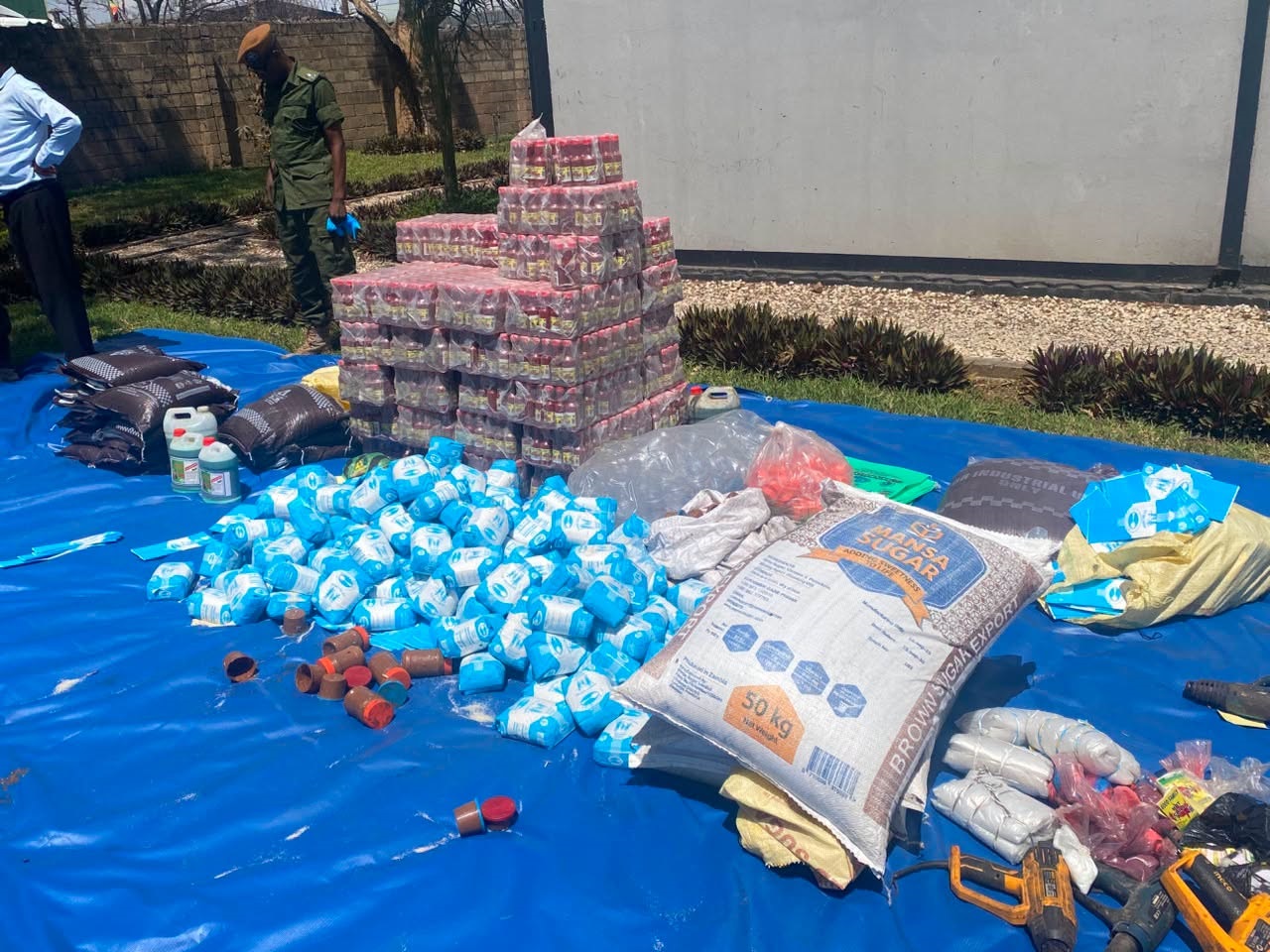
Zambia Police: Counterfeit Food Seizure Lusaka Nabs Unhygienic Goods
Summary
- Zambia Police seized various food, cosmetic, and sugar products in Lusaka's Kabanana and Chipata Compounds.
- The confiscated items are suspected of being manufactured or repackaged under unhygienic conditions.
- Jovan Mugisha, 25, and Ogden Malam were identified in connection with the seizures.
- Police Public Relations Officer Godfrey Chilabi confirmed the details of the operation.
- This action highlights increased enforcement against substandard and unhygienic products in Zambia.
Recent Enforcement Action in Lusaka
This targeted action by the Zambia Police underscores an ongoing commitment to addressing the proliferation of substandard goods.
Law enforcement officials in Lusaka recently undertook a significant operation, resulting in the seizure of a variety of products suspected of being manufactured or repackaged under unsanitary conditions. The items confiscated included diverse food products, cosmetic goods, and sugar, indicating a broad scope of concern regarding consumer safety and product standards within the local market. This targeted action by the Zambia Police underscores an ongoing commitment to addressing the proliferation of substandard goods.
The seizures were specifically carried out in two distinct areas of Lusaka: the Kabanana and Chipata Compounds. During the operation, authorities identified and apprehended two individuals in connection with the illicit activities. Jovan Mugisha, a 25-year-old resident of Chipata Compound, was implicated, alongside another individual named Ogden Malam. The details of these arrests and the nature of their alleged involvement were confirmed by Police Public Relations Officer Godfrey Chilabi, who provided official statements regarding the operation.
Heightened Scrutiny on Product Standards
This particular Zambia Police counterfeit food seizure in Lusaka, encompassing both food and unhygienic cosmetics, signals a heightened period of enforcement against products that fail to meet established health and safety benchmarks. The focus on items suspected of being produced or handled in unhygienic environments highlights a critical public health concern, as such conditions can lead to contamination and pose serious risks to consumers. The inclusion of sugar products in the seizure further broadens the scope of potential dangers, indicating that basic commodities are also under scrutiny for compliance.
The ongoing Zambia Police anti-counterfeiting operations are not merely about seizing goods but also about upholding product standards compliance in Zambia. These efforts are crucial for safeguarding public health and maintaining market integrity. The presence of unhygienic cosmetics, alongside food items, suggests a systemic issue that extends beyond a single product category, necessitating comprehensive food safety enforcement in Zambia and broader regulatory oversight across various consumer goods sectors.
Safeguarding Public Health and Market Integrity
The recent police action serves as a stark reminder of the persistent challenges posed by Zambia counterfeit food products and other substandard goods in the marketplace. Such operations are vital for protecting consumers from potentially harmful items and ensuring that products available for purchase adhere to national health and safety regulations. The proactive stance taken by law enforcement is a key component of broader consumer protection law in Zambia, aiming to deter illicit manufacturing and distribution practices.
For businesses operating within Zambia, this enforcement action underscores the imperative of robust supply chain integrity and stringent adherence to production standards. The seizure of products and the identification of individuals involved send a clear message that authorities are actively monitoring and acting upon non-compliance. This vigilance is essential for fostering a trustworthy market environment where consumers can have confidence in the safety and quality of the goods they purchase, ultimately benefiting legitimate businesses and the wider economy.
Practical Implications
This police action signals heightened enforcement against counterfeit and unhygienic products in Zambia. Lawyers and compliance officers advising food and cosmetic manufacturers or distributors should review their clients' supply chain integrity and production standards to mitigate risks of seizure and legal penalties under consumer protection laws.
Source
Source: Original reporting via {source}
How does this affect you?
Get an AI analysis of this article grounded in your jurisdictions, practice areas, and any policy documents you've uploaded to Wansom.
Finish Reading the Full Story and the Expert Analysis.
Get the latest legal & regulatory intelligence in Zambia
Wansom is AI and can make mistakes.