
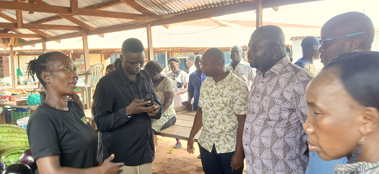
Yambio Traders High Taxes Complaints Voiced at Market Assessment
Summary
- Traders in Yambio County, Western Equatoria State, voiced concerns over high taxes, rising commodity prices, and a weak local currency during a recent market assessment.
- Specific complaints included substantial taxes on goods from Nimule, the high value of the US dollar, declining consumer purchasing power, and a shortage of affordable trading spaces.
- Yambio Town Mayor Fozia Abbas Barnaba Bangasu acknowledged issues like high taxes and shops blocking access routes, while the market was deemed too small.
- Governor Badagbu Daniel Rimbasa pledged a state government review of the concerns, promising measures to improve security, cleanliness, market organization, and the overall business environment.
- The Governor also encouraged traders, particularly women and small-scale business owners, to form groups or cooperatives to access collective support.
Traders Voice Concerns in Yambio
Governor Rimbasa, after hearing the extensive feedback, assured the traders that the state government would undertake a thorough Western Equatoria State tax review and examine all concerns raised during the assessment.
Traders operating within Yambio County, located in South Sudan's Western Equatoria State, recently articulated significant challenges impacting their livelihoods and the local economy. During a comprehensive market assessment conducted on Tuesday, led by Governor Badagbu Daniel Rimbasa and a delegation including the State Minister of Commerce and Trade, the Yambio County Commissioner, the Mayor of Yambio, and the Commissioner of the Revenue Authority, merchants highlighted a range of pressing issues. Foremost among these Yambio traders high taxes complaints were the burden of elevated taxation, the escalating cost of essential commodities, and the detrimental effects of a depreciating local currency.
Several traders shared their experiences directly with the visiting delegation. Emmanuel Obama, an Ethiopian trader, specifically pointed to the substantial taxes levied on goods transported from Nimule as a primary factor contributing to higher South Sudan commodity prices in Yambio. He further noted that the strong appreciation of the US dollar against the local currency is broadly affecting business viability across the nation. An anonymous local food vendor, expressing fear of reprisal, revealed a sharp decline in consumer purchasing power, leading to reduced sales.
This vendor observed that many residents are no longer buying food items, citing unpaid salaries and the pervasive impact of the dollar's strength on their financial stability, which has forced numerous businesses to cease operations. The collective sentiment expressed by the traders during the assessment painted a clear picture of an economy struggling under the weight of multiple systemic issues, impacting both supply chains and consumer demand.
Government Acknowledges and Pledges Review
In response to the widespread Yambio County business challenges presented by the trading community, local authorities acknowledged the severity of the situation. Yambio Town Mayor Fozia Abbas Barnaba Bangasu confirmed that the municipality is well aware of the various difficulties confronting traders and the market environment. She specifically mentioned receiving complaints regarding high taxes and the unauthorized construction of shops along roads and access routes, which not only impede movement but also heighten the risk of fire outbreaks. The Mayor also conceded that the existing market infrastructure is insufficient to accommodate all traders.
Governor Rimbasa, after hearing the extensive feedback, assured the traders that the state government would undertake a thorough Western Equatoria State tax review and examine all concerns raised during the assessment. He committed to implementing appropriate measures aimed at enhancing security, improving market cleanliness, streamlining market organization, and generally fostering a more conducive business environment. The Governor also encouraged traders, particularly women and small-scale entrepreneurs, to establish groups or cooperatives to facilitate collective access to support and resources.
Furthermore, Governor Rimbasa emphasized the critical importance of maintaining clear roads and access routes within the market to ensure improved movement, safety, and accessibility for both traders and customers. This commitment signals a potential shift in local policy and regulatory enforcement, which could have significant implications for businesses operating in the region.
Broader Economic and Infrastructural Impacts
The Yambio market assessment findings underscored a complex interplay of economic pressures and infrastructural deficiencies contributing to the current difficulties. Nimeri Tobo, representing the Yambio Chamber of Commerce, welcomed the government's direct engagement with traders, outlining a comprehensive list of obstacles. These included dilapidated roads, frequent roadblocks, pervasive insecurity, a scarcity of suitable land for business, and the persistent issue of limited trading spaces. He also advocated for improved road infrastructure and better sanitation within the market area.
The shortage of affordable trading spaces emerged as a particularly acute problem, disproportionately affecting women and traders traveling from rural areas. Faiza Manrate, a trader, highlighted the exorbitant costs, with some individuals reportedly being asked to pay approximately SSP 700,000 for a single table or space. She stressed the urgent need for authorities to provide designated and affordable spaces, as many traders, especially those from villages, cannot afford the current rates. These challenges collectively contribute to an environment where business growth and stability are severely hampered.
Practical Implications
Lawyers advising businesses in South Sudan, particularly Western Equatoria, should monitor the outcome of the government's review of trader complaints regarding high taxes and poor business conditions, as this may lead to changes in local tax policies or market regulations affecting commercial operations.
Source
Source: Original reporting
How does this affect you?
Get an AI analysis of this article grounded in your jurisdictions, practice areas, and any policy documents you've uploaded to Wansom.
Finish this article free. Just your email for instant unlock.
Wansom is AI and can make mistakes.