
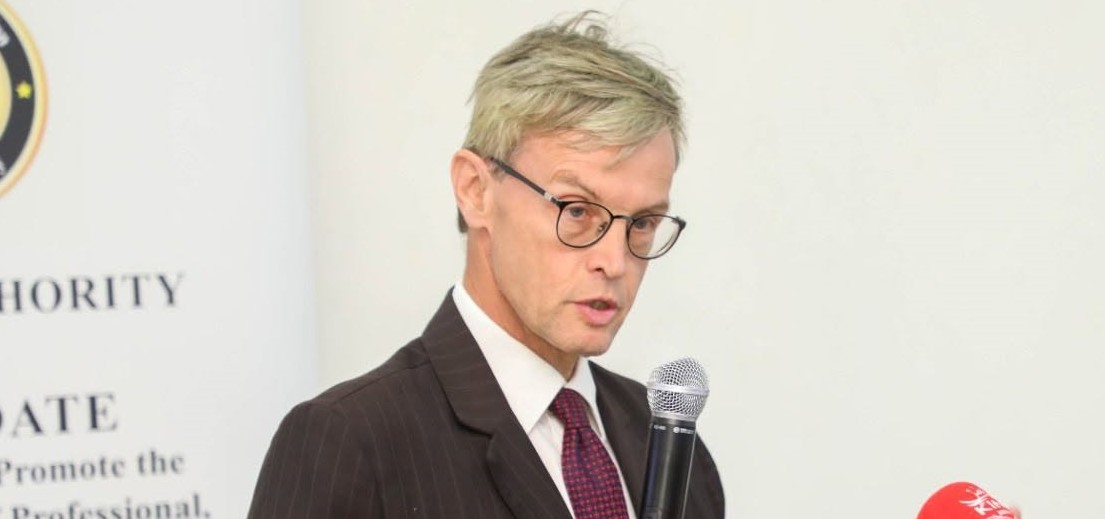
EU Envoy Jaschke: South Sudan Civic Space Critical for Governance
Summary
- Outgoing EU Deputy Head of Delegation Lothar Jaschke urged South Sudan to create a protected civic space for inclusive governance and women's leadership.
- Jaschke called for the implementation of the 35% women's representation quota in the upcoming December elections, as outlined in the 2018 peace agreement.
- He pressed for stronger accountability for gender-based violence and progress on a modern Anti-Gender-Based Violence Bill.
- The remarks were made at the 2026 Annual Gender Forum in Juba, emphasizing the need to move from commitments to concrete results.
- Jaschke also condemned attacks on UN peacekeepers and noted that 36 humanitarian workers were killed in South Sudan in 2026.
Call for Open Civic Space in South Sudan
The EU envoy Jaschke South Sudan civic space message was clear: inclusive governance necessitates an environment where women-led and grassroots organizations can operate freely, secure funding, and meaningfully contribute to policy dialogue and peacebuilding efforts.
Outgoing European Union Deputy Head of Delegation, Lothar Jaschke, recently delivered his final public address in South Sudan, emphasizing the critical need for the nation to translate its commitments on women’s leadership and inclusive governance into tangible outcomes. Speaking at the 2026 Annual Gender Forum in Juba, Jaschke underscored that genuine political participation is inextricably linked to a protected civic space, a cornerstone for a thriving society.
The forum, held under the theme “From Commitments to Results: Advancing Women’s Leadership, Accountability and Inclusive Governance in South Sudan,” served as a platform for stakeholders to deliberate on women’s engagement in political and peace processes, alongside broader issues of accountability and inclusive governance. Jaschke's remarks highlighted that while ambitious commitments are valuable, it is ultimately the concrete results that hold significance for the country's future. The EU envoy Jaschke South Sudan civic space message was clear: inclusive governance necessitates an environment where women-led and grassroots organizations can operate freely, secure funding, and meaningfully contribute to policy dialogue and peacebuilding efforts.
He specifically advocated for the representation of diverse groups of women, including those from rural areas, young women, displaced women, and women with disabilities, to ensure that inclusive governance truly reflects the nation's population. These Lothar Jaschke South Sudan remarks serve as a poignant reminder of the ongoing challenges and the path forward for the country as it navigates complex political transitions.
Advancing Women's Leadership and Legal Frameworks
A key focus of Jaschke’s address was the imperative for greater representation of women in elected institutions, particularly as South Sudan prepares for elections scheduled for December. He strongly supported the implementation of the 35% women's representation quota, as stipulated in the 2018 peace agreement, urging that at least this percentage of successful candidates should be women. This quota is seen as vital for ensuring that women's voices are adequately heard in the nation's governance structures. Beyond electoral success, Jaschke stressed that women’s participation must extend into constitutional, electoral, peace, and governance processes.
Furthermore, the outgoing EU official called for enhanced accountability for gender-based violence (GBV) and conflict-related sexual violence (CRSV). His recommendations included the establishment of survivor-centred justice mechanisms, the implementation of transitional justice measures, and guarantees of non-repetition to prevent future abuses. He specifically urged progress on a modern South Sudan Anti-Gender-Based Violence Bill, which would provide a robust legal framework to address these critical issues. Additionally, Jaschke advocated for the full implementation of the Women, Peace and Security National Action Plan, emphasizing the need for increased resources and accountability for women-led peacebuilding initiatives, thereby strengthening EU South Sudan human rights efforts.
Broader Context and Challenges to Stability
These calls for reform and inclusion come at a pivotal time for South Sudan, with the nation gearing up for elections in December amidst an incomplete implementation of its 2018 peace agreement. The political landscape remains complex, making the establishment of a protected civic space and the empowerment of women even more crucial for stability and progress. The challenges extend beyond political reforms to include significant security concerns.
Jaschke also condemned recent deadly attacks on U.N. peacekeepers in Jonglei, which occurred on Monday. He highlighted the severe risks faced by those working to support the country, noting that a total of 36 humanitarian workers had been killed in South Sudan in 2026. These incidents underscore the volatile environment in which efforts towards peacebuilding and inclusive governance are being pursued, affecting those who serve the country by promoting peace, stability, development, and humanitarian assistance.
EU's Enduring Commitment to South Sudan
Lothar Jaschke’s departure marks the end of his three-year tenure in South Sudan, a period he described as an honor. His final public address served not only as a summation of key priorities but also as a reaffirmation of continued international support for the nation's development and stability. Despite his personal departure, Jaschke conveyed that the European Union remains steadfast in its commitment to South Sudan.
He articulated that the EU would continue to support the country in its endeavors, signaling an ongoing partnership in addressing the challenges and opportunities ahead. This enduring commitment from the European Union is vital as South Sudan strives to achieve lasting peace, inclusive governance, and respect for human rights, building on the foundations laid by initiatives like the South Sudan inclusive governance agenda.
Practical Implications
Lawyers and compliance officers in South Sudan should closely monitor the legislative progress of the proposed Anti-Gender-Based Violence Bill and the implementation of the 35% women's representation quota in the upcoming elections, as these developments will significantly impact legal frameworks concerning gender equality, civic participation, and accountability for human rights violations, potentially creating new compliance obligations or avenues for advocacy.
Source
How does this affect you?
Get an AI analysis of this article grounded in your jurisdictions, practice areas, and any policy documents you've uploaded to Wansom.
Wansom is AI and can make mistakes.