
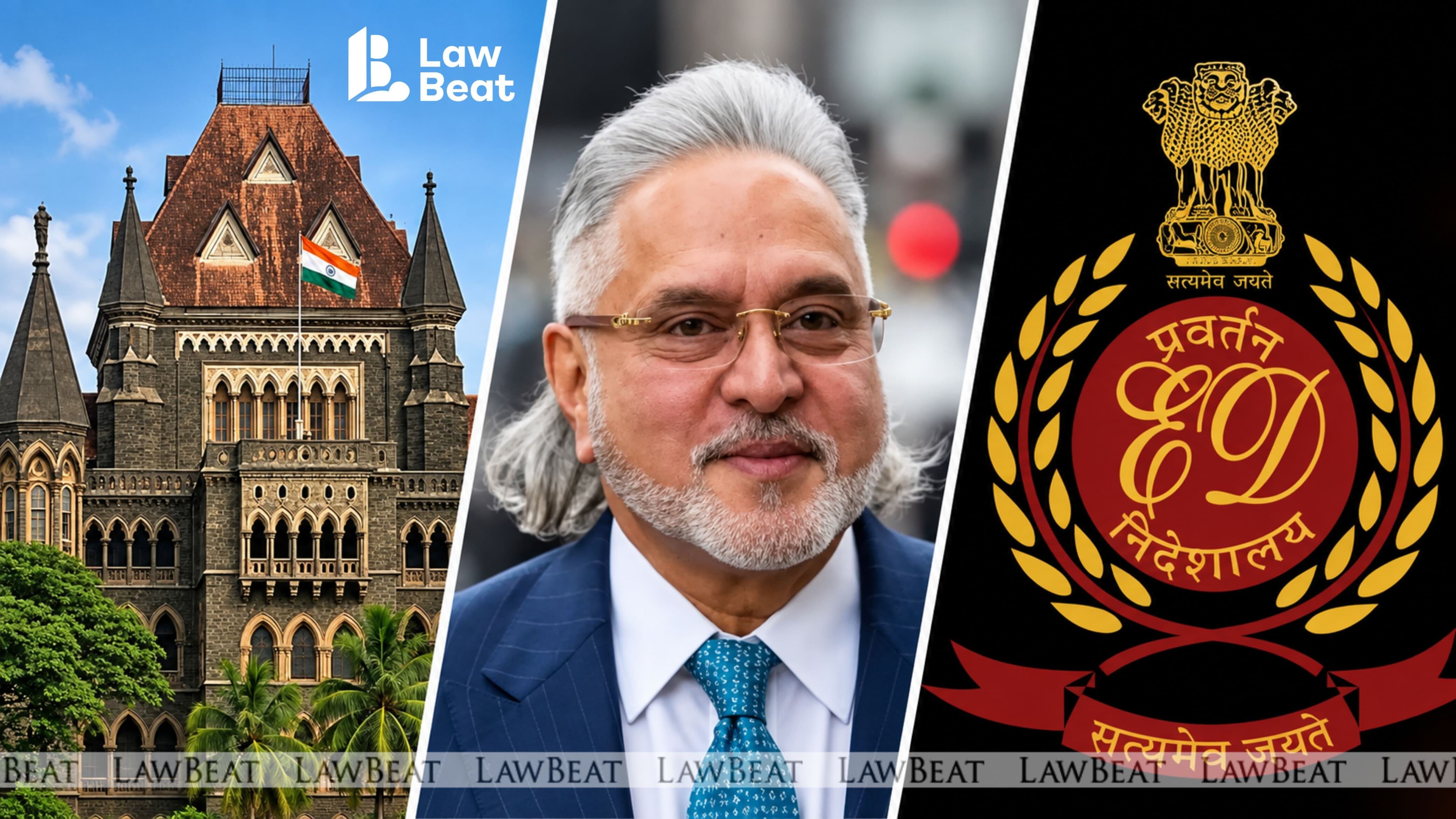
Bombay High Court: Vijay Mallya PMLA Charges Stand Despite Asset Recovery
Summary
- The Enforcement Directorate informed the Bombay High Court that recovering ₹14,131.6 crore from Vijay Mallya's assets does not extinguish money laundering charges.
- The ED clarified that asset recovery under the Prevention of Money Laundering Act is distinct from criminal prosecution for scheduled offenses.
- Vijay Mallya, declared a proclaimed offender in November 2016, continues to evade legal process in India.
- Mallya responded on social media, arguing that the recovered amount should settle the case and questioning his continued portrayal as a fraud.
- The case involves alleged misappropriation of at least ₹3,500 crore from Kingfisher Airlines loans, with assets provisionally attached in 2016.
Enforcement Directorate Clarifies PMLA Scope in Mallya Case
The ED explicitly stated that the criminal prosecution initiated under the PMLA is not rendered ineffective simply because claimant banks have subsequently recovered substantial amounts from assets restored to them.
The Enforcement Directorate (ED) has formally informed the Bombay High Court that the substantial recovery of funds from Vijay Mallya's assets does not nullify the ongoing money laundering charges against him. This assertion came in an affidavit filed on September 8, where the central agency opposed a 2020 petition by Mallya seeking the termination of criminal cases. The ED's submission directly addresses the former liquor baron's contention that his financial dispute with banks was resolved following the lenders' recovery of their dues.
Specifically, the ED highlighted that movable and immovable properties valued at ₹14,131.6 crore have been transferred to the State Bank of India (SBI)-led consortium of lenders. Despite this significant asset recovery, the agency maintains that these actions do not lead to the dropping or cancellation of the money laundering charges. This stance underscores a critical interpretation of the Prevention of Money Laundering Act (PMLA) by the Enforcement Directorate, particularly concerning the distinction between asset restitution and criminal liability.
Mallya, in turn, has publicly challenged the ED's position through social media, referencing what he claims are paragraphs from the agency's own affidavit. He argues that the recovered amount should effectively settle the matter in his favor, questioning why he continues to be labeled a fraudster by the media and asking when he might receive a refund. This public exchange brings into sharp focus the legal complexities surrounding asset recovery and criminal prosecution under India's anti-money laundering framework.
Dual Objectives of India's Money Laundering Law
The Enforcement Directorate's filing before the Bombay High Court provides crucial insight into the agency's interpretation of the Prevention of Money Laundering Act India. The ED explicitly stated that the criminal prosecution initiated under the PMLA is not rendered ineffective simply because claimant banks have subsequently recovered substantial amounts from assets restored to them. This clarifies that the PMLA serves a dual purpose: facilitating asset recovery for legitimate claimants and pursuing criminal prosecution for alleged money laundering offenses.
According to the agency, the restoration of assets under the PMLA constitutes a statutory mechanism designed to allow victims to recoup their losses. This process, however, is presented as entirely distinct from the criminal proceedings related to the scheduled offenses and the act of money laundering itself. Therefore, the successful recovery of funds, while beneficial to the lenders, does not automatically absolve an accused individual of their criminal liability under the Enforcement Directorate PMLA charges. This distinction is central to the ongoing legal battle and has significant implications for how money laundering criminal prosecution asset recovery cases are handled.
Background of the Case and Mallya's Evasion
The legal proceedings against Vijay Mallya stem from accusations of laundering and misappropriating at least ₹3,500 crore from loans totaling approximately ₹9,000 crore, which were extended by banks to his now-defunct Kingfisher Airlines. The Enforcement Directorate provisionally attached Mallya's properties in 2016 as part of its investigation. Subsequently, in 2019, a special court granted permission for the SBI-led consortium to utilize these attached movable assets, including shares in United Breweries Holdings Ltd, for the recovery of outstanding dues.
Mallya's continued absence from India has been a persistent issue in the case. He departed the country in March 2016 and has since failed to appear before investigating authorities despite repeated summons. This led to the issuance of a non-bailable warrant against him, and he was officially declared a proclaimed offender in November 2016. The ED further noted that despite inquiries from the High Court regarding his intent to return to India and submit to the jurisdiction of the competent criminal court, Mallya has provided evasive responses, indicating his continued evasion of the legal process.
Mallya's Public Defense and Claims
In response to the Enforcement Directorate's affidavit, Vijay Mallya took to social media to present his counter-arguments. He specifically referenced paragraphs from what he identified as the ED's own affidavit, citing "Para 7" as the decreed debt and "Para 17" as showing ₹14,131.60 crore recovered in 2021. Mallya expressed frustration, stating that five years on, he is still referred to as a fraud who cheated banks, despite the significant recovery. He questioned the fairness of this portrayal, presenting a table he claimed detailed the statement of account for recovery and asking why he continued to be "berated by the media."
Mallya also addressed his prolonged absence from India, asserting that it was not by choice. He claimed to be "legally prohibited from leaving UK" and characterized the Indian government's stance towards him as "grossly unjust." His social media posts, which garnered mixed reactions, reflect his ongoing efforts to challenge the narrative surrounding his case and to argue that the financial recovery should mitigate or eliminate his criminal liability.
Practical Implications
This development clarifies that asset recovery under the PMLA is distinct from criminal prosecution, meaning clients facing money laundering charges cannot assume that repayment or asset restoration will automatically extinguish their criminal liability. Lawyers must advise clients that PMLA proceedings have a dual objective of asset recovery and criminal prosecution, and one does not negate the other.
Source
How does this affect you?
Get an AI analysis of this article grounded in your jurisdictions, practice areas, and any policy documents you've uploaded to Wansom.
Finish Reading the Full Story and the Expert Analysis.
Wansom is AI and can make mistakes.