
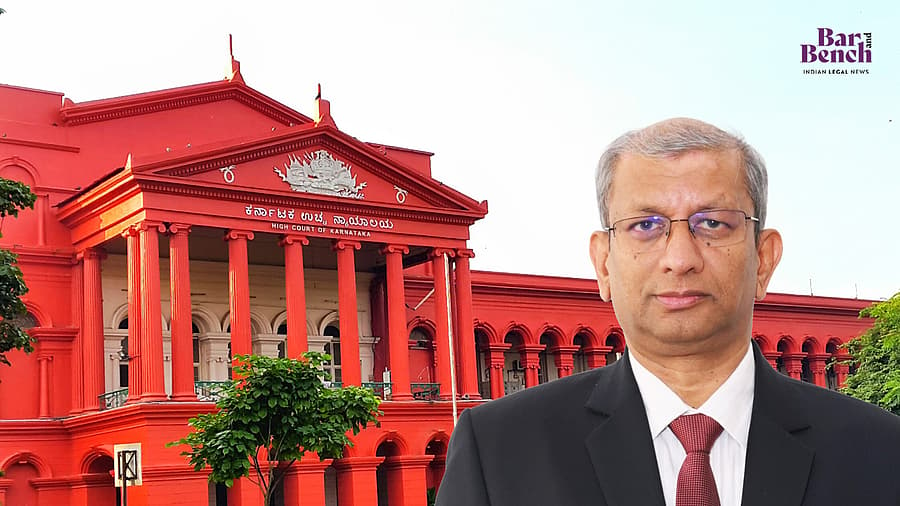
Karnataka High Court: S. Vidyashankar VC Appointment Upheld
Summary
- The Karnataka High Court dismissed an appeal challenging Dr. S. Vidyashankar's appointment as Vice-Chancellor of Visvesvaraya Technological University (VTU).
- The court ruled that its constitutional jurisdiction should not be repeatedly invoked without a clear legal infirmity or statutory disqualification.
- Petitioners Yogesh B and Venugopal K.A. had filed a writ of quo warranto, alleging violations of UGC Regulations 2018 and the VTU Act, 1994, regarding the September 29, 2022, appointment.
- The bench, comprising Justice D.K. Singh and Justice H. Shanthi Bhushan, found no material to establish that the appointment was made by an authority lacking jurisdiction or in patent violation of mandatory statutory requirements.
- This decision underscores the high evidentiary burden required for challenging statutory appointments in India, emphasizing the need for restraint and fidelity to law.
Karnataka High Court Upholds VC Appointment
The court underscored that both the office-holder and those initiating legal challenges must act with restraint, good faith, and adherence to the law, respecting the dignity of the office and the sanctity of the judicial process.
The Karnataka High Court has definitively dismissed an appeal that sought to challenge the appointment of Dr. S. Vidyashankar as the Vice-Chancellor of Visvesvaraya Technological University (VTU) in Belagavi. This significant ruling, delivered by a bench comprising Justice D.K. Singh and Justice H. Shanthi Bhushan, reinforces the stability of statutory appointments unless a clear legal infirmity can be robustly demonstrated.
The court's decision in the case of Yogesh B v. State of Karnataka underscores a judicial reluctance to repeatedly intervene in such matters without compelling evidence. The bench emphasized that the constitutional jurisdiction of the court should not be invoked to destabilize an appointment in the absence of a patent legal flaw.
Details of the Legal Challenge
The legal challenge originated from a writ of quo warranto filed by petitioners Yogesh B and Venugopal K.A., who sought to question Dr. Vidyashankar's continued tenure as the Visvesvaraya Technological University VC. Their petition specifically targeted the original appointment notification, which was issued on September 29, 2022.
The petitioners alleged that the appointment violated provisions of the UGC Regulations, 2018, and Section 13 of the VTU Act, 1994. Furthermore, they raised concerns regarding the proper constitution of the Search-cum-Selection Committee responsible for recommending the Vice-Chancellor candidate. Despite these claims, the High Court found the petitioners' arguments lacking in substantive proof.
Court's Rationale for Dismissal
In its detailed reasoning, the Karnataka High Court highlighted that the petitioners failed to provide any material demonstrating that Dr. Vidyashankar suffered from a statutory disqualification that would render him ineligible for the Vice-Chancellor position. The court found no evidence to suggest that the appointment was made by an authority lacking the requisite jurisdiction or in patent violation of any mandatory statutory requirement.
The bench articulated a clear principle, stating that the dignity of the office and the sanctity of the judicial process demand that both the office-holder and those who invoke the court's jurisdiction act with restraint, bona fides, and fidelity to the law. This statement reflects the judiciary's commitment to upholding the integrity of public appointments and discouraging frivolous or unsubstantiated challenges.
Implications for Statutory Appointments
This ruling by the Karnataka High Court provides crucial clarity on the stringent requirements for challenging statutory appointments in India. It establishes a high bar for petitioners, emphasizing that mere allegations are insufficient; concrete evidence of a legal infirmity or statutory disqualification is paramount. The court's decision reinforces the principle that judicial intervention in such matters is reserved for instances where a clear and undeniable breach of law can be proven.
The outcome of Yogesh B v. State of Karnataka serves as a significant guide for legal practitioners, illustrating the substantial evidentiary burden that must be met when filing a writ of quo warranto appointment. It underscores the judiciary's reluctance to unsettle established appointments without robust and compelling proof of a fundamental legal flaw, thereby ensuring greater stability and respect for the processes governing public office.
Practical Implications
This ruling clarifies the high bar for challenging statutory appointments in India, particularly when no clear legal infirmity or statutory disqualification can be demonstrated, guiding lawyers on the evidentiary burden for such petitions and the court's reluctance to intervene without concrete proof.
Source
Source: Original reporting
How does this affect you?
Get an AI analysis of this article grounded in your jurisdictions, practice areas, and any policy documents you've uploaded to Wansom.
Finish Reading the Full Story and the Expert Analysis.
Wansom is AI and can make mistakes.