
US Senate: Demands Liberia Deportation Human Rights Report
Summary
- Senator Tim Kaine introduced a resolution requiring the State Department to report on Liberia's human rights practices within 30 days.
- The resolution was prompted by Liberia's agreement to accept up to 1,200 non-Liberian individuals deported from the United States.
- The legal basis for the resolution is Section 502B(c) of the Foreign Assistance Act, which can freeze U.S. security aid if the report is not delivered.
- Liberia's deal is reportedly the largest of its kind within the Trump administration's third-country deportation program.
- A US$5 million payment to Liberia for migration management raises questions given the Liberian government's claims of receiving no compensation for the deportees.
Congressional Scrutiny Intensifies
The Senate's resolution signals a heightened level of U.S. congressional scrutiny over Liberia's human rights practices and the transparency surrounding its deportation agreement.
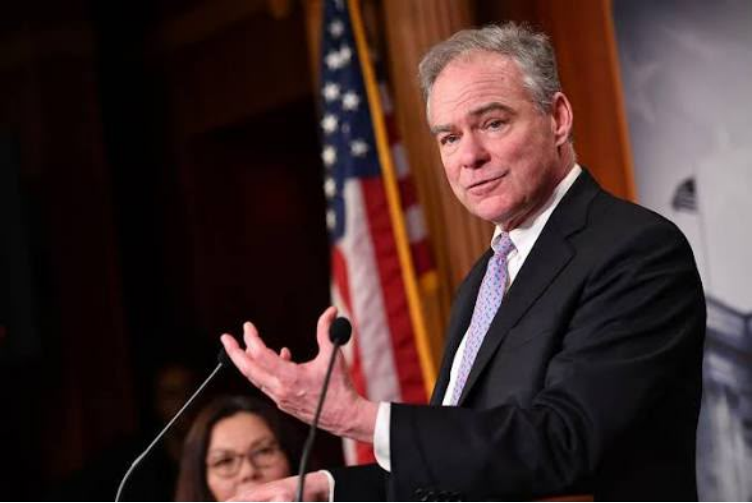
The United States Senate is directing increased attention toward Liberia's human rights record and its recent agreement to accept individuals deported from the U.S. Senator Tim Kaine, a Democrat from Virginia and a member of the Senate Foreign Relations Committee, initiated this scrutiny by filing Senate Resolution 886 on September 23. This resolution mandates that the U.S. Secretary of State provide Congress with a comprehensive statement on Liberia's human rights practices within 30 days of its adoption.
The resolution, which has been referred to the Foreign Relations Committee, underscores growing congressional concern regarding countries participating in the Trump administration's third-country deportation program. While devoid of a preamble or direct accusations, the two-page document presents a series of pointed questions that suggest underlying suspicions among U.S. lawmakers. It specifically requests that the State Department furnish all credible information concerning alleged abuses perpetrated by the Liberian government, including arbitrary arrest and detention, torture, denial of due process, enforced disappearances, extrajudicial killings, human trafficking, and forced labor. A key focus is the treatment of non-citizens removed to Liberia by the U.S.
Demands for Transparency and Accountability
Beyond general human rights concerns, the resolution seeks detailed disclosures from Washington. It demands information on whether U.S. security assistance might inadvertently support abusive practices within Liberia and calls for an assessment of conditions in facilities where deportees are held. Furthermore, the resolution requires the disclosure of every agreement and financial transaction between the two governments related to these removals. It also mandates providing information on all individuals sent to Liberia in 2025 and 2026, along with any assurances regarding their treatment that the U.S. sought or received. A summary of meetings between Liberian officials and Washington-based U.S. officials during the same two-year period is also requested.
The legal foundation for this congressional action is Section 502B(c) of the Foreign Assistance Act of 1961, a Cold War-era statute. This provision empowers Congress to demand a human rights report on any nation through a simple resolution. The mechanism carries significant weight: should the State Department fail to meet the 30-day deadline for delivering the report, U.S. security assistance to the country in question will be frozen until the report is submitted. The resolution's privileged status further enables its sponsor to force a floor vote, even if Senate leadership might prefer to avoid such a debate.
The Controversial Deportation Agreement
The agreement between Liberia and the U.S., reached in September 2025 and made public in March 2026, allows for Liberia to accept up to 1,200 individuals deported from the United States. These individuals are predominantly non-Liberian and, in most cases, have no prior connection to Africa. The Liberian government, through Information Minister Jerolinmek Piah, initially characterized the arrangement as an act of hospitality, stating that the arrivals would be welcomed as guests. However, the exact number of individuals and their countries of origin were not specified in the six-page agreement; the figure of 1,200 only emerged in August, days before the first flight.
The initial arrival of deportees on August 20 at Roberts International Airport did not proceed smoothly. Several of the 20 deportees, primarily Latin Americans including Cubans and Venezuelans, refused to disembark the plane, necessitating U.S. agents to restrain some of them. Subsequently, six of these individuals were flown to Equatorial Guinea, a fourth country from which none of them originated. This incident marked the first reported instance of deportees refusing to leave a third country and being rerouted to yet another nation. The resolution's Section 1(b)(3) specifically targets the disclosure of all financial transactions related to these removals, a point of particular vulnerability for Monrovia. Despite repeated assertions from the Liberian government that it neither sought nor received compensation for accepting deportees, the U.S. awarded Liberia US$5 million this year for migration management, a fact reported by The New York Times.
Broader Implications
This development places Liberia among a growing number of nations whose participation in the Trump administration's third-country deportation program is under congressional review. Rights monitors indicate that at least 35 countries have entered into such agreements, with approximately 22,000 individuals sent to 26 non-native countries by early August. Liberia's agreement stands out as the largest by number within this aggressive global program.
The Senate's resolution signals a heightened level of U.S. congressional scrutiny over Liberia's human rights practices and the transparency surrounding its deportation agreement. The impending report from the State Department, and the potential for frozen U.S. security assistance, could significantly impact bilateral relations and underscore the importance of adherence to international human rights standards in such agreements.
Practical Implications
This development signals heightened US congressional scrutiny on Liberia's human rights practices and transparency regarding its deportation agreement. Lawyers advising clients with operations in Liberia, particularly those involved in international aid, migration, or government contracts, should monitor the State Department's impending report and potential implications for US security assistance and bilateral relations, which could affect business operations and compliance risks.
Source
How does this affect you?
Get an AI analysis of this article grounded in your jurisdictions, practice areas, and any policy documents you've uploaded to Wansom.
Finish Reading the Full Story and the Expert Analysis.
Get the latest legal & regulatory intelligence in Liberia
Wansom is AI and can make mistakes.