
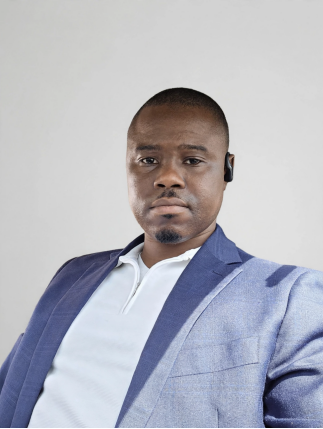
Hassan Sambolah: Liberian Diplomatic Appeal for US Rights Violations
Summary
- Hassan Sambolah, a Liberian national in New York, has launched formal appeals to both Liberian and U.S. authorities for diplomatic and legal assistance.
- His requests, made through his LIFSAA initiative, seek an independent review of years of employment, immigration, and personal security difficulties.
- Sambolah met with Liberia's Consul General in New York, who subsequently forwarded his requests for legal aid to the Liberian Ambassador to the U.S.
- He specifically seeks help identifying specialized attorneys, facilitating FBI communication for criminal record clarification, and navigating FOIA procedures.
- Sambolah's challenges include an Uber account deactivation, wage disputes, a workplace injury and termination, and a denied naturalization application despite passing initial tests.
What Happened
This case illuminates the complex interplay between international diplomatic assistance and individual legal challenges within a foreign jurisdiction, particularly for pro se litigants like Hassan Sambolah.
Hassan Sambolah, a Liberian national residing in Staten Island, New York, has formally petitioned both the Liberian and United States governments for assistance. His appeals seek legal representation, a diplomatic inquiry, and an independent review into what he describes as ongoing difficulties related to his employment, immigration status, and personal security over several years. Sambolah is pursuing this support through an advocacy initiative he established, known as the Liberian Initiative for Freedom, Security and Accountability in America (LIFSAA).
Between October 16 and October 29, Sambolah dispatched letters to multiple high-level entities. These included the Office of the President of Liberia, the Liberian Ministry of Foreign Affairs, the Liberian Senate, and the Liberian House of Representatives. He also reached out to the Liberian Consulate General in New York and the United States Embassy in Monrovia, seeking intervention in his complex situation.
Documents indicate that on October 26, Sambolah held a meeting with Liberia’s Consul General in New York, Professor Thomas S. B. Kaydor Jr., and Consul Rennie Thomson. Following this meeting, on October 27, Sambolah sent a letter expressing gratitude for the audience and outlining key requests, which he noted the Consul General had asked him to provide. On the same day, Consul General Kaydor forwarded Sambolah’s communication to Liberia’s Ambassador to the United States, Al Hassan Conteh, and other officials, characterizing it as a plea for legal assistance from a Liberian national seeking support via the Embassy in Washington.
Legal and Personal Challenges
Sambolah's appeals stem from a series of personal and professional challenges, which he traces back to September 2022. At that time, while working as an Uber driver in New Orleans, he alleges an incident occurred where a passenger exited his moving vehicle, resulting in the subsequent deactivation of his Uber account. His employment difficulties continued with a wage dispute in 2022 involving work in Minnesota and North Dakota. Later, he was employed by Papaya LMD, an Amazon Delivery Service Partner in New York, from November 8, 2024, to May 29, 2026, where he raised concerns regarding workplace treatment, scheduling, and safety. During this period, on February 11, 2026, Sambolah sustained a back injury, leading to his eventual suspension and termination. He has pursued the resulting employment dispute, which involves a contested arbitration issue and appellate proceedings, as a self-represented, or pro se, litigant.
Beyond his employment struggles, Sambolah faces significant immigration hurdles. As a lawful permanent resident, he successfully completed the English and civics portions of his naturalization interview, yet his application for naturalization was denied. In November 2025, he filed an administrative appeal concerning this denial. He is now actively seeking qualified immigration counsel to review the current status of his case and identify any available legal remedies, underscoring the complexities of his situation.
Diplomatic and Regulatory Context
A central component of Hassan Sambolah's Liberian diplomatic appeal involves specific requests directed at the Liberian Consulate, aiming to leverage Liberia US diplomatic assistance. He has asked the Consulate to help identify qualified attorneys specializing in federal civil rights, employment, constitutional, immigration, and administrative law, specifically mentioning those who might offer pro bono or contingency-fee arrangements. Furthermore, Sambolah seeks the Consulate's aid in facilitating diplomatic communication with the FBI to clarify his criminal-record status. He also wants assistance in determining how to obtain releasable records through Freedom of Information Act (FOIA) and Privacy Act procedures, and in identifying appropriate channels for filing complaints about alleged misconduct. Another request is for the Consulate to assess whether his various legal matters necessitate a coordinated legal team.
Sambolah has highlighted the significant challenges he has encountered in securing legal representation, noting that he has approached numerous legal-service providers without success. This difficulty has led him to raise an unproven concern about the possibility that undisclosed adverse information may have impacted his ability to obtain legal counsel, adding another layer to the pro se litigant challenges he faces. His requests for FBI record clarification via FOIA procedures underscore the intricate bureaucratic maze individuals must navigate when seeking to address alleged Liberian national US rights violations.
Why It Matters
This case illuminates the complex interplay between international diplomatic assistance and individual legal challenges within a foreign jurisdiction, particularly for pro se litigants like Hassan Sambolah. His extensive efforts to secure intervention from both the Liberian and U.S. governments highlight the profound difficulties foreign nationals can face when attempting to navigate the American legal system, especially when confronting alleged Liberian national US rights violations across multiple domains such as employment and immigration. The reliance on diplomatic channels for issues like FBI record clarification via FOIA and securing legal counsel underscores the unique vulnerabilities and obstacles faced by individuals without robust legal support.
Sambolah's situation serves as a compelling example of how personal legal battles can escalate to the level of international diplomatic appeals, emphasizing the critical role that a home country's diplomatic missions can play in advocating for its citizens abroad. The request for Liberia US diplomatic assistance to address issues ranging from employment disputes to immigration denials and alleged misconduct by federal agencies demonstrates the breadth of challenges that can arise and the potential for diplomatic engagement to support individuals in seeking redress and ensuring accountability.
Practical Implications
This case highlights the complex interplay between international diplomatic assistance and individual legal challenges in a foreign jurisdiction, particularly for pro se litigants. Lawyers specializing in immigration, employment, or civil rights law should note the potential for diplomatic intervention in cases involving foreign nationals, and the challenges in navigating US federal agencies (like the FBI for record clarification via FOIA) when seeking legal redress for alleged rights violations.
Source
How does this affect you?
Get an AI analysis of this article grounded in your jurisdictions, practice areas, and any policy documents you've uploaded to Wansom.
Finish Reading the Full Story and the Expert Analysis.
Get the latest legal & regulatory intelligence in Liberia
Wansom is AI and can make mistakes.