
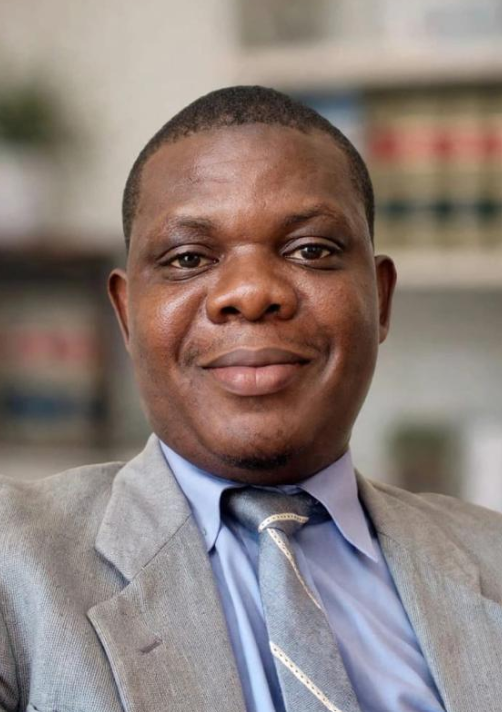
Wonlue Garpue: LNP Selective Enforcement Targets Kehkeh Riders
Summary
- A Liberian Ministry of Justice prosecutor, Wonlue Garpue, publicly accused the Liberia National Police of selective traffic enforcement against tricycle riders.
- Garpue stated that tricycles, known as kehkeh, are fined US$50 for carrying two front passengers, while taxis and illegal private vehicles engaging in more dangerous practices are ignored.
- This public criticism from a prosecutor is unusual, highlighting internal tensions within Liberia's justice system.
- The LNP defends its actions by citing high accident rates among motorcyclists and kehkeh riders, with 478 traffic accidents recorded in the first three months of 2026.
- The incident adds to a history of concerns regarding traffic law fairness, including past driver protests and legislative interference in traffic citations.
Prosecutor Alleges Selective Enforcement
It is unusual for a sitting Justice Ministry prosecutor to criticize the police so publicly, underscoring the gravity of the concerns regarding equitable law enforcement.
A prosecutor within Liberia's Ministry of Justice has publicly challenged the Liberia National Police (LNP) over what he describes as discriminatory traffic enforcement practices. Wonlue Garpue, who serves as a City Solicitor and Prosecutor assigned to the West Point Magisterial Court, issued a statement over the weekend asserting that commercial tricycle riders, known locally as kehkeh, are being unfairly targeted with fines, while other commercial vehicles like taxis and unauthorized private transport operators are largely overlooked.
While expressing support for the police's broader road safety initiatives, Garpue emphasized the critical need for the law to be applied uniformly to all citizens. This public criticism from a Ministry of Justice official directed at the Liberia National Police highlights significant concerns about fairness and the equitable application of traffic regulations within the nation's capital, Monrovia.
Disparate Treatment and Financial Burden
Garpue specifically pointed out that kehkeh riders face a US$50 fine for carrying two passengers in the front seat. This penalty is particularly burdensome in a country where many individuals subsist on very limited daily incomes. He contrasted this with the situation of taxi drivers in Monrovia and other areas, who frequently transport four passengers in the back and two in the front, a practice he deemed even more hazardous, yet these vehicles are rarely stopped by law enforcement.
Furthermore, the prosecutor highlighted private cars operating as unofficial taxi services on routes such as Red Light to Broad Street and Duala to Paynesville. These vehicles, he noted, often lack commercial license plates, the required yellow paint for commercial vehicles, and passenger insurance, yet they are reportedly never ticketed. Garpue questioned this disparity, asking why only kehkeh riders are targeted, emphasizing that these riders are Liberian citizens, often young men striving to support their families, and should not be treated as convenient sources for US$50 fines while other offenders go unpunished. The financial strain on tricycle operators is considerable, with a new kehkeh costing US$3,500, and additional expenses including US$150 for Ministry of Transport registration and license plates, US$130 for insurance, and US$35 for a driver's license.
Broader Context of Traffic Enforcement Concerns
It is unusual for a sitting Justice Ministry prosecutor to criticize the police so publicly, underscoring the gravity of the concerns regarding equitable law enforcement. This incident is not isolated, as commercial drivers previously staged a 'go-slow' protest in May 2025, with their union spokesperson accusing the Liberia National Police Traffic Division of issuing numerous high-cost tickets for minor infractions, even when drivers possessed valid licenses, registrations, and insurance. The Ministry of Transport later announced that this dispute had been resolved following discussions between police and union representatives.
Conversely, Police Inspector General Gregory Coleman has previously stated that motorcyclists and kehkeh riders are associated with the highest accident rates. According to data from the Liberia National Police, the first three months of 2026 saw 478 traffic accidents, resulting in 71 fatalities and 309 injuries. This ongoing debate over traffic law fairness also includes a long-standing discussion about whether influential individuals in Liberia adhere to the same road rules as the general public. In April 2025, the House of Representatives summoned the LNP Inspector General after a traffic citation was issued to one of its members, Representative Anthony F. Williams, with legislators arguing for exemptions for elected officials due to security concerns, and the House majority reportedly ordering the revocation of the ticket.
Implications for Justice and Fairness
Garpue's intervention underscores a fundamental call for fairness in Liberia's traffic law enforcement. He advocated for the police to establish checkpoints that stop all categories of vehicles—tricycles, taxis, and private transport cars—equally, asserting that this approach represents both genuine road safety and true justice. His statement, "We stand with the Police for safety. We stand with the riders for fairness," encapsulates the dual objectives of public safety and equitable treatment under the law.
This public critique from a high-ranking Ministry of Justice official against the Liberia National Police highlights potential internal tensions within the justice system and raises critical questions about the consistent application of laws. Such public discourse is vital for ensuring that all citizens, including vulnerable groups like kehkeh riders, are treated fairly and that the rule of law is upheld without discrimination.
Practical Implications
Lawyers representing commercial transport operators in Liberia should note this public statement from a Ministry of Justice prosecutor, which can be leveraged to challenge instances of selective traffic enforcement or disproportionate fines against specific groups like tricycle riders, citing concerns of unequal application of the law. This also highlights potential internal tensions within the justice system that could impact legal strategies.
Source
How does this affect you?
Get an AI analysis of this article grounded in your jurisdictions, practice areas, and any policy documents you've uploaded to Wansom.
Finish Reading the Full Story and the Expert Analysis.
Get the latest legal & regulatory intelligence in Liberia
Wansom is AI and can make mistakes.