
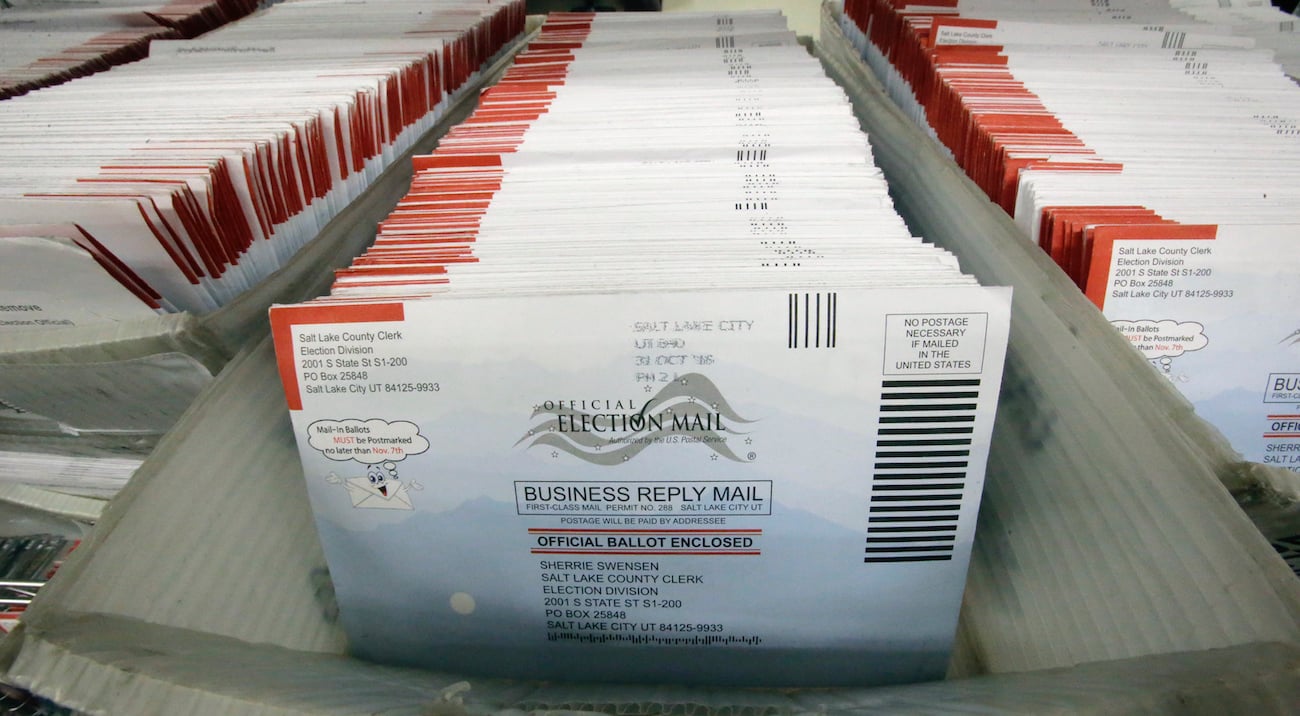
US Judge Blocks Trump Executive Order on Mail-In Voting
Summary
- A federal judge in Boston has blocked a Trump executive order aimed at limiting mail-in voting in the November midterm election.
- The ruling declares the executive order unconstitutional and notes that power to set election rules rests with individual states and Congress.
- Voting rights groups, led by the League of Women Voters of Massachusetts, merged efforts with 23 individual states and the District of Columbia to challenge the order.
- The Supreme Court will now consider the case, which has major implications for state-by-state voting rules.
Trump Executive Order on Mail-In Voting Blocked by US Judge
A federal judge in Boston has blocked a Trump executive order that aimed to limit mail-in voting in the November midterm election. The order, which was issued on March 31, directed the U.S. Postal Service (USPS) to only supply mail-in ballots to states that turned over their voter registries to the federal government. This move was seen as an attempt by Trump to leverage the USPS to restrict mail-in voting, a process that has been widely used in many states since the Civil War.
The judge, Indira Talwani, ruled that the executive order is unconstitutional and that the power to set election rules rests with individual states and Congress. She noted that the Constitution does not grant the president any specific powers over elections. The ruling is now before the Supreme Court.
Relevant Legal/Regulatory Context
The Trump executive order was part of a broader effort to restrict mail-in voting, which has been a contentious issue in recent months. Voting rights groups, led by the League of Women Voters of Massachusetts, merged efforts with 23 individual states and the District of Columbia to challenge the order. The challenge was successful, with Talwani ruling that key aspects of the executive order were unconstitutional in June. This latest ruling builds on that finding, declaring once again that Trump's executive order is unconstitutional.
The judge's decision is significant because it highlights the ongoing debate over mail-in voting and its implications for electoral integrity. The Supreme Court will now consider the case, which has major implications for state-by-state voting rules.
Why It Matters
This ruling has far-reaching implications for the November midterm election and beyond. Lawyers and compliance officers should be aware of potential changes to state-by-state voting rules as the Supreme Court considers a challenge to this ruling. The ongoing debate over mail-in voting also underscores the need for clarity on electoral integrity. As Talwani noted, 'The critical need for an injunction to prevent defendants from changing election rules on the eve of the election' is pressing, given that the Nov. 3 midterm election is less than 90 days away.
Practical Implications
Lawyers and compliance officers should watch for potential changes to state-by-state voting rules, as the Supreme Court considers a challenge to this ruling. They should also be aware of the ongoing debate over mail-in voting and its implications for electoral integrity.
Source
How does this affect you?
Get an AI analysis of this article grounded in your jurisdictions, practice areas, and any policy documents you've uploaded to Wansom.
Wansom is AI and can make mistakes.