
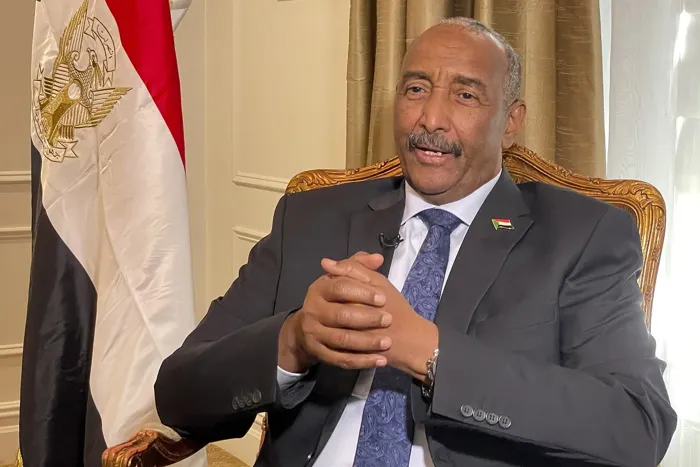
US: Denies Al-Burhan UN Visa Amid UNGA Travel Restrictions
Summary
- On September 22, 2026, the United States had not yet granted a visa to General Abdel Fattah al-Burhan, Chairman of Sudan's Sovereign Council, for the 81st UN General Assembly.
- The US State Department declined to comment on the specific visa case, while Khartoum sources still anticipated its issuance.
- UN Secretary-General Antonio Guterres expressed deep concern, urging the US to issue the visa in accordance with its obligations under the UN Headquarters Agreement.
- Guterres emphasized that full participation of all delegations is essential for the proper functioning of the United Nations.
Diplomatic Visa Dispute Emerges
This incident brings into sharp focus the intricate legal complexities and potential for diplomatic disputes inherent in the relationship between the United Nations and its host country, particularly concerning visa obligations.
On September 22, 2026, a significant diplomatic issue arose concerning the attendance of General Abdel Fattah al-Burhan, Chairman of Sudan's Sovereign Council, at the 81st session of the United Nations General Assembly in New York. Informed diplomatic sources, speaking to "Sudan Tribune," revealed that the United States had not yet issued a visa for al-Burhan to enter the country. This development cast uncertainty over his planned participation in the high-profile international gathering.
Despite these reports, government sources in Khartoum conveyed to "Sudan Tribune" that they maintained expectations for the visa to be granted at any point on Tuesday. The U.S. State Department, when approached for comment on the matter, adhered to its established policy, declining to discuss specific visa cases. This non-committal stance left the situation unresolved as the General Assembly proceedings loomed.
The visa denial comes after earlier reports indicated that General al-Burhan was preparing to lead Sudan's delegation to the current UNGA session. He was scheduled to deliver a speech on the upcoming Thursday, with Sudanese officials confirming his official representation of the nation at the meetings. The absence of a visa thus directly jeopardized Sudan's planned high-level engagement at the global forum, raising questions about potential Sudan UNGA travel restrictions.
UN Chief Expresses Grave Concern
The unfolding situation quickly drew the attention of United Nations Secretary-General Antonio Guterres, who voiced profound concern regarding the reports that Sudan's transitional Sovereign Council chairman had not yet received his entry visa. Guterres's intervention underscored the gravity of the matter, highlighting the potential disruption to the General Assembly's operations and signaling a Guterres Al-Burhan visa concern.
In a formal statement, the Secretary-General explicitly urged the host nation, the United States, to fulfill its obligations under the UN Headquarters Agreement. He stressed the necessity of issuing the visa promptly, thereby ensuring General al-Burhan's personal attendance and participation in the General Assembly's work. This call directly invoked the legal framework governing the relationship between the UN and its host country, emphasizing the importance of a UN Headquarters Agreement visa.
Guterres further emphasized that the full and unrestricted participation of all member state delegations is fundamental to the effective functioning of the United Nations. His remarks highlighted the principle that access for official representatives is not merely a courtesy but a critical component of international cooperation and the organization's operational integrity, aligning with US diplomatic visa obligations.
Legal Framework and Host Nation Duties
This incident brings into sharp focus the intricate legal complexities and potential for diplomatic disputes inherent in the relationship between the United Nations and its host country, particularly concerning visa obligations. The UN Headquarters Agreement, a foundational international treaty, outlines the responsibilities of the United States as the host nation to facilitate access for representatives of member states to UN headquarters. This agreement is designed to ensure that the sovereign discretion of the host country does not impede the essential functions of the international organization.
The Secretary-General's appeal directly referenced these US diplomatic visa obligations, underscoring that the host nation's duties are not discretionary but are legally binding under international law. Such situations test the boundaries of national sovereignty against treaty commitments, where the host country is expected to provide unhindered access for official delegates, even when political tensions might exist. The principle is that the UN's work, which requires universal participation, should not be hampered by bilateral issues between a member state and the host nation.
This case serves as a critical example of how international agreements like the Headquarters Agreement aim to prevent Sudan UNGA travel restrictions or similar impediments from undermining global diplomatic efforts. The legal framework is designed to ensure that the UN can operate effectively as a forum for all nations, free from undue influence or obstruction by any single member state, including the host.
Broader Implications for International Diplomacy
The unresolved visa situation for General Abdel Fattah al-Burhan carries significant implications for international diplomacy and the operational norms of multilateral institutions. Should a high-ranking official be prevented from attending a crucial global forum like the UN General Assembly, it could set a concerning precedent regarding the interpretation and enforcement of host nation obligations under international law. This incident highlights the delicate balance between a nation's right to control its borders and its treaty commitments to facilitate international engagement.
Such diplomatic disputes can erode trust and complicate future interactions within the international community, potentially leading to reciprocal actions or challenges to the established protocols for diplomatic access. The legal complexities involved extend beyond the immediate visa application, touching upon the very principles of multilateralism and the sovereign equality of states within the UN framework. The outcome of this particular situation, where the US denies Al-Burhan UN visa, will be closely watched by legal professionals and diplomats alike, as it could influence how similar access issues are handled in the future, impacting the ability of leaders to engage directly on global challenges.
Practical Implications
This incident underscores the legal complexities and potential diplomatic disputes arising from host nation obligations under international agreements like the UN Headquarters Agreement. Legal professionals advising on international law, diplomatic relations, or human rights should note this case as it tests the boundaries of sovereign discretion versus treaty commitments regarding access for foreign dignitaries to international bodies.
Source
How does this affect you?
Get an AI analysis of this article grounded in your jurisdictions, practice areas, and any policy documents you've uploaded to Wansom.
Finish Reading the Full Story and the Expert Analysis.
Get the latest legal & regulatory intelligence in Sudan
Wansom is AI and can make mistakes.