
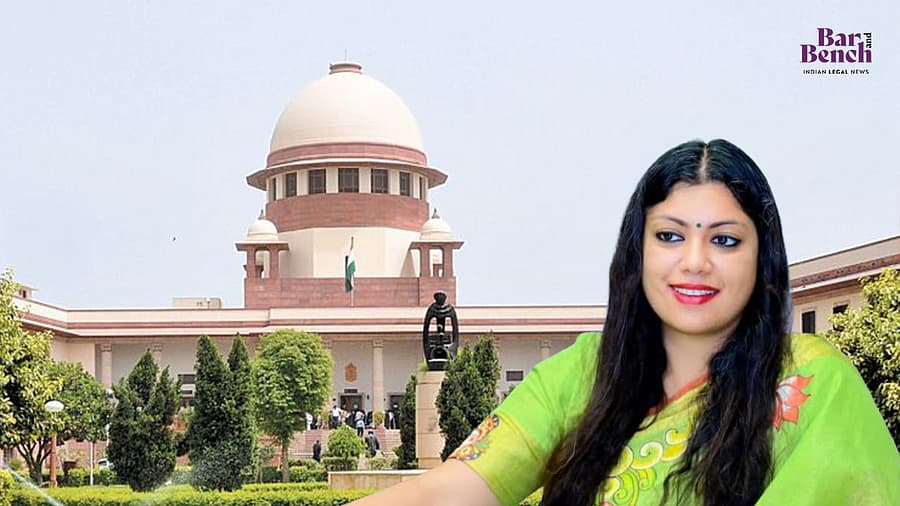
Uttar Pradesh Govt: Challenges Noida DM NSA Reprimand in Supreme Court
Summary
- The Uttar Pradesh government will appeal to the Supreme Court against an Allahabad High Court ruling that reprimanded Gautam Buddha Nagar DM Medha Roopam.
- The High Court had criticized DM Roopam for ordering the National Security Act detention of Akriti Chaudhary, a Delhi University graduate.
- The Allahabad High Court quashed Chaudhary's detention and ordered ₹5 lakh compensation, to be recovered from the DM's salary and other responsible officers.
- The court found the police report lacked credible material and deemed the DM's conduct in invoking NSA's "oppressive provisions" as "worthy of derision."
- Despite the quashed NSA detention, Akriti Chaudhary remains in custody due to other criminal cases related to an April industrial protest in Noida.
UP Government Challenges DM Reprimand
This aspect of the ruling, particularly the personal financial liability imposed, sets a notable precedent for executive accountability.
The Uttar Pradesh government is set to appeal a recent Allahabad High Court decision to the Supreme Court, a move that directly challenges a reprimand issued against Gautam Buddha Nagar District Magistrate Medha Roopam. The High Court had criticized Roopam for her role in ordering the detention of Akriti Chaudhary, a Delhi University History graduate, under the stringent National Security Act (NSA). This significant legal development sees the state government contesting a ruling that held an executive officer accountable for an NSA detention.
Solicitor General Tushar Mehta has already informed a Supreme Court Bench, comprising Chief Justice of India Surya Kant, Justice Joymalya Bagchi, and Justice V Mohana, of the state's intention to pursue this appeal. In a related development, District Magistrate Medha Roopam herself plans to file a separate appeal to challenge the High Court's order, indicating a concerted effort to overturn the adverse ruling. The case highlights the state's stance on the accountability of its administrative officials in matters of public order and detention.
High Court's Scathing Indictment
The Allahabad High Court's ruling, delivered on September 2 by a Division Bench of Justice Atul Sreedharan and Justice Achal Sachdev, not only quashed Akriti Chaudhary's National Security Act detention but also mandated substantial financial restitution. The court ordered a compensation payment of ₹5 lakh to Chaudhary, with a critical directive that this sum be recovered directly from the salary of District Magistrate Medha Roopam and any other officers involved in preparing the flawed report that led to Chaudhary's NSA detention.
In its detailed judgment, the High Court underscored the absence of credible evidence in the police report against Chaudhary. It emphasized that the District Magistrate, as the detaining authority, bore the responsibility to exercise vigilance and meticulously review all records before invoking the "oppressive provisions" of the National Security Act. The court went further, explicitly stating that Roopam's conduct in the matter was "worthy of derision," a strong condemnation of her actions. This aspect of the ruling, particularly the personal financial liability imposed, sets a notable precedent for executive accountability.
Broader Implications and Ongoing Custody
The decision by the Uttar Pradesh government to challenge the Allahabad High Court's reprimand of the Noida DM before the Supreme Court carries significant implications for the exercise of executive power, particularly concerning National Security Act detentions. The Supreme Court's eventual ruling in the Medha Roopam Supreme Court appeal could redefine the scope of personal liability for District Magistrates and other officials who issue detention orders without rigorous scrutiny. This legal battle will be closely watched for its potential to establish new standards for accountability in cases involving arbitrary detentions under laws like the NSA.
Despite the quashing of her National Security Act detention by the High Court, Akriti Chaudhary remains in custody. Her continued incarceration stems from several other criminal cases that are connected to the industrial workers' protest in Noida, which took place in April. The initial detention under the NSA was linked to this protest, highlighting the complex legal landscape surrounding such incidents and the multiple charges individuals can face.
Practical Implications
This development highlights the potential for increased personal liability for executive officers, such as District Magistrates, who issue detention orders without proper scrutiny. Lawyers should monitor the Supreme Court's decision as it could establish a significant precedent regarding accountability for arbitrary detentions under the National Security Act and similar laws, impacting advice to both officials and those subject to detention.
Source
How does this affect you?
Get an AI analysis of this article grounded in your jurisdictions, practice areas, and any policy documents you've uploaded to Wansom.
Finish Reading the Full Story and the Expert Analysis.
Wansom is AI and can make mistakes.