
UN Sudan: Civilian Drone Strikes, Detentions Escalate Human Rights Crisis
Summary
- UN officials report that Sudanese civilians are caught between escalating drone warfare and government repression, facing severe deprivation.
- A new report from the UN Independent International Fact-Finding Mission on Sudan highlights widespread violations by both the RSF and SAF.
- RSF drone strikes are causing civilian deaths and injuries, while SAF forces are conducting mass surveillance and arbitrary detentions.
- The UN attributes primary responsibility for destruction and atrocities in Sudan to both the RSF and SAF.
- Recent drone strikes in Nyala on Monday killed dozens and injured over 150, targeting a market and residential area.
Civilian Plight in Sudan
Mr. Dujarric explicitly stated that both the Rapid Support Forces and the Sudanese Armed Forces bear the primary responsibility for the widespread destruction and atrocities occurring throughout Sudan, emphasizing their accountability for the ongoing crisis.
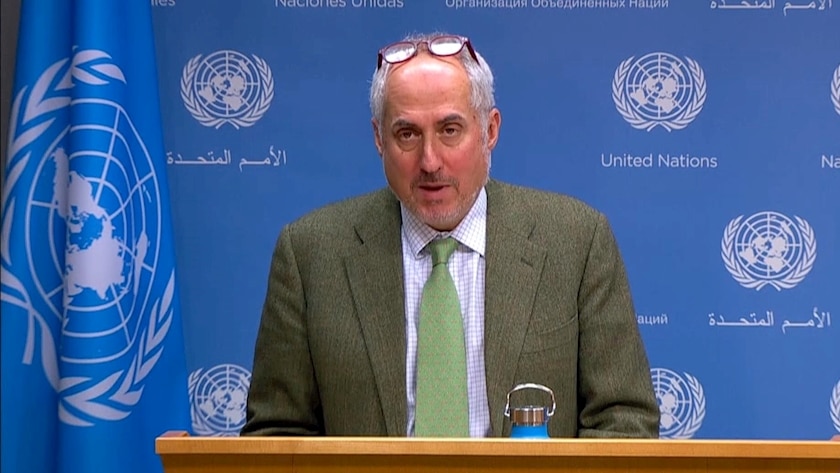
A United Nations spokesperson recently highlighted the dire situation for civilians across Sudan, who remain trapped amidst escalating drone warfare, state repression, and profound deprivation. Stéphane Dujarric, speaking during a regular briefing on Wednesday, underscored that both warring factions continue to perpetrate extensive human rights violations, leaving the civilian population in a precarious state. This alarming assessment draws upon a new report issued by the UN Independent International Fact-Finding Mission on Sudan, which specifically examined the harrowing conditions within the besieged city of El Obeid. The ongoing conflict has created an environment where Sudan conflict civilian protection is severely compromised, with residents facing constant threats from multiple directions, including both aerial attacks and ground-level repression.
Dual Threats to Civilians
According to the UN, drone attacks attributed to the Rapid Support Forces (RSF) are consistently resulting in significant civilian casualties, causing both fatalities and injuries among non-combatants. These RSF drone attacks Sudan have also been responsible for the widespread destruction of critical infrastructure, including vital educational institutions, sites housing internally displaced persons, and other essential community facilities. Concurrently, security forces aligned with the Sudanese Armed Forces (SAF) have intensified their operations, implementing widespread mass surveillance and carrying out arbitrary detentions across various areas. These actions by the SAF arbitrary detentions Sudan have significantly deepened the climate of fear and insecurity among the populace, further eroding trust and stability. These findings emerge approximately one year after the RSF, alongside its allied militias, captured El Fasher, the capital of North Darfur, marking a critical turning point in the conflict that has ravaged the nation since April 2023.
International Concerns and Recent Atrocities
Mr. Dujarric explicitly stated that both the Rapid Support Forces and the Sudanese Armed Forces bear the primary responsibility for the widespread destruction and atrocities occurring throughout Sudan, emphasizing their accountability for the ongoing crisis. He also noted with concern that various external parties persist in exacerbating the conflict and directly benefiting from the ongoing turmoil, thereby prolonging the suffering. The United Nations recently drew attention to a series of lethal aerial assaults that took place this week, further illustrating the severe Sudan human rights violations UN. Among these incidents were drone strikes on Monday that targeted both a bustling market and a densely populated residential area in Nyala, located in South Darfur. These particular UN Sudan civilian drone strikes detentions resulted in dozens of fatalities and left over 150 individuals wounded, underscoring the urgent need for enhanced Sudan conflict civilian protection and an immediate cessation of hostilities impacting civilians.
Practical Implications
Lawyers and compliance officers should advise clients operating in or with ties to Sudan to reassess their risk exposure due to escalating international humanitarian law violations, including drone strikes and arbitrary detentions. This situation increases the likelihood of future international investigations, sanctions, and accountability measures against parties involved, potentially impacting business operations and supply chains.
Source
How does this affect you?
Get an AI analysis of this article grounded in your jurisdictions, practice areas, and any policy documents you've uploaded to Wansom.
Finish Reading the Full Story and the Expert Analysis.
Wansom is AI and can make mistakes.