
UN Failure to Protect Congolese Tutsi in DRC: Ongoing Attacks
Summary
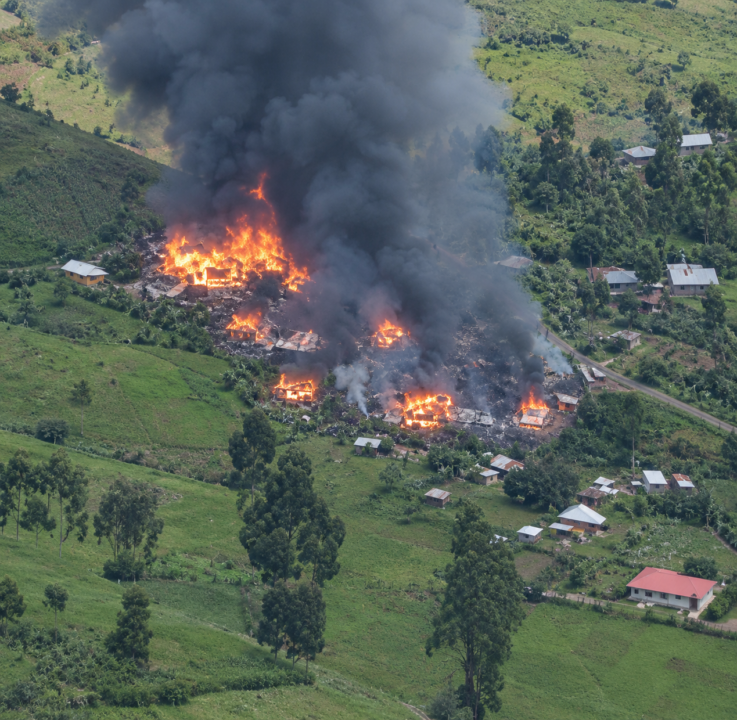
- FDLR militia attacked Nturo village in eastern DRC in October 2023, burning over 300 homes belonging to Congolese Tutsi after M23 rebels withdrew.
- Despite MONUSCO's explicit mandate for civilian protection since 2010, UN reports document persistent violence, including killings, village destruction, and forced displacement against Congolese Tutsi communities.
- Over 650 villages have been destroyed or burned since 2017, highlighting a failure in mandate enforcement rather than its absence.
- Congolese Tutsi communities, including Banyamulenge, have faced decades of discrimination, citizenship disputes, and attacks, contributing to a refugee crisis of over 883,000 Congolese by late 2024.
- The UN Security Council must prioritize ethnicity, citizenship, and identity-related grievances to achieve sustainable peace, ensuring the protection of Congolese Tutsi regardless of political alignments.
Escalating Violence and UN's Role
The persistent vulnerability of Congolese Tutsi communities, despite the long-standing presence and explicit mandate of UN peacekeeping forces, highlights a critical gap between stated international commitments and their practical enforcement.
A recent three-day assault by the FDLR militia on Nturo village in Masisi, located in the eastern Democratic Republic of Congo, underscores the persistent security challenges faced by specific communities. Commencing on October 2, 2023, this attack resulted in the destruction by fire of over 300 homes belonging to the local Congolese Tutsi population, occurring in the aftermath of the M23 rebels' withdrawal from the area. This incident highlights the ongoing vulnerability of these communities despite a significant international peacekeeping presence in the region.
For more than two decades, the United Nations has maintained a substantial peacekeeping operation in eastern DRC, initially through MONUC and, since 2010, via MONUSCO. The latter's mandate explicitly includes the critical responsibility of protecting civilians from imminent physical violence. However, a fundamental question arises regarding the effectiveness of this mandate, particularly concerning the safety of Congolese Tutsi communities, who have consistently endured violence, displacement, and discrimination.
Despite numerous serious reports from various UN bodies documenting targeted attacks against Banyamulenge and other Congolese Tutsi communities, the pattern of violence has continued unabated. These reports detail widespread atrocities, including the killing of civilians, the systematic destruction and burning of villages, forced displacement of populations, and the pervasive spread of hate speech and incitement. Alarmingly, over 650 villages have reportedly been destroyed or burned since 2017, indicating a severe and ongoing crisis. This situation suggests that the core issue is not the absence of a formal protection mandate, but rather a critical failure in its consistent and effective enforcement.
A History of Vulnerability and Unaddressed Grievances
The historical context of Congolese Tutsi communities, including the Banyamulenge, reveals that their precarious situation is not a recent phenomenon. UN documentation meticulously records decades of systemic discrimination, contentious disputes over citizenship and identity, widespread property seizures, and a continuous pattern of threats and attacks targeting Tutsi communities across eastern DRC. This deep-rooted history is crucial for understanding the current security landscape, as it demonstrates that the problem extends beyond the activities of armed groups to encompass underlying political and social conditions that render specific populations exceptionally vulnerable.
The international community's response has frequently prioritized the defeat of armed groups and the preservation of the DRC's territorial integrity. While these objectives are important, this approach often overlooks a critical question: what recourse do members of a particular community have when they perceive that neither their own state nor international institutions can guarantee their fundamental physical security, affirm their citizenship rights, or ensure equal protection under the law? This perceived abandonment fuels a cycle of mistrust and insecurity.
The UN itself has acknowledged the severe dangers posed by ethnic violence. In 2022, the UN High Commissioner for Human Rights, alongside Alice Wairimu Nderitu, who was then the UN Special Adviser on the Prevention of Genocide, issued a stark warning about the escalating hate speech and incitement to discrimination, hostility, and violence, specifically targeting Kinyarwanda-speakers amidst heightened tensions surrounding the M23 rebellion. Such official warnings underscore the recognized risks, yet the practical protection of these communities remains a significant challenge.
Broader Implications for Regional Stability
The ongoing crisis has significant regional implications, contributing to a widespread refugee situation. UNHCR data indicates that by the end of 2024, more than 883,000 Congolese refugees and asylum seekers were being hosted collectively by neighboring countries including Uganda, Burundi, Rwanda, Zambia, and Tanzania. While the displacement crisis affects various communities throughout the country, the continued exile of Congolese Tutsi populations specifically raises profound questions about the persistent failure to establish durable security conditions that would enable the safe return of these refugees.
The treatment of Banyamulenge refugees serves as a poignant illustration of the high stakes involved. In 2025, UN human rights documentation highlighted concerns regarding reported discrimination affecting Banyamulenge within the DRC. This documentation also recalled the horrific 2004 Gatumba refugee camp massacre, where over 150 civilians, predominantly Banyamulenge, were brutally killed. The unresolved nature of such historical atrocities underscores the long-term consequences of impunity and the urgent need for accountability.
For the Security Council to achieve sustainable peace in eastern DRC, it is imperative that issues of ethnicity, citizenship, and broader identity-related grievances are not relegated to secondary importance. The protection of Congolese Tutsi civilians must be an unconditional priority and should not be contingent upon whether their security concerns align with the political interests of Kinshasa, the AFC/M23, or any other political actor. The persistent vulnerability of Congolese Tutsi communities, despite the long-standing presence and explicit mandate of UN peacekeeping forces, highlights a critical gap between stated international commitments and their practical enforcement.
Practical Implications
Lawyers and compliance officers advising clients operating in or engaging with conflict zones, particularly those with UN peacekeeping missions, must recognize the potential gap between stated mandates (e.g., MONUSCO's civilian protection) and their actual enforcement. This highlights significant human rights and security risks for specific communities, which could lead to future international legal actions or reputational risks for entities associated with the region, necessitating independent risk assessments beyond official mandates.
Source
How does this affect you?
Get an AI analysis of this article grounded in your jurisdictions, practice areas, and any policy documents you've uploaded to Wansom.
Finish Reading the Full Story and the Expert Analysis.
Get the latest legal & regulatory intelligence in Rwanda
Wansom is AI and can make mistakes.